The 2026 Novel-to-Webtoon Adaptation Framework: Engineering Narrative Elasticity for Visua
In 2026, the global demand for novel-to-webtoon adaptations has created a specialized discipline: Narrative Elasticity. This framework teaches creators how to bridge the gap between prose density and visual-scroll pacing.
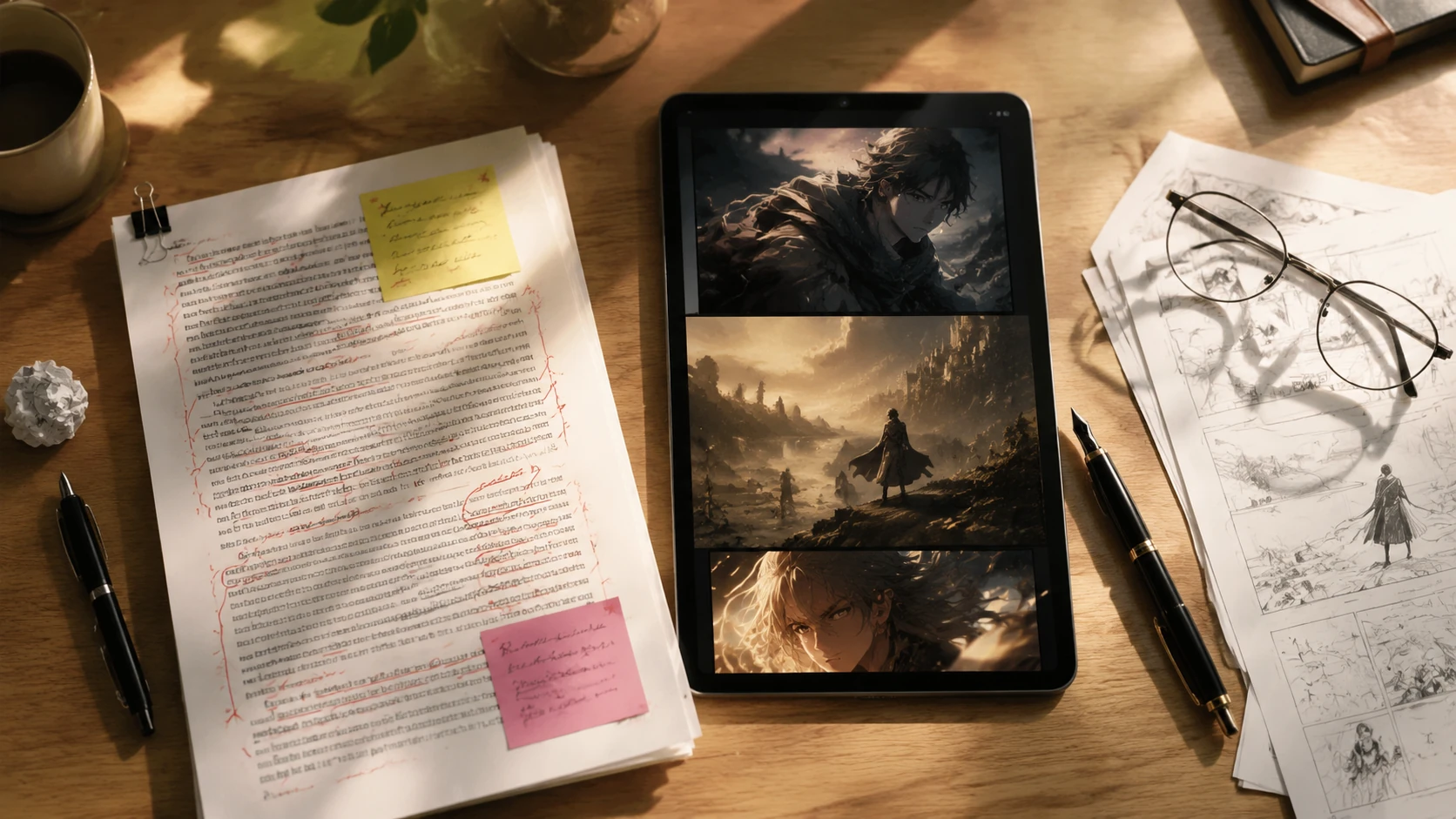
The 2026 media landscape is defined by the 'Adaptation Gold Rush.' As global platforms pivot from high-risk original IPs to data-validated prose novels, the role of the adaptation specialist has become the industry's most critical bottleneck. However, simply transferring dialogue from a page to a panel is no longer sufficient to maintain reader retention in a hyper-competitive market. Success in 2026 requires a deep understanding of 'Narrative Elasticity'—the science of expanding prose subtext into visual action while compressing internal monologues into high-impact scroll beats. This framework provides the technical and creative blueprint for transforming static text into dynamic, vertical-native experiences that satisfy both original fans and new visual-first audiences.
The Concept of Narrative Elasticity
In prose, a single paragraph can describe a character's internal emotional state over ten years. In a webtoon, that same paragraph must be 'stretched' or 'compressed' to fit the physical constraints of the mobile screen. Narrative Elasticity refers to the ability to identify which prose elements are 'load-bearing' for the plot and which must be translated into visual metaphors. In 2026, we categorize these as 'Fixed Lore Entities' and 'Fluid Visual Beats.' Fixed entities are the non-negotiable plot points, while fluid beats are the atmospheric and action sequences that must be expanded to create the 'scroll-speed' necessary for modern dopamine loops.
The Three Pillars of Visual Conversion
- Internal-to-External Shift: Converting 80% of internal monologue into facial expressions, environmental storytelling, or symbolic color shifts.
- The 15-Panel Anchor: Identifying the one core 'emotional anchor' panel every 15 scrolls to ensure the reader remains tethered to the protagonist's journey.
- Dialogue De-cluttering: Reducing prose dialogue by 40% to allow for visual 'breathing room' and faster scroll velocity.
The 2026 Adaptation Workflow: From Page to Panel
Modern adaptation isn't a linear process; it's a modular reconstruction. Creators must first deconstruct the novel into its 'Narrative DNA' before rebuilding it for the vertical canvas. This involves a three-stage workflow that utilizes AI-assisted pre-visualization and semantic mapping to ensure the core 'vibe' of the original work remains intact while optimizing for the new format's UX requirements. The goal is to move beyond literal translation and toward 'transmedial reimagining,' where the webtoon version offers a sensory depth that the prose version could only suggest.
Step 1: Semantic Deconstruction
Before drawing a single line, the adapter must map the novel's emotional arc using semantic tagging. This involves identifying recurring themes, character traits, and 'tonal triggers.' In 2026, professional studios use these tags to create a 'Visual Lore Bible' that ensures character consistency even when multiple artists are involved. This step prevents the common mistake of 'visual drift,' where the adapted characters lose the specific personality nuances that made the original book a hit.
Step 2: The Pacing Script
The prose script is converted into a 'Scroll-Native Script.' Unlike traditional comic scripts, this format uses 'Vertical Beats' (VBs) instead of page numbers. Each VB represents a screen-worth of content. A standard 2026 webtoon chapter aims for 60-80 VBs. The script-writer must balance high-action VBs with 'White Space VBs'—intentional gaps that allow the reader's brain to process emotional gravity. This is where narrative elasticity is most visible: a five-word sentence in a novel might be expanded into a 4-VB silent sequence to emphasize its impact.
Avoiding the 'Literal Translation' Trap
The most frequent cause of adaptation failure in 2026 is the 'Literalist Fallacy.' This occurs when a creator tries to include every line of prose dialogue or descriptive text, resulting in a cluttered, slow-moving webtoon that feels like a narrated slideshow rather than a visual story. To avoid this, adapters must employ the 'Visual Substitution' technique. If the novel describes a room as 'cold, sterile, and smelling of ozone,' the webtoon should show blue-tinted lighting, sharp metallic angles, and a faint shimmering effect in the air, rather than putting that description into a text box.
Case Study: The 'High-Density' Novel Success
In early 2026, the adaptation of the hard sci-fi novel 'The Silicon Ghost' set a new industry standard. The original text was dense with technical jargon and complex philosophical debates. The adaptation team used the Elasticity Framework to convert these technical passages into 'Augmented Reality' overlays within the webtoon panels. Readers could scroll quickly for the action or pause to look at the 'technical' background details that visualized the jargon. This approach achieved a 94% retention rate among both the hardcore science fans and casual webtoon readers.
The Future of Author-Artist Collaboration
As the adaptation market matures, the relationship between the original novelist and the webtoon showrunner is evolving. In 2026, novelists are increasingly writing their books with 'visual hooks' in mind, creating a symbiotic loop between prose and visual media. The 'Showrunner' role has emerged as the bridge between these two worlds—someone who understands the literary soul of the book but speaks the technical language of vertical cinematography. For creators, mastering this framework is the key to becoming a high-value asset in the 2026 IP economy.
FAQ
How do I handle internal monologue in a webtoon adaptation?
Minimize it. In 2026, best practices suggest converting 70% of internal monologue into visual cues like character expressions or symbolic imagery. Use text boxes only for critical narrative insights that cannot be shown.
What is the ideal ratio of novel chapters to webtoon episodes?
Typically, one novel chapter equals 1.5 to 2 webtoon episodes. This allows for 'Narrative Elasticity'—expanding the action and emotional beats while maintaining a high-frequency update schedule.
Is it better to stay 100% faithful to the original novel?
Faithfulness should be to the 'spirit' and 'lore' rather than the literal text. Successful 2026 adaptations often rearrange scenes to improve the vertical scroll's pacing and hook-frequency.