The 2026 Neural SFX Standard: Engineering Context-Aware Visual Onomatopoeia for Global Exp
Discover how neural in-painting and context-aware style transfer are solving the industry's biggest bottleneck: manual sound effect retouching. This 2026 guide explores the technical framework for seamless visual onomatopoeia translation.
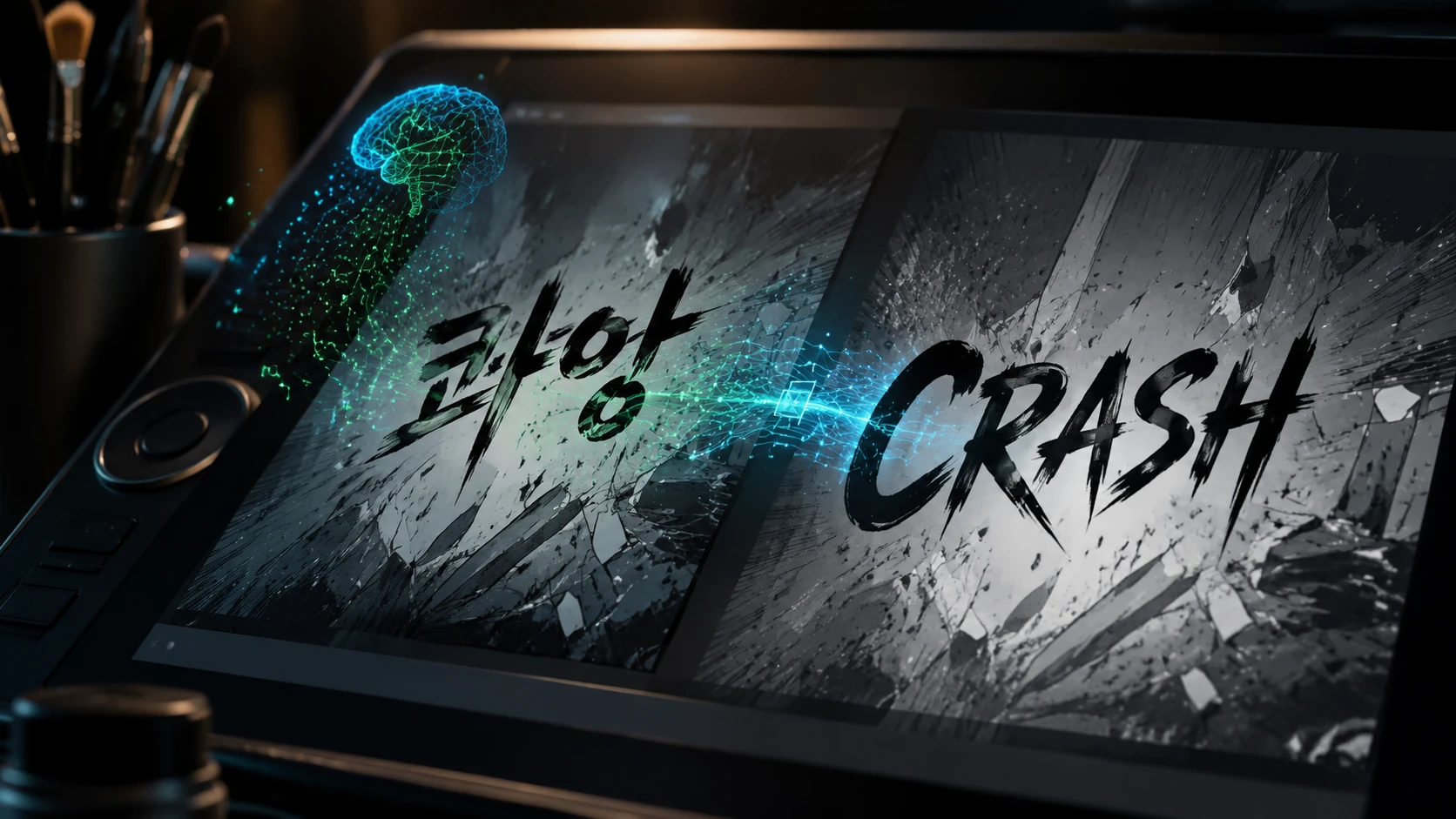
For over a decade, the greatest bottleneck in global webtoon distribution hasn't been the text translation, but the visual sound effect (SFX). Manually retouching onomatopoeia—erasing hand-drawn characters that overlap with character hair, backgrounds, or complex textures—consumes up to 40% of the total localization budget. In 2026, the industry has pivoted to the Neural SFX Standard. This framework leverages context-aware generative models to not only translate the meaning of a sound but to physically 're-draw' the SFX into the target language while maintaining the original artist's unique brushstroke, weight, and spatial integration. This shift is what finally enables 'Day-and-Date' global releases, where a chapter launches simultaneously in Seoul, Tokyo, New York, and Paris without the traditional three-week localization lag.
The Architecture of Context-Aware SFX Rendering
The 2026 Neural SFX workflow differs from traditional image-to-image AI. It operates on a three-layer segmentation architecture. First, the 'Contextual Parser' identifies the semantic meaning of the sound (e.g., distinguishing a 'metallic clang' from a 'soft thud'). Second, the 'Background In-painter' reconstructs the art hidden behind the original characters, using surrounding pixels to fill the void left when the source SFX is removed. Finally, the 'Stylistic Synthesizer' generates the new text in the target language. This synthesizer is trained on the specific artist’s portfolio, ensuring that the new English or Spanish 'BOOM' looks exactly as if the original creator drew it themselves. This preserves the 'Visual Soul' of the IP, a critical factor for E-E-A-T and reader immersion.
Key Components of the 2026 Standard
- Semantic Sound Mapping: A universal database of cross-cultural onomatopoeia equivalents.
- Brush-Stroke Embedding: Capturing the specific pressure, tilt, and texture of the original digital ink.
- Spatial Awareness: Ensuring the SFX recedes or advances in the 3D space of the panel, interacting with lighting and shadows.
- Layerless Source Independence: The ability to process 'flattened' legacy files without needing the original PSD/CSP layers.
The Four Levels of SFX Automation
As of 2026, studios categorize their technical capability into four distinct levels. Level 1 is simple text replacement (rarely used in premium titles). Level 2 involves automated masking with manual cleanup. Level 3—the current industry benchmark—is fully automated rendering with a human 'Quality Assurance' (QA) editor who approves the final look. Level 4 represents the future: 'Live-Rendered' SFX, where the sound effects change dynamically based on the reader’s device language settings, allowing a single image file to serve a global audience. This Level 4 capability is currently being integrated into major vertical scroll platforms to reduce CDN storage costs by up to 60%.
Impact on Search Discovery and Accessibility
Beyond visual aesthetics, the Neural SFX Standard provides a massive boost to technical SEO and accessibility. Because the SFX are rendered from a semantic metadata layer, search engines can now 'read' the action within a panel. An AI-driven search engine in 2026 can index a comic based on the intensity of its action scenes by analyzing the frequency and scale of 'Explosion' or 'Impact' SFX metadata. Furthermore, this standard allows for 'Screen-Reader' compatibility; for the first time, visually impaired readers can use assistive technology to hear the environmental sounds of a comic, as the system knows exactly what every visual 'THUD' or 'SHING' represents.
Common Implementation Mistakes
- Over-Smoothing: Allowing the AI to remove the 'grit' of the original art, resulting in sterile-looking text.
- Cultural Mismatch: Translating a sound literally rather than finding the regional equivalent (e.g., using 'snore' when a specific cultural visual cue is required).
- Ignoring Perspective: Failing to map the new SFX to the vanishing points of the background environment.
The Future: Beyond Static Onomatopoeia
Looking toward 2027, the Neural SFX Standard is evolving into 'Haptic-Sync.' By embedding vibration data into the SFX metadata, mobile devices can trigger subtle haptic feedback that matches the visual weight of the sound. A heavy 'THOOM' might trigger a deep rumble, while a 'CLINK' produces a sharp, short tap. This convergence of visual, semantic, and sensory data is redefining what it means to 'read' a comic, turning the static page into a multi-dimensional narrative experience that scales effortlessly across borders.
FAQ
Does Neural SFX replace human letterers?
No. It automates the tedious task of background reconstruction and base rendering, allowing human letterers to focus on high-level artistic direction and creative placement.
Can this technology work on old manga scans?
Yes, the 2026 models are specifically designed to 'retro-fit' legacy archives by using context-aware in-painting to clean up flattened images.
Is the Neural SFX Standard expensive to implement?
Initially, it requires an API integration, but it typically pays for itself within three chapters by reducing manual retouching hours by 70-85%.