The 2026 Narrative Sandbox Model: Monetizing Fan-Generated ‘Mods’ and Alternate Realities
The shift from static IP to narrative sandboxes is redefining creator revenue in 2026. Discover how modular licensing allows fans to build—and creators to monetize—official alternate realities.
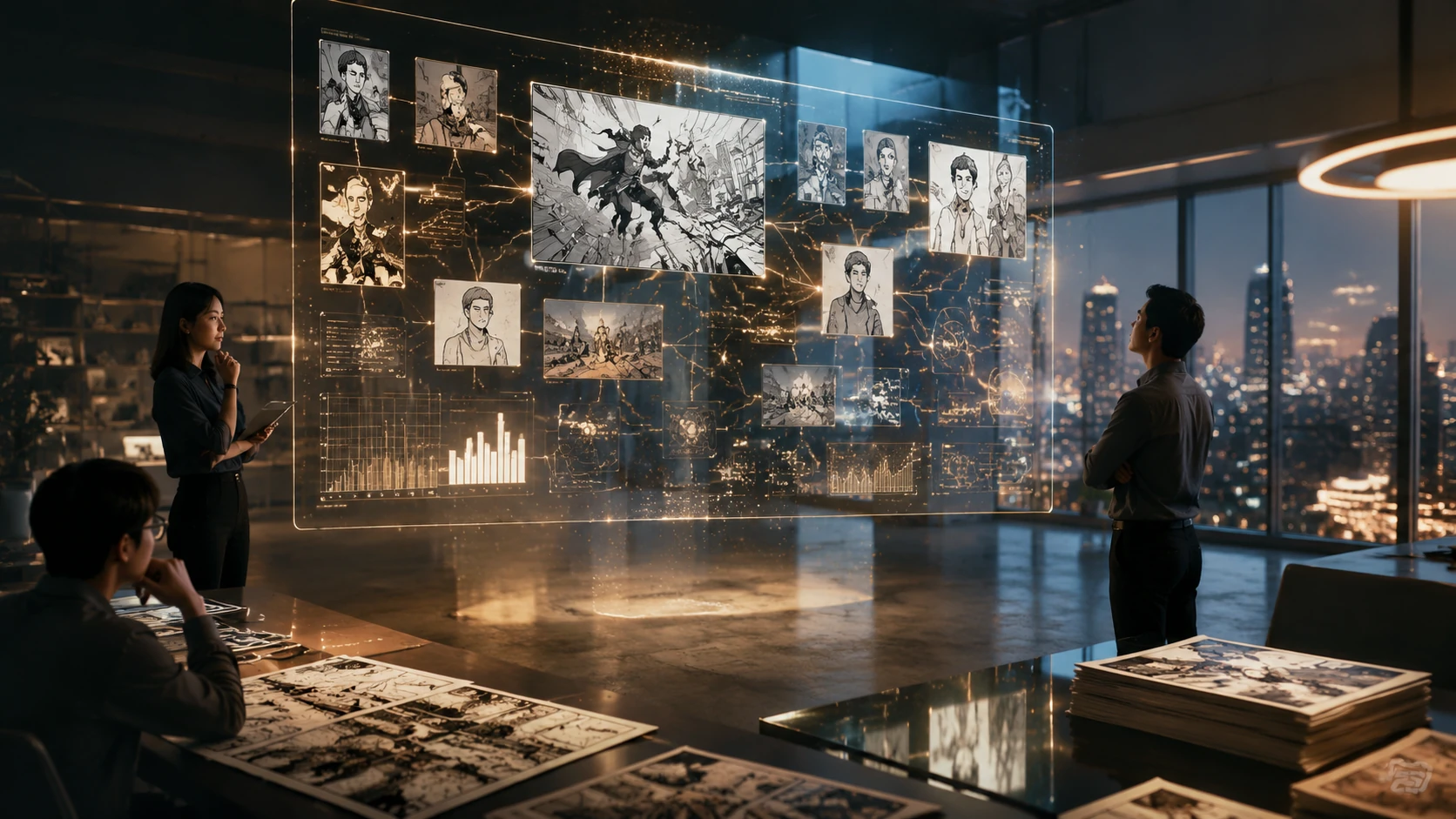
By 2026, the traditional boundaries of intellectual property have dissolved. We are moving away from the 'Read-Only' era of comics into the 'Narrative Sandbox' era. In this new market landscape, top-tier webtoon and manga creators no longer view their stories as static documents, but as platforms. The Narrative Sandbox Model allows creators to release official 'modding kits'—modular asset libraries, lore bibles, and character rigs—that enable fans to legally create and monetize their own side-stories, alternate endings, and non-canonical universes within the original IP's ecosystem. This shift isn't just about fan service; it is a sophisticated commercial strategy designed to maximize IP longevity and capture the long-tail revenue of the creator economy.
The Architecture of a Narrative Sandbox
A Narrative Sandbox is built on three core pillars: modularity, technical interoperability, and legal clarity. Unlike traditional fan fiction, which exists in a legal gray area, 'modding' a 2026 comic involves using official API-linked assets. Creators provide 'Genesis Packs' that include high-fidelity character models (often semantic-ready for AI-assisted drawing) and environmental assets. These are hosted on centralized IP hubs where every fan-made 'mod' is cryptographically linked back to the original creator. This ensures that the parent studio maintains ultimate governance over the 'Prime Canon' while reaping the benefits of community-driven content expansion. It effectively turns a single story into a multi-threaded franchise without the studio bearing the full cost of production.
Key Components of the IP Modding Kit
- Semantic Asset Rigging: Character models that maintain visual consistency across different fan styles.
- Lore-Lock Metadata: Automated checks that prevent fan-made stories from violating 'Hard Lore' rules unless tagged as 'Alt-Universe'.
- Revenue Smart Contracts: Automated royalty splits between the original creator, the platform, and the fan-artist.
- Discovery Nodes: AI-driven tagging that helps readers find fan-mods based on specific tropes or emotional vibes.
Monetization Cascades: How Creators Profit
The revenue potential of the Sandbox Model far exceeds traditional licensing. In 2026, lead creators monetize through a tiered royalty system. When a fan-made 'mod'—such as an alternate-reality romance path for a side character—gains traction, the original IP owner receives a percentage of every micro-transaction, ad-view, or subscription fee generated by that content. Furthermore, the Sandbox Model acts as a massive 'R&D' laboratory. Studios use engagement data from fan-mods to identify which characters or plot lines deserve official 'Prime Canon' status, effectively outsourcing market validation to their most dedicated audience. This reduces the risk of greenlighting expensive spin-offs that might fail to resonate.
Managing Brand Integrity and 'Canon Drift'
One of the primary concerns for 2026 studios is the risk of brand dilution. To combat 'Canon Drift,' the Sandbox Model utilizes a tiered validation system. Content is categorized into 'Prime Canon' (official), 'Community Verified' (high-quality, lore-compliant), and 'Multiverse' (experimental/non-compliant). This hierarchy allows creators to enjoy the creative explosion of fan content without confusing the general audience. AI-driven governance tools also monitor for 'IP Safety,' ensuring that fan-generated content does not introduce prohibited themes or stylistic deviations that could damage the core brand's licensing value in more conservative global markets.
Implementation: A Step-by-Step for Independent Studios
For independent comic studios looking to adopt the Sandbox Model in 2026, the transition requires a shift in mindset from 'protection' to 'participation.' The first step is the creation of a 'World Bible' that is machine-readable. This is followed by the release of a 'Pilot Sandbox'—a limited set of assets and a clear legal framework for a specific story arc. Once the community begins to build, the studio must transition into a 'Narrative Curator' role, highlighting the best community work and integrating the most successful concepts back into the official roadmap. This creates a virtuous cycle of engagement that makes the IP nearly impossible for competitors to displace.
- Audit your IP for 'Moddability': Identify characters and settings with high fan-interest.
- Define your Legal Sandbox: Set clear boundaries on what can be monetized and where.
- Invest in Asset Portability: Ensure your character rigs work across popular community tools.
- Establish a Curation Pipeline: Dedicate resources to surfacing and rewarding top community creators.
In conclusion, the 2026 Narrative Sandbox Model is the ultimate hedge against content saturation. By empowering the community to build alongside them, creators can achieve a scale and depth of world-building that was previously reserved for massive conglomerates. It is the democratization of IP management, where the value of a story is measured not just by its own reach, but by the size of the creative ecosystem it supports.
FAQ
Does the creator lose control of their characters in a Narrative Sandbox?
No. The creator retains 'Prime Canon' authority. Fan-mods are legally categorized as licensed derivatives, and the creator can set 'Hard Lore' boundaries that fan-made content must respect to be officially listed.
How do creators make money from fan-made webtoons?
Monetization occurs through automated revenue splits. When a fan-made story is read on a platform, the smart contract automatically distributes a percentage of the revenue to the original IP owner as a licensing fee.
What is the difference between fan fiction and a Narrative Sandbox?
Fan fiction is usually unauthorized and non-monetized. A Narrative Sandbox is an official, modular framework provided by the creator that includes legal permission to monetize and access to high-quality production assets.