The 2026 Narrative Persistence Standard: Engineering Cross-Format Continuity for Multi-App
Discover how the 2026 Narrative Persistence Standard allows creators to maintain a unified 'story state' across multiple digital platforms. Learn to engineer seamless IP transitions that increase reader LTV and engagement.
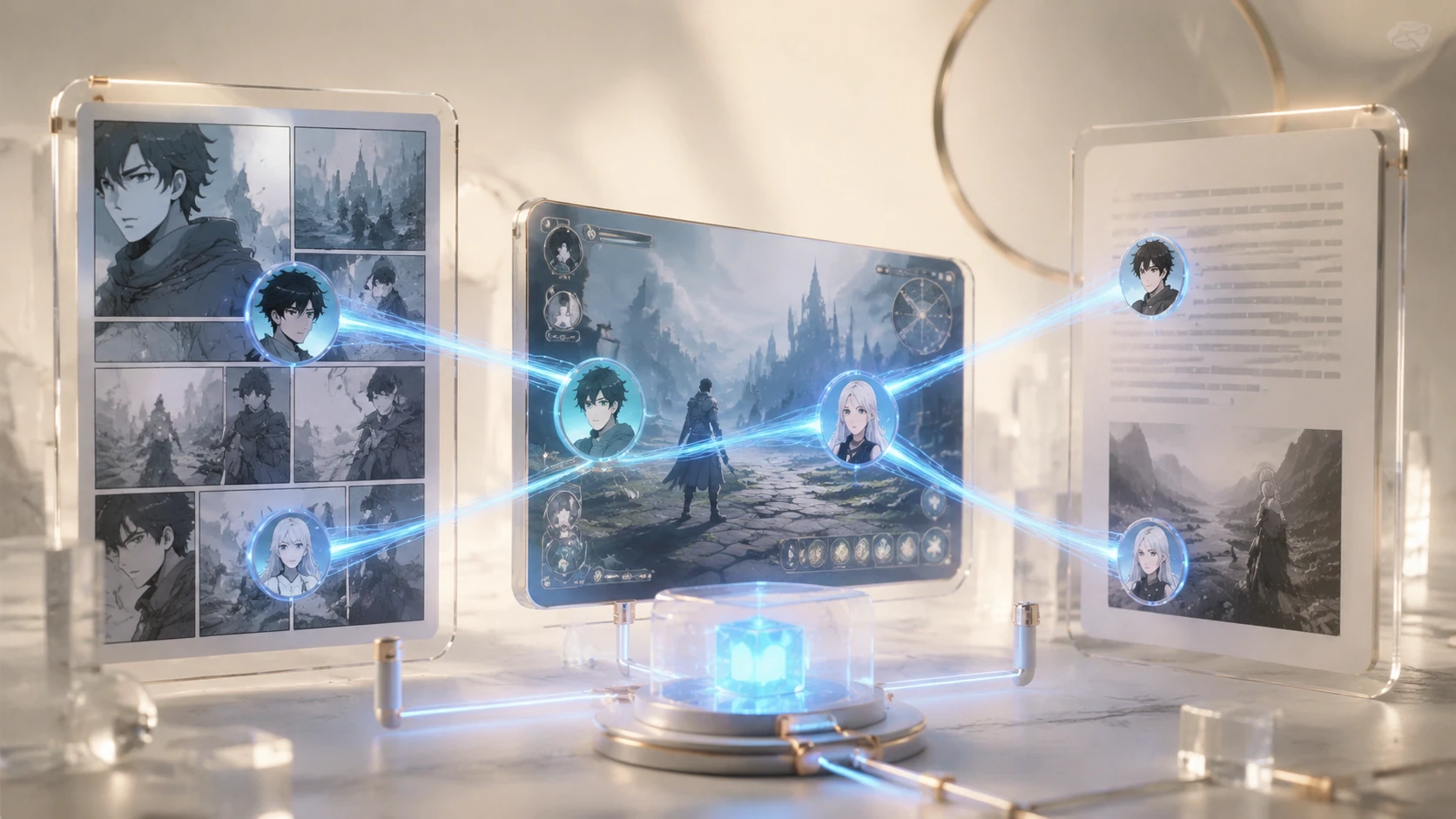
By 2026, the concept of a standalone webtoon or a singular manga series has evolved into the 'Multi-App IP' ecosystem. Readers no longer consume stories in isolation; they move fluidly between a vertical-scroll comic on one app, a companion narrative-driven game on another, and perhaps a serialized light novel on a third. The challenge for 2026 creators is no longer just 'content creation,' but 'state management.' The 2026 Narrative Persistence Standard (NPS) addresses this by providing a technical and creative framework for ensuring that a character’s growth, lore discoveries, and world-state remain consistent across every digital touchpoint. Without NPS, the user experience becomes fragmented, leading to 'narrative dissonance' that kills retention and devalues the IP. This article explores how to architect stories that remember the reader's journey across the entire platform ecosystem.
Defining the Narrative Persistence Standard (NPS)
Narrative Persistence is the ability of an intellectual property to maintain a synchronized 'source of truth' regarding its plot and character states across different media formats. In the 2026 market, if a reader unlocks a secret backstory in a webtoon, the companion RPG app should recognize that event. This isn't just about 'cross-promotion'; it’s about 'cross-contextualization.' The NPS framework relies on a centralized lore-graph that acts as a dynamic database. When a reader interacts with Chapter 50 of a comic, a 'state-flag' is updated in the IP's cloud registry. This flag then modifies the dialogue options in the mobile game or changes the descriptive text in the companion novel, creating a truly living universe.
The Three Pillars of Persistence
- Entity Consistency: Ensuring character attributes, visual motifs, and power levels remain identical across formats.
- Lore Synchronization: Using a shared database to prevent 'lore drift' where a novel contradicts a comic panel.
- User-State Portability: Allowing a reader's progress or choices in one medium to trigger rewards or narrative branches in another.
The Architecture of Cross-Format Continuity
Implementing NPS requires a shift from 'format-first' writing to 'data-first' world-building. In 2026, studios are moving away from writing separate scripts for comics and games. Instead, they develop a 'Master Narrative Schema.' This schema defines every entity (characters, items, locations) as a unique data object. When a writer updates a character’s age or emotional state in the Master Schema, every connected app pulls that data via a Narrative API. This ensures that the visual design and the personality traits of the hero remain perfectly aligned, regardless of whether the reader is seeing them in a 2D panel or a 3D game environment. This architecture drastically reduces the cost of multi-platform expansion by eliminating the need for manual lore-auditing.
Strategic Benefits: Why Persistence is the 2026 Growth Engine
The primary driver for adopting the Narrative Persistence Standard is the massive increase in Lifetime Value (LTV). When a story feels persistent, the reader feels a sense of 'narrative ownership.' They aren't just reading a comic; they are participating in a world that responds to them. This creates a high-friction barrier to exit; readers are far less likely to abandon an IP when their progress is acknowledged across multiple apps. Furthermore, NPS allows for 'Contextual Monetization.' A reader who has just finished a high-tension arc in a webtoon can be served an offer for a side-story novel that specifically addresses the cliffhanger they just experienced, resulting in conversion rates 4x higher than generic advertisements.
Avoiding the Repetition Trap in Transmedia
One of the greatest risks in cross-format IP is the 'Repeat Content' fatigue. If the novel is simply a prose version of the comic, readers will only choose one. The 2026 NPS framework solves this through 'Complementary Narrative Loops.' In this model, the comic handles the high-action visual beats, while the novel or audio drama handles the internal monologues and deep political world-building. The 'Persistence' layer ensures that these different facets don't just exist side-by-side but actively feed into each other. For instance, a tactical hint hidden in a novel’s description might help a player solve a puzzle in the companion game, creating a rewarding cross-media scavenger hunt that deepens fan engagement.
NPS Implementation Checklist
- Establish a single 'Lore Source of Truth' (CMS for narrative).
- Define 'State Hooks'—points in the story that trigger updates in other formats.
- Audit visual assets for 'Format Elasticity' to ensure characters look consistent in 2D and 3D.
- Develop a unified User ID system to sync progress across different apps.
- Create 'Persistence Rewards' for users who engage with the IP in more than one format.
Conclusion: The Future of Sovereign IP
As we move further into 2026, the ability to maintain a persistent narrative will be the line between a viral 'one-hit wonder' and a multi-decade franchise. The Narrative Persistence Standard is more than a technical specification; it is a promise to the reader that their time and attention in your world matters. By engineering continuity into the very fabric of your IP architecture, you build a resilient, high-retention ecosystem that can withstand the volatility of the platform economy. Creators who master this standard will find themselves at the helm of the most valuable IPs in the digital age, capable of scaling across any new format that the future of technology brings.
FAQ
What is the 2026 Narrative Persistence Standard?
It is a framework for ensuring that character growth, plot developments, and world-states remain synchronized across different formats like webtoons, games, and novels.
Does NPS require building my own apps?
Not necessarily. NPS can be implemented using specialized Narrative APIs that connect different third-party platforms, though a unified ecosystem provides the best results.
How does persistence help with monetization?
By tracking a reader's story progress, you can offer highly relevant, context-aware products or side-stories, leading to much higher conversion rates than traditional ads.