The 2026 ‘Narrative-Led Merchandising’ Case Study: Engineering Physical Value from Digital
This case study deconstructs the 'Prop-to-Product' workflow, demonstrating how integrating physical merchandise into a webtoon's narrative architecture can transform fan engagement into high-margin revenue. Explore the shift from generic stickers to lore-accurate artifacts.
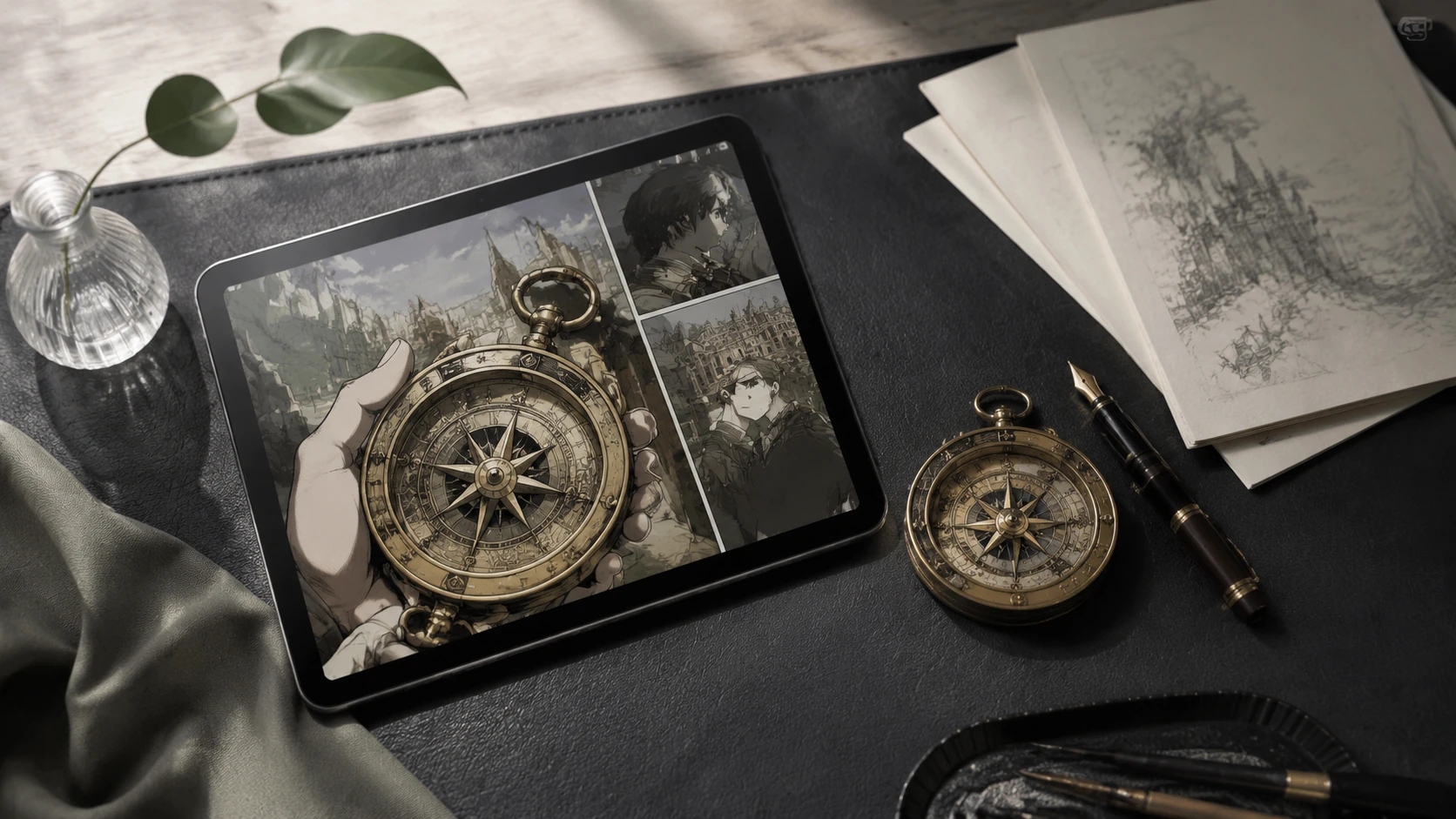
By 2026, the 'digital-only' model for webtoon and manga monetization has reached a saturation point. With millions of chapters available at the swipe of a thumb, the value of digital attention has shifted toward physical permanence. This case study examines Studio Orizon, an independent production house that successfully pivoted from the standard 'Print-on-Demand' sticker model to a sophisticated 'Narrative-Led Merchandising' (NLM) strategy. By treating physical products as extensions of the story—rather than just marketing afterthoughts—Studio Orizon achieved a 215% increase in Average Revenue Per User (ARPU) and a significant boost in long-term IP loyalty. The core of their success lies in 'Prop-to-Product' engineering, a workflow where items are designed for the physical world before they ever appear in a digital panel.
The Challenge: Moving Beyond the 'Sticker and Print' Ceiling
Prior to 2025, Studio Orizon followed the industry standard: they produced a popular webtoon, 'The Obsidian Compass,' and sold generic merchandise like acrylic stands, stickers, and t-shirts. Despite having 2.5 million active readers, their merchandising conversion rate hovered at a meager 0.8%. Readers enjoyed the content but felt no 'collector's urgency' for items that felt disconnected from the emotional core of the narrative. The studio realized that in a high-speed mobile economy, fans weren't looking for 'branded items'; they were looking for 'tangible lore.' The challenge was to bridge the gap between the ephemeral nature of a vertical scroll and the tactile satisfaction of high-end physical artifacts.
The Strategy: The 'Prop-to-Product' Framework
Studio Orizon implemented a three-phase framework called NLM (Narrative-Led Merchandising). This approach fundamentally changed how their writers and artists collaborated during the pre-production phase of their second major series, 'Echoes of Aethel.' Instead of designing a world and then asking what could be made into a toy, they engineered the story around 'Narrative Anchors'—objects with high emotional utility.
Phase 1: Narrative Integration (The Seed)
The creative team identified key 'totems' in the story—objects that characters held, gifted, or fought over. For 'Echoes of Aethel,' this was a specific signet ring used by the protagonist. The ring was given a backstory, a unique visual design optimized for actual jewelry manufacturing, and a recurring role in the series' most emotional chapters. By the time the ring was offered for sale, it wasn't a piece of 'merch'; it was a symbol of the reader's journey.
Phase 2: Sensory Alignment
Studio Orizon moved away from cheap plastics. They partnered with artisanal manufacturers to ensure the physical weight, texture, and materials matched the 'in-universe' description. If a cloak was described as 'heavy, rough-spun wool' in the webtoon, the limited-edition physical release used authentic high-GSM wool blends. This 'sensory alignment' created a premium perception that justified a 3x price premium over standard merch.
Implementation: The 'Lore-Drop' Execution
- Interactive Teasing: Items appeared in background panels for 10 chapters before being highlighted in the main plot.
- Scarcity Engineering: Products were released in 'Lore-Drops'—limited quantities tied to specific story milestones.
- QR Integration: Each physical product contained a subtle, narrative-consistent QR code (etched or embroidered) that unlocked an exclusive digital side-story or 'origin chapter' for that specific item.
- Community Validation: Top contributors in the fan-wiki were given 'First-Right-to-Buy' access, rewarding lore-knowledge with physical ownership.
Results and Key Performance Indicators (KPIs)
The results of the 'Echoes of Aethel' launch redefined the studio's business model. Within six months, the following metrics were recorded: a 420% increase in merchandising revenue compared to their previous series, a 12% conversion rate from free readers to physical buyers, and a 95% sell-through rate within the first 48 hours of each Lore-Drop. Most importantly, the Lifetime Value (LTV) of their readers increased by 200%, as physical owners were significantly less likely to churn from the digital subscription, viewing themselves as 'stakeholders' in the universe.
The 2026 Playbook for Independent Creators
For independent creators looking to replicate Studio Orizon’s success, the 2026 playbook requires a shift in mindset. You are no longer just a storyteller; you are a curator of artifacts. Start by auditing your current IP: Which objects do your fans talk about most? Can those objects be manufactured with high fidelity? Avoid the temptation to slap your logo on every generic item. Instead, focus on one high-quality 'Hero Prop' that embodies the soul of your narrative. In the age of AI-generated digital abundance, the physical, the heavy, and the lore-accurate are the ultimate trust signals.
FAQ
What is Prop-to-Product engineering?
It is a workflow where physical merchandise is designed and prototyped before it appears in the comic, ensuring the digital representation is accurate to a manufacturable physical object.
Does this work for small indie creators?
Yes. By focusing on small-batch, high-quality 'lore-drops' instead of mass-market items, indie creators can maintain high margins and deep fan engagement without massive upfront costs.
How do you choose which object to turn into merchandise?
Select 'Narrative Anchors'—objects that have high emotional weight in the story, are visually distinct, and have a clear tactile or sensory appeal.