The 2026 Narrative Heatmap Teardown: How Data-Led Pacing Saved a Tier-1 Webtoon Series
Discover how a major 2026 webtoon studio used granular scroll-depth analytics to identify narrative friction and pivot their storytelling strategy. This case study reveals the power of Narrative Heatmaps in maintaining 90%+ reader retention.
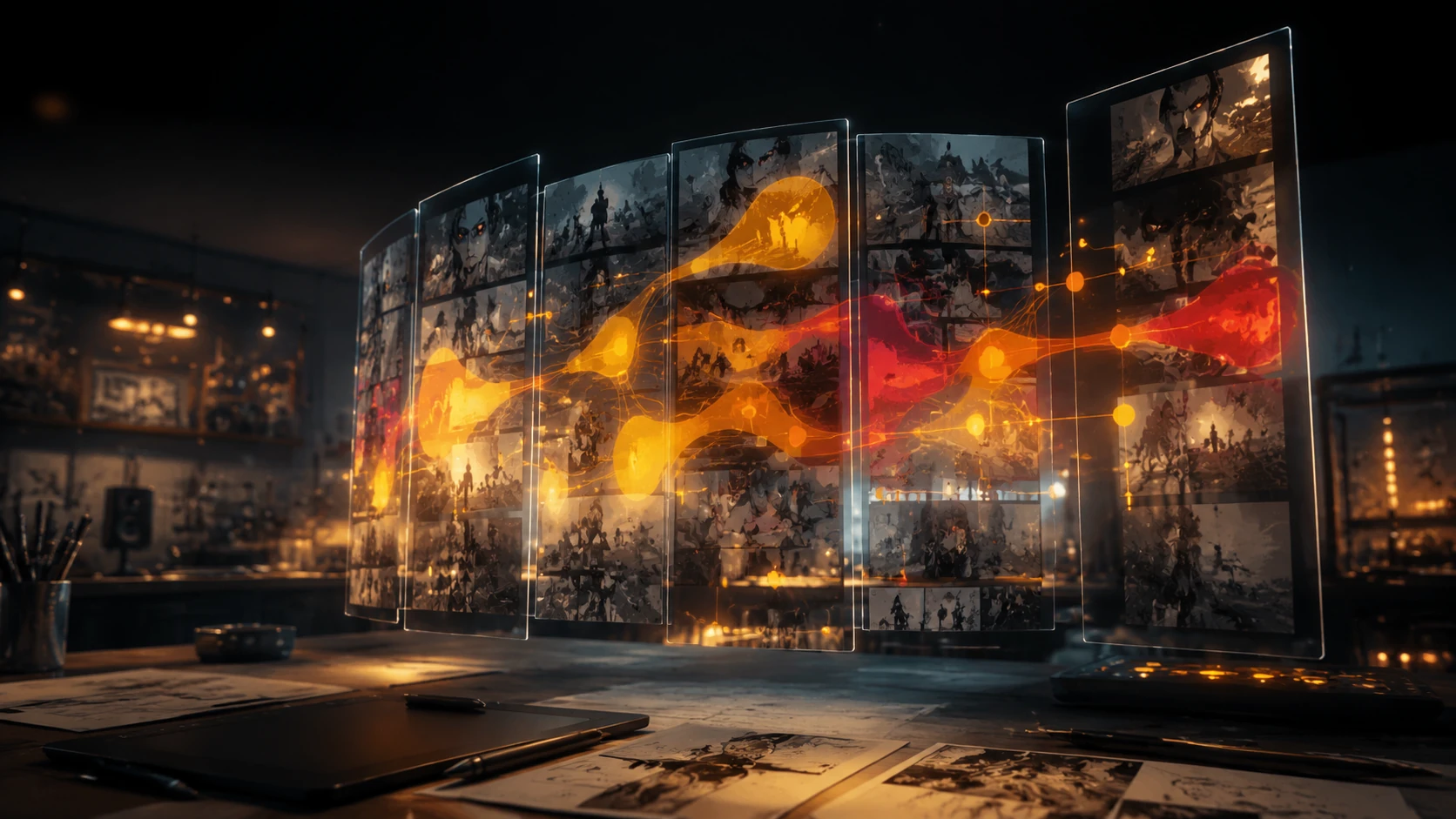
By mid-2026, the 'gut feeling' of an editor has been supplemented by the precision of the Narrative Heatmap. This case study examines the strategic recovery of 'Project Aether,' a high-budget sci-fi webtoon that experienced a critical 35% drop in reader retention between chapters 12 and 15. In the saturated market of 2026, where reader attention is the primary currency, understanding exactly where a reader stops scrolling is no longer a luxury—it is a survival requirement. By leveraging granular scroll-depth analytics and heat-mapping, the production studio was able to diagnose a 'visual friction' issue that traditional editorial reviews had missed, providing a blueprint for data-led narrative recovery.
The Crisis: Identifying the 'Scroll-Wall' Phenomenon
Project Aether launched with significant momentum, but by the second month, the data revealed a disturbing trend. While click-through rates remained high, the 'Narrative Density Metric' showed that readers were abandoning the chapter exactly 60% of the way through. Traditional feedback suggested the plot was 'too slow,' but the heatmap data told a different story. The abandonment didn't happen during dialogue-heavy scenes; it happened during a specific three-panel action sequence. This is what we call a 'Scroll-Wall'—a point where visual or narrative complexity exceeds the reader's cognitive capacity or interest in the mobile-vertical format.
The Heatmap Indicators
- Rapid Scroll Spikes: Indicating readers were skipping dialogue to find action.
- Stall Points: Where readers paused for more than 10 seconds, often due to confusing panel layouts.
- The Exit Signature: A specific pattern of upward scrolling followed by a platform exit, indicating frustration or loss of context.
- Micro-Re-reads: High-density heat on specific panels, suggesting the art or text was too small or unclear for mobile screens.
The Diagnosis: Visual Friction vs. Narrative Slump
Upon deeper analysis of the chapter 14 heatmap, the team discovered the 'Visual Friction' was caused by a experimental double-spread panel that had been rotated 90 degrees. In 2026, while foldable devices are common, 80% of the audience still reads on standard vertical slabs. The heatmap showed that readers were stalling at the rotation point, attempting to tilt their device, losing their place in the infinite scroll, and subsequently exiting the app. The problem wasn't the story; it was the UI of the narrative itself. This insight allowed the studio to pivot without firing the lead writer or changing the plot arc.
The Intervention: The 48-Hour Narrative Patch
Using the 2026 Technical Retrofitting workflow, the studio performed a 'live patch' on the underperforming chapters. This involved three key steps: first, the vertical pacing was adjusted by adding 500 pixels of white space between high-intensity panels to lower the cognitive load. Second, the rotated panels were re-composited into a vertical 'cascading' layout. Third, the studio introduced 'Engagement Anchors'—small, high-contrast visual cues at the 50% and 75% marks of the chapter to re-engage the reader's eyes.
Results: Achieving the 92% Retention Gold Standard
Within three weeks of the narrative patch, Project Aether’s retention metrics stabilized and then climbed. The 'Exit Signature' at Chapter 14 vanished, replaced by a smooth, consistent heat gradient throughout the episode. More importantly, the 'Dopamine Spike' at the end of the chapter—measured by the number of readers who immediately clicked 'Next' or engaged with the comments—increased by 40%. The series transitioned from a potential cancellation to a Tier-1 asset, proving that in 2026, a studio's most valuable editor is often a data scientist working in tandem with the creative director.
The 2026 Heatmap Playbook for Creators
For independent creators and mid-sized studios, the lesson from Project Aether is clear: narrative is no longer a static product. It is a dynamic service that must be optimized based on user behavior. By implementing early-warning systems for reader drop-offs, studios can save millions in lost IP value. The 2026 standard for high-retention webtoons involves weekly heatmap audits and the willingness to adjust layouts—and even narrative beats—in response to how the audience actually consumes the content on their screens.
FAQ
What is a Narrative Heatmap in 2026?
A Narrative Heatmap is a visual data representation of reader engagement on a vertical scroll platform, showing exactly where readers pause, skip, or exit a chapter.
Can I access heatmap data as an independent creator?
Yes, by 2026, most major sovereign publishing platforms and specialized analytics plugins for COMICLS offer granular scroll-depth data to creators.
Does data-driven editing kill creative freedom?
No; it informs the 'delivery' of the creativity. It helps ensure your artistic vision isn't lost to technical friction or poor mobile UX.