The 2026 Narrative Equity Shift: Why Investors are Prioritizing Story Architecture over Vi
The comic industry is witnessing a massive valuation shift where 'Narrative Equity'—the structural integrity of a story—is outperforming pure visual aesthetics in investor portfolios. As generative tools commoditize art, the logic and depth of the lore have become the primary assets for long-term IP
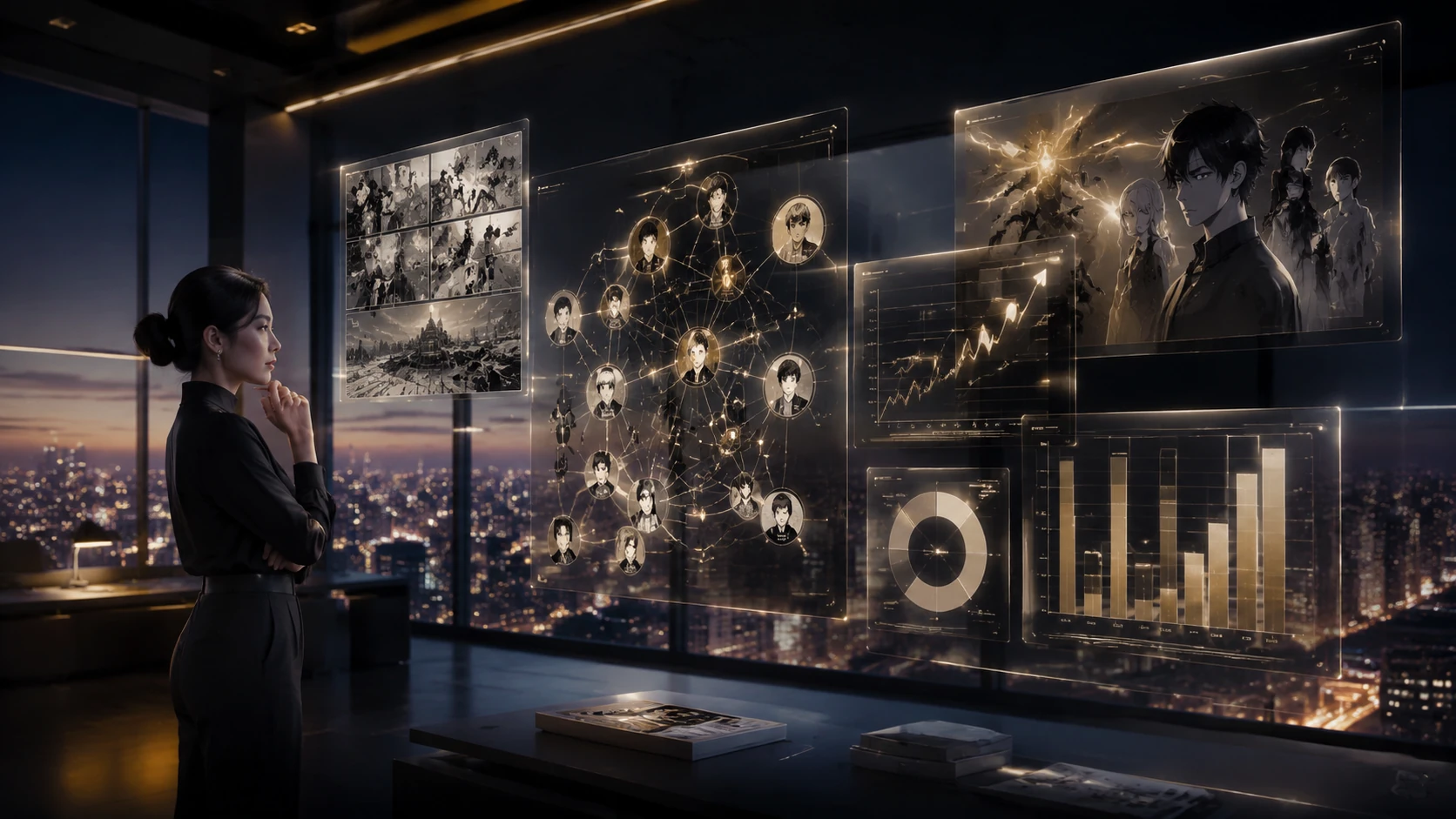
By mid-2026, the comic and webtoon industry has reached a critical inflection point. For decades, the visual 'wow factor' was the primary gatekeeper for IP acquisition and reader retention. However, as generative AI and high-speed production tools have effectively commoditized visual polish, the market's center of gravity has shifted. Investors, studios, and streaming platforms are now looking past the surface aesthetics to measure what we call 'Narrative Equity.' This metric evaluates the structural integrity, lore depth, and character resilience of a story—elements that cannot be easily replicated or automated. In this new landscape, a visually stunning but narratively thin series is considered a 'depreciating asset,' while a robustly architected narrative is the ultimate blue-chip investment.
Defining Narrative Equity in the Age of Generative Abundance
Narrative Equity is the inherent value of a story’s intellectual property, independent of its medium or visual execution. In 2026, this value is quantified through the 'Story Architecture'—the logic, consistency, and emotional resonance that allow an IP to survive across multiple formats (webtoons, games, films, and AR). Because visual styles can now be 'swapped' or upgraded with relative ease, the underlying narrative logic is the only part of the IP that remains truly scarce. Investors are increasingly moving away from 'Visual-First' assets, which are prone to rapid saturation, and toward 'Architecture-First' IPs that offer long-term transmedia potential.
Key Components of Narrative Equity
- Lore Interoperability: How well the world-building adapts to different game mechanics or cinematic structures.
- Character Psychological Depth: The complexity of character motivations that drive high-LTV (Life Time Value) fan engagement.
- Plot Resilience: The ability of the core story to withstand branching paths or spin-offs without breaking internal logic.
- Emotional Proprietary Beats: Unique narrative 'hooks' that define the brand's identity and emotional 'flavor'.
The Investor Shift: Why Visual Polish is Now a 'Baseline,' Not a 'Premium'
In the 2026 market, high-quality art is no longer a competitive advantage; it is the entry fee. With the 'Asset-Modular' and 'Vector-Native' shifts we've seen earlier this year, producing professional-grade visuals has become significantly cheaper and faster. Consequently, venture capital firms and IP aggregators have adjusted their valuation models. They no longer ask 'How good does this look?' but rather 'How deep does this go?' A series with millions of views but shallow narrative hooks is now viewed as a 'viral flash,' whereas a series with a smaller, high-intent community built around complex lore is valued at a 4x premium.
The IP Valuation Matrix: Measuring Story Health
Strategic buyers are now using the 'IP Valuation Matrix' to benchmark potential acquisitions. This matrix looks at three specific axes of narrative health: Scalability, Friction, and Retention. Scalability measures how many 'narrative nodes' exist for spin-offs. Friction measures how much the story relies on specific visual gimmicks (which age poorly) versus universal themes. Retention measures the 'Sunk-Cost' of the reader—how much lore they have had to learn, which acts as a barrier to leaving the fandom ecosystem.
The Risk of 'Narrative Entropy'
One of the biggest red flags for investors in 2026 is 'Narrative Entropy'—the tendency for long-form stories to lose logic and emotional weight over time. IPs that lack a structured 'Narrative Equity' foundation often suffer from plot drift and character dilution, leading to a sharp drop in valuation after the second or third year of serialization. To combat this, boutique studios are now hiring 'Narrative Architects' to oversee the long-term structural integrity of their scripts before the first panel is even drawn.
Strategic Implications for Independent Comic Studios
For independent creators and boutique studios, the 2026 Narrative Equity shift is a massive opportunity to compete with larger platforms. While major platforms often prioritize 'Safe Genres' and algorithmic visual trends, indie studios can win by building 'Deep-Lore' premiums. By focusing on narrative density and intellectual complexity, small teams can create IPs that are more 'defensible' against AI-generated clones. The goal is to create a story so structurally unique that it cannot be 'prompted' into existence by a competitor.
- Audit your story logic for 'Lore Gaps' before seeking investment.
- Create a 'Transmedia Bible' that proves your narrative can function as a game or series.
- Focus on 'Character Sovereignty'—building characters with unique psychological profiles that drive the plot, rather than being driven by it.
Conclusion: Building for 2030 and Beyond
As we move further into the decade, the distinction between a 'content creator' and an 'IP owner' will be defined by Narrative Equity. Visuals will continue to evolve, but the human-centric art of architecture—building worlds that make sense and characters that matter—remains the only true moat in the digital economy. For the forward-thinking creator in 2026, the script is no longer just a blueprint for the art; it is the most valuable financial asset in the studio.
FAQ
What is Narrative Equity in the 2026 comic market?
Narrative Equity is the intrinsic financial and strategic value of a story's structure, lore, and character depth, independent of its visual style. It is the primary metric investors use to value comic IP in an era where high-quality visuals are commoditized.
Why are investors moving away from visual-first comics?
Because AI and automation have lowered the barrier to producing high-quality art, visual polish is no longer a scarce asset. Investors now prioritize narrative architecture because it is harder to replicate and essential for transmedia adaptation (games, movies, etc.).
How can I increase the Narrative Equity of my webtoon?
Focus on world-building logic, character psychological depth, and transmedia scalability. Create a comprehensive 'IP Bible' that documents your lore and proves the story can survive in different formats without losing its core identity.