The 2026 Narrative Cohesion Index (NCI): Engineering IP Consistency for Multi-Series Unive
Discover how the 2026 Narrative Cohesion Index (NCI) provides a quantitative framework for maintaining story integrity across complex, multi-series comic universes. Learn to prevent 'canon drift' and maximize IP value through rigorous thematic and logical anchoring.
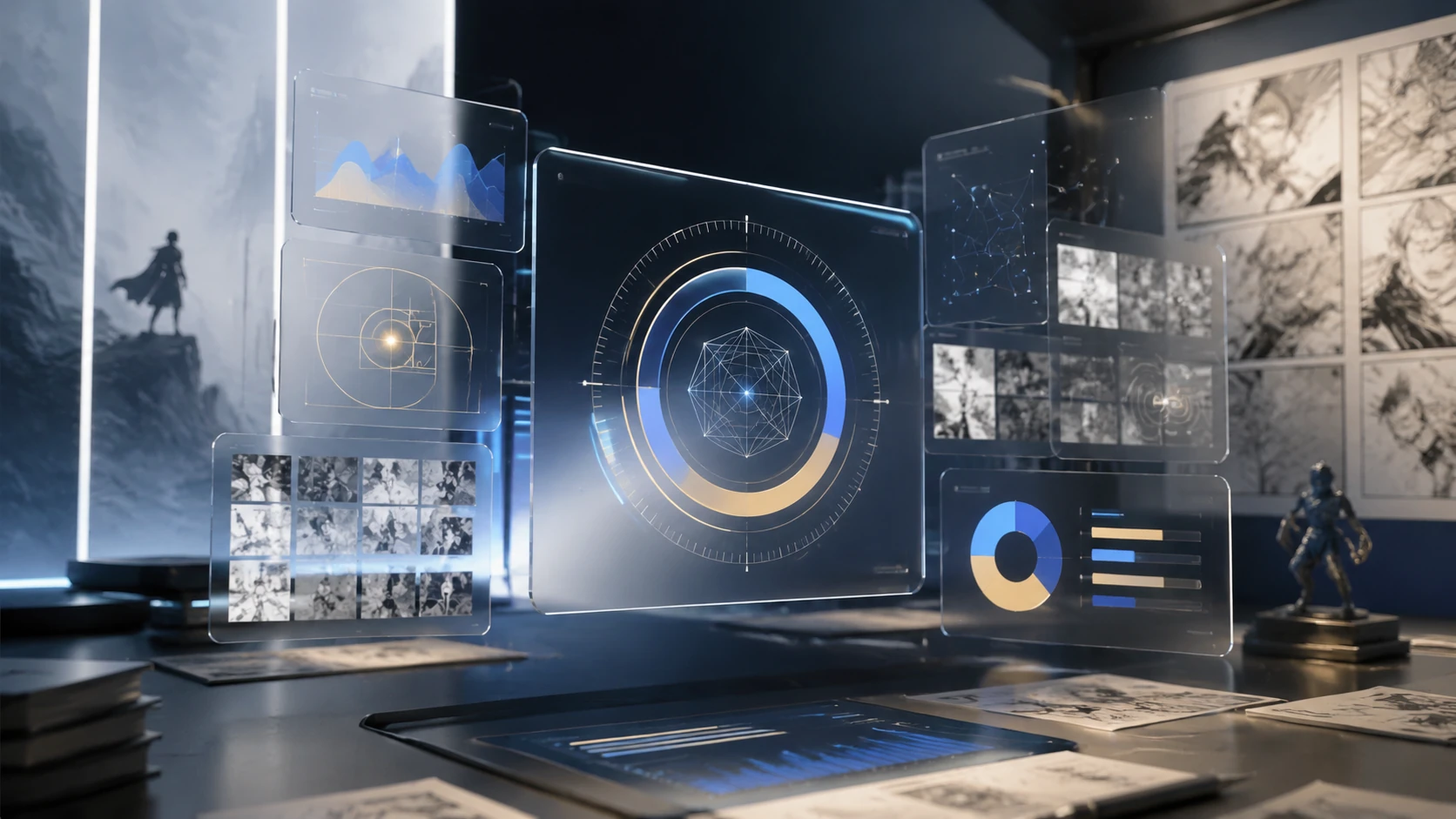
By 2026, the comic and webtoon industry has shifted from individual hit series to massive, interconnected IP universes. As studios rush to capitalize on successful characters through spin-offs, prequels, and cross-media adaptations, a new crisis has emerged: Narrative Drift. When a story expands too quickly across different writers, artists, and platforms, the core 'DNA' of the IP often becomes diluted or contradictory, leading to 'Canon Fatigue' and audience churn. To combat this, the Narrative Cohesion Index (NCI) has become the industry standard for measuring and maintaining the structural integrity of a franchise. NCI is not just a creative guideline; it is a quantitative framework used by publishers, investors, and showrunners to ensure that every new piece of content strengthens the value of the overall IP rather than eroding it through inconsistency.
What is the Narrative Cohesion Index (NCI)?
The Narrative Cohesion Index is a metric-based system designed to evaluate how well a new story installment or spin-off aligns with the established 'Master Lore' of an existing universe. In 2026, major platforms like COMICLS utilize NCI to grade submissions for franchise expansion. The index scores stories on three primary axes: Thematic Resonance, Semantic Logic, and Visual DNA. A high NCI score indicates a 'seamless' expansion where the audience feels the familiar pull of the original IP, even in a different genre or format. Conversely, a low NCI score signals high narrative debt, warning producers that the project may confuse fans or damage the long-term equity of the character assets. By quantifying what was once a subjective feeling of 'vibe,' the NCI allows studios to scale production without losing the soul of their stories.
The Three Pillars of Narrative Cohesion
Achieving a high NCI requires rigorous attention to three distinct dimensions of world-building. These pillars act as the structural supports for any expanding franchise, ensuring that no matter how far the story travels from its origin, the connection remains unbreakable.
1. Thematic Resonance (The 'Soul' Anchor)
Thematic resonance measures whether the new content upholds the core philosophical questions and emotional stakes of the original IP. If a webtoon series is built on themes of 'sacrifice for family,' a spin-off that celebrates 'unrestrained individualism' without a narrative justification will see its NCI score plummet. In 2026, audiences are highly sensitive to 'theme-washing,' where a brand name is slapped onto a story that feels fundamentally different in its message.
2. Semantic Logic and Physics Persistence
This pillar focuses on the 'rules' of the world. Does magic cost the same in the spin-off as it does in the main series? Are the power levels consistent? Semantic logic involves auditing every script against a Semantic Lore Graph to ensure no plot holes are created. In the age of AI-assisted reading, fans often use automated tools to spot logical inconsistencies across thousands of panels, making logical persistence a critical factor for community trust.
3. Visual DNA (The Aesthetic Language)
Visual DNA is more than just using the same character designs. it refers to the recurring visual motifs, color palettes, and paneling geometries that define an IP's identity. Even if the art style changes (e.g., from a hyper-realistic manhwa to a stylized animation), the NCI tracks whether key visual anchors—such as specific lighting temperatures or architectural styles—remain consistent enough to trigger brand recognition.
The Cost of Low NCI: Narrative Debt and Audience Churn
In the 2026 market, 'Narrative Debt' is treated with the same severity as financial debt. Every time a creator breaks a rule of their own world or ignores a character's established history to solve a short-term plot problem, they accrue debt. Eventually, this debt leads to a 'Continuity Collapse,' where the audience no longer believes in the stakes of the story. Once the 'buy-in' is lost, retention rates drop significantly. Studios now use NCI audits during the pre-production phase to identify these debt-heavy plot points before they are serialized, saving millions in potential rework and preserving the Lifetime Value (LTV) of their readers.
Implementing NCI-Driven Governance in Your Studio
For boutique studios and independent creators, implementing NCI doesn't require complex software—it requires a shift in workflow. The 2026 standard involves creating an 'IP Bible' that is machine-readable, allowing for automated consistency checks during the scripting phase. This governance model ensures that every freelancer or guest artist is working within the same boundaries.
- Establish a 'Lore-Keeper' role: A dedicated editor responsible for the NCI score of every episode.
- Use Semantic Tagging: Tag characters, items, and locations with their 'logic rules' in your script database.
- Thematic Audits: Review every arc to ensure it contributes to the core themes of the franchise.
- Visual Reference Libraries: Maintain centralized, 8K-ready asset libraries to prevent visual drift.
- Community Feedback Loops: Use sentiment analysis to see where the audience feels the 'cohesion' is slipping.
The Role of AI Lore-Guardians in 2026
One of the most significant technological shifts in 2026 is the emergence of AI Lore-Guardians. These are custom-trained Large Language Models (LLMs) that have been fed the entire history of an IP. Writers use these guardians as real-time NCI checkers. If a writer suggests a scene where a character uses an ability they haven't learned yet, the Lore-Guardian flags it immediately. This technological layer has made it possible for massive multi-writer rooms to function with the same cohesion as a single creator, enabling the 'Infinite Franchise' model to thrive without sacrificing quality.
Conclusion: Making Your IP Unbreakable
As we move further into the era of interconnected digital storytelling, the Narrative Cohesion Index will distinguish the legacy franchises of the future from the flash-in-the-pan hits of the past. By treating your story's integrity as a measurable asset, you protect your IP from the entropy of rapid expansion. Whether you are a solo creator planning your first spin-off or a studio managing a dozen parallel series, the NCI framework provides the roadmap to an unbreakable, high-value narrative universe.
FAQ
Does a high NCI score mean all my stories have to look the same?
No. NCI measures consistency in 'DNA,' not surface-level style. You can have different art styles as long as the visual anchors (motifs, colors, symbols) and logical rules remain consistent with the core IP.
How is NCI different from a standard Lore Bible?
A Lore Bible is a static reference. NCI is an active measurement framework that evaluates how well new content actually adheres to that bible in practice, often using data-led audits.
Can small creators afford to implement NCI?
Yes. It starts with a mindset shift: treating your story's internal logic and themes as 'non-negotiable' assets and documenting them clearly for any future collaborators.