The 2026 Narrative Bridge: Architecting Webtoons for the Global South Growth Wave
As traditional markets reach saturation, the 2026 comic industry is pivoting toward the Global South. Learn how to architect 'Narrative Bridges' that turn local cultural nuances into global IP success.
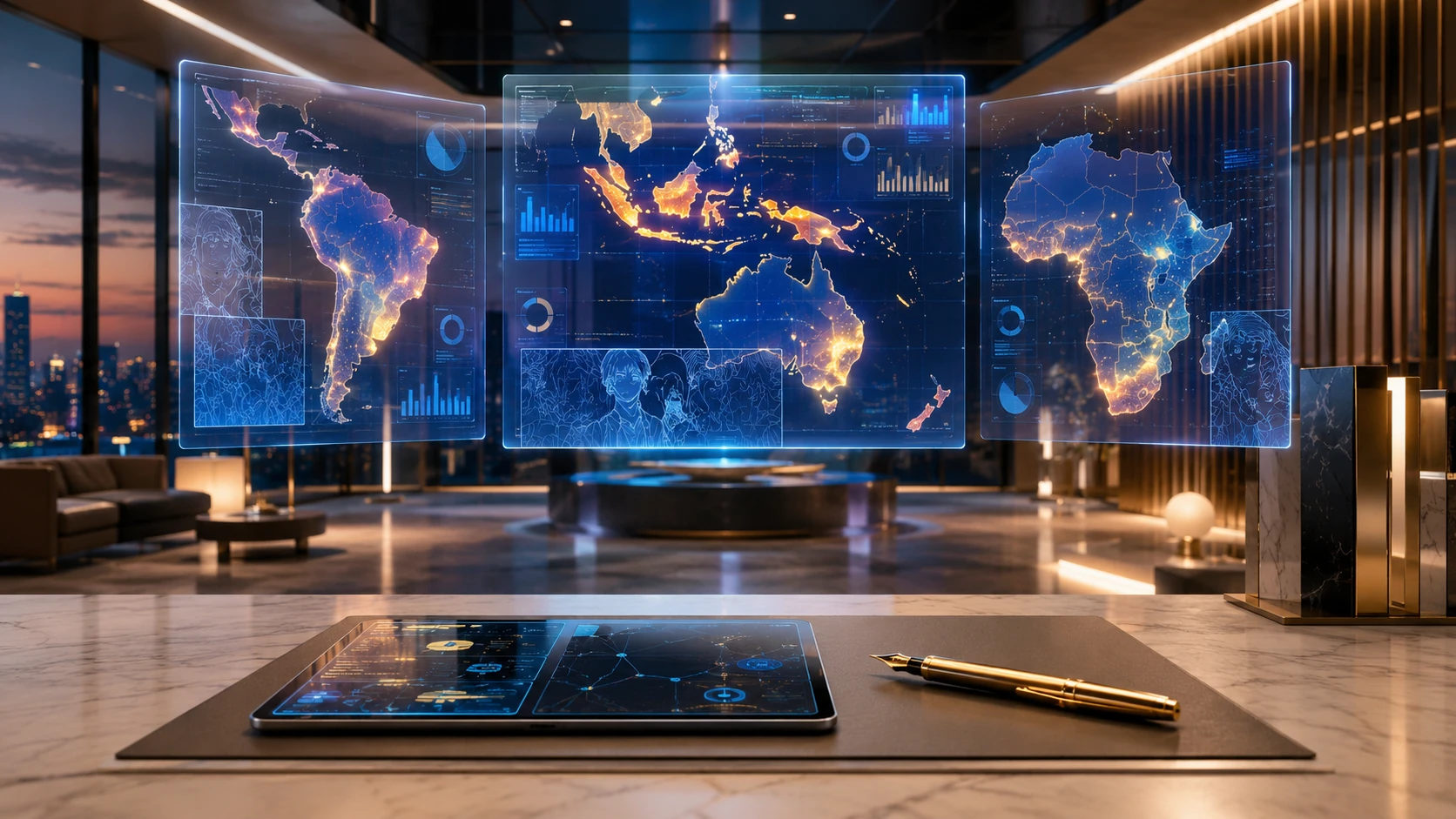
By mid-2026, the global comic landscape has undergone a seismic shift. While the 'Big Three' markets—South Korea, Japan, and the United States—remain influential, they have reached a state of high-competition saturation. The real growth engine has migrated to the Global South, encompassing Southeast Asia (SEA), Latin America (LATAM), and the Middle East and North Africa (MENA). These regions are no longer just consumers of imported content; they are the primary targets for IP architects who understand that simple translation is no longer a viable strategy. The 'Narrative Bridge' has emerged as the essential 2026 framework for publishers looking to capture this high-growth demographic. This isn't just about changing text; it’s about re-engineering stories to resonate with the specific socio-cultural frequencies of billions of new mobile readers.
Beyond Translation: The Rise of Cultural Transcreation
In the 2026 market, 'translation' is viewed as a legacy technical task, while 'transcreation' is the strategic imperative. Transcreation involves the deep adaptation of a story's visual and narrative DNA to ensure it feels 'native' to the target region while maintaining the core IP's integrity. For instance, a romance webtoon originally set in Seoul might require its Narrative Bridge to adjust social etiquette, culinary references, and even color symbolism to succeed in the Brazilian or Indonesian markets. Data from 2025 indicates that transcreated series see a 40% higher retention rate in emerging markets compared to those that only receive a standard language localized version. This process requires a collaborative pipeline between original creators and regional cultural consultants who act as the architects of the bridge.
The Visual Localization Audit
- Architectural Context: Swapping generic urban backgrounds for region-specific landmarks or residential styles to increase reader immersion.
- Symbolic Literacy: Auditing hand gestures, color choices, and clothing styles to avoid cultural taboos and align with local aesthetic preferences.
- Social Dynamics: Adjusting power dynamics in dialogue and character interactions to reflect the hierarchical or egalitarian norms of the target region.
- Religious and Festive Integration: Timing plot points or special episodes to coincide with local holidays (e.g., Ramadan, Lunar New Year, or Carnival) to boost seasonal engagement.
Monetization Nuances in the Global South
The 2026 expansion requires a total rethink of revenue models. High-friction credit card subscriptions often fail in regions with low banking penetration but high mobile-wallet usage. Successful IP owners are now implementing 'Adaptive Monetization,' which utilizes hyper-local payment gateways and micro-transaction models tailored to regional purchasing power parity (PPP). In markets like Vietnam and Nigeria, 'Time-Gated Access' and 'In-Story Rewarded Ads' have proven more effective than the traditional Western 'Fast Pass' model. By lowering the entry barrier for the first three arcs of a series, creators can build a massive, loyal top-of-funnel audience that eventually converts into high-LTV super-fans through localized physical merchandise and community-gated events.
The Role of Hyper-Local Storytelling and Folklore
Perhaps the most significant trend in 2026 is the blending of global storytelling tropes with local folklore. We are seeing the emergence of 'Hybrid Lore,' where standard genres—such as Level-Up Fantasy or Villainess Rebirth—are infused with regional mythology. A Level-Up story based on Filipino 'aswang' mythology or a historical drama set in the Abbasid Caliphate provides a sense of 'narrative ownership' for local readers. This strategy doesn't just win regional markets; it creates a 'novelty premium' for global audiences who are increasingly fatigued by repetitive Western and East Asian tropes. The Narrative Bridge works both ways: it brings global standards to local markets and elevates local stories to the global stage.
Risk Management: Navigation and Compliance
Entering the Global South is not without risks. Narrative architects must navigate complex regulatory environments and varying standards of censorship. In 2026, automated 'Compliance Audits' have become standard in the production pipeline, checking visual assets for compliance with regional laws regarding depiction of sensitive topics. However, the most successful studios go beyond mere compliance; they engage in proactive 'Community Stewardship,' building trust with local creator guilds and fan moderators to ensure the IP is welcomed rather than viewed as a form of cultural extraction. Authenticity is the primary currency of 2026.
FAQ
What is the difference between translation and transcreation in 2026?
Translation converts language word-for-word, while transcreation adapts the narrative's cultural context, visual symbols, and social nuances to resonate deeply with a specific regional audience.
Which regions offer the highest growth for webtoons in 2026?
The Global South—specifically Southeast Asia (Indonesia, Vietnam, Thailand), Latin America (Brazil, Mexico), and the MENA region—shows the highest growth due to young, mobile-first populations.
How do creators handle payment barriers in emerging markets?
By adopting adaptive monetization strategies that prioritize mobile wallets, micro-transactions, and rewarded ad models over traditional credit-card-based subscriptions.