The 2026 'Narrative Arbitrage' Strategy: Identifying Under-Served Emotional Niches in Glob
In a saturated market, 2026's most successful studios are shifting from genre-based production to 'Narrative Arbitrage.' Discover how to identify and fill emotional supply-demand gaps across global webtoon platforms.
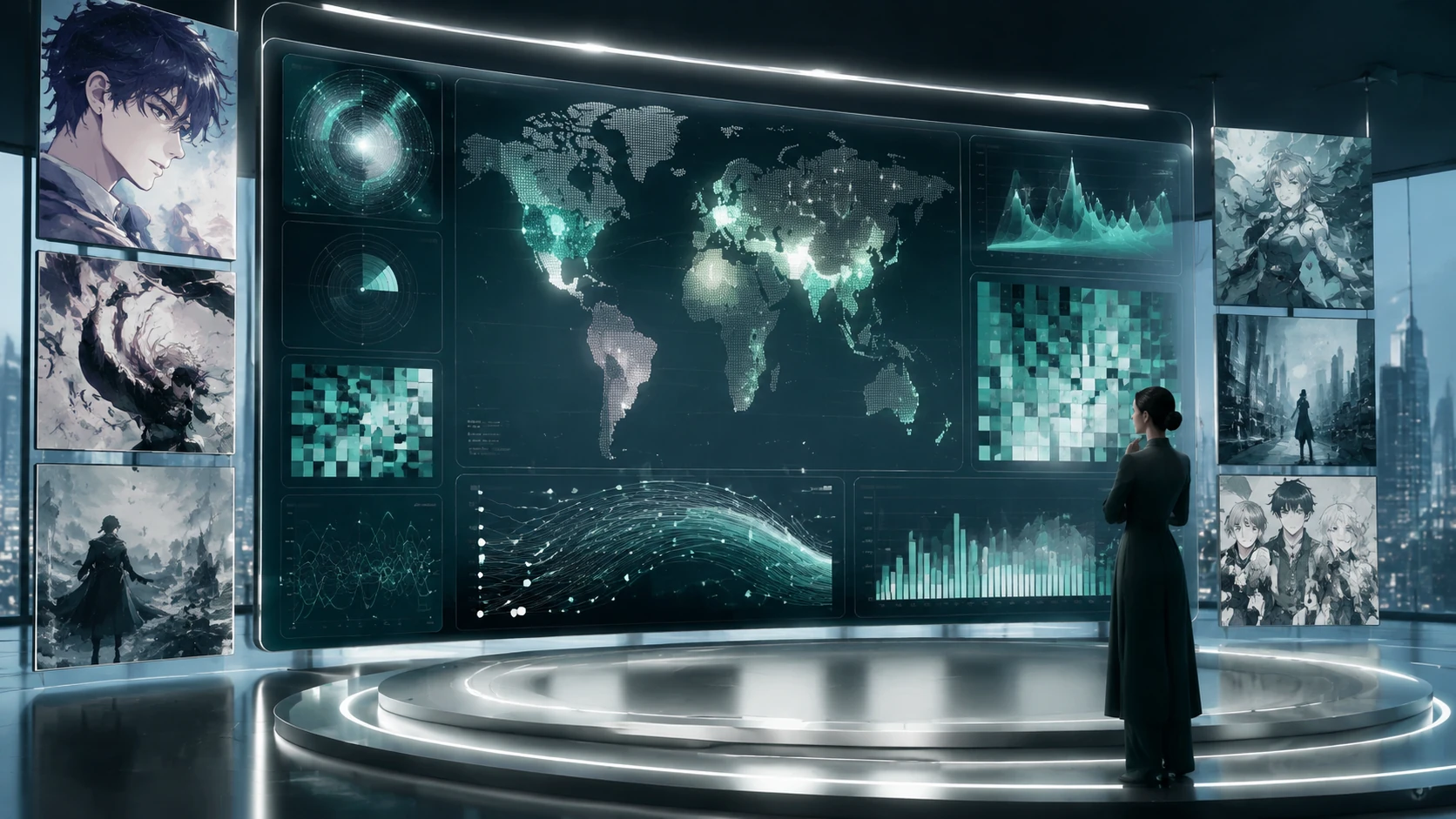
By 2026, the global webtoon and digital comic market has moved beyond the 'genre-saturation' phase. Traditional categories like 'Level-up Fantasy' or 'Office Romance' are no longer sufficient signals for success. Instead, the industry's most profitable studios are employing a strategy known as 'Narrative Arbitrage.' This framework involves identifying specific emotional frequencies—such as 'transient nostalgia' or 'social mobility anxiety'—that have high demand in specific geographic regions but low supply in local content libraries. By treating narrative themes as tradable assets, creators and publishers can bypass the noise of saturated genres and enter markets where they face minimal competition despite a hungry audience.
The Shift from Genre to Emotional Resonance
Historically, publishers looked for 'the next big action hit.' In 2026, the focus has shifted to the underlying emotional payoff. Narrative Arbitrage relies on the fact that while genres are global, emotional needs are often hyper-local and cyclical. For instance, a market experiencing rapid economic shifts might show a high semantic search volume for 'reclamation of agency' stories, which current local top-tier titles might be neglecting in favor of escapist comedy. Identifying this gap allows a studio to 'arbitrage' a story from a different culture or create one from scratch that specifically hits that emotional note.
- Sentiment Gap Analysis: Using AI to scan reader comments and reviews to find 'unmet emotional expectations' in top-ranking series.
- Cross-Border Lore Porting: Taking a narrative structure that worked in one region (e.g., Brazilian 'Saudade' themes) and adapting the visual skin for a South Korean or North American market.
- Predictive Cycle Mapping: Identifying upcoming cultural shifts (e.g., post-digital burnout) and producing content that serves that emotional need 6-12 months before it peaks.
How to Conduct a Narrative Arbitrage Audit
Executing Narrative Arbitrage requires a move away from 'gut-feeling' storytelling toward data-informed creative direction. The process begins with a 'Supply-Demand Emotional Heatmap.' In 2026, semantic discovery tools allow publishers to see not just what people are reading, but the 'vibes' they are searching for. If the search intent for 'found family' is rising by 40% month-over-month, but the top 100 titles are dominated by 'solo revenge,' a massive arbitrage opportunity exists.
Step 1: Semantic Intent Mapping
Analyze search queries that aren't titles. Look for phrases like 'stories that feel like a rainy afternoon' or 'webtoons about overcoming corporate loneliness.' These high-intent, long-tail queries reveal the true emotional hunger of the reader base. In 2026, Google’s helpful content systems prioritize this kind of intent-matching over simple keyword optimization.
Step 2: Competitive Density Evaluation
Once a target emotion is identified, audit the current 'top 50' on major platforms like Webtoon, Tapas, or Kakao. If the target emotion is present in fewer than 5% of those titles, the market is 'under-served.' This is the 'Arbitrage Zone.' Entering this zone significantly lowers your Cost Per Acquisition (CPA) for new readers because you are providing the only solution to their specific emotional craving.
Risk Management: Avoiding 'Cultural Dissonance'
The primary risk of Narrative Arbitrage is cultural dissonance—importing a narrative theme that feels 'off' to the local audience. To mitigate this, 2026 studios use 'Localization 2.0,' which involves more than just translating text. It involves 'Cultural Transposition,' where the underlying emotional arc remains the same, but the social triggers, etiquette, and environmental cues are rebuilt from the ground up for the target market. A story about 'social shame' in Japan requires a very different narrative architecture than one about 'social shame' in the United States, even if the core arbitrage opportunity is the same.
The Role of AI in Narrative Arbitrage
In 2026, AI is the primary engine for identifying these gaps. Large Language Models (LLMs) trained on global narrative databases can now identify 'structural tropes' that are over-represented in specific languages. By comparing these datasets, studios can find 'lost tropes'—narrative devices that were popular 20 years ago or are popular in other mediums (like theater or classic literature) but haven't yet been exploited in the vertical scroll format. This 'Medium Arbitrage' is a secondary layer of the strategy that allows for rapid IP innovation.
Future Outlook: The Fragmented Market Era
As we move further into 2026, the 'blockbuster' model is being replaced by a 'portfolio of niches.' Narrative Arbitrage allows small and mid-sized studios to thrive by owning 80% of a small, high-intent emotional niche rather than 0.1% of a mass-market genre. This shift is empowering independent creators to use data as a shield against platform monopolies, ensuring that their stories find the exact audience that needs them most.
FAQ
What is the difference between trend-chasing and narrative arbitrage?
Trend-chasing is entering a market after it has already peaked (high supply). Narrative arbitrage is identifying a psychological or emotional need that is rising but currently has low content supply.
Does this strategy work for solo creators?
Yes. Solo creators can use narrative arbitrage to find 'blue ocean' niches where they can build a loyal fanbase without competing with high-budget studio marketing.
Which regions offer the best arbitrage opportunities in 2026?
Currently, Southeast Asia and Latin America show the highest 'emotional gaps' where readers are looking for specific modern-life narratives that aren't yet fully served by imported K-webtoons or Manga.