The 2026 Narrative Anchor Framework: Engineering Iconic Visual Motifs for IP Recognition
In an AI-saturated market, 'Narrative Anchors' are the visual signatures that define your IP's identity. This framework explains how to engineer recurring motifs that boost reader memory and search engine relevance.
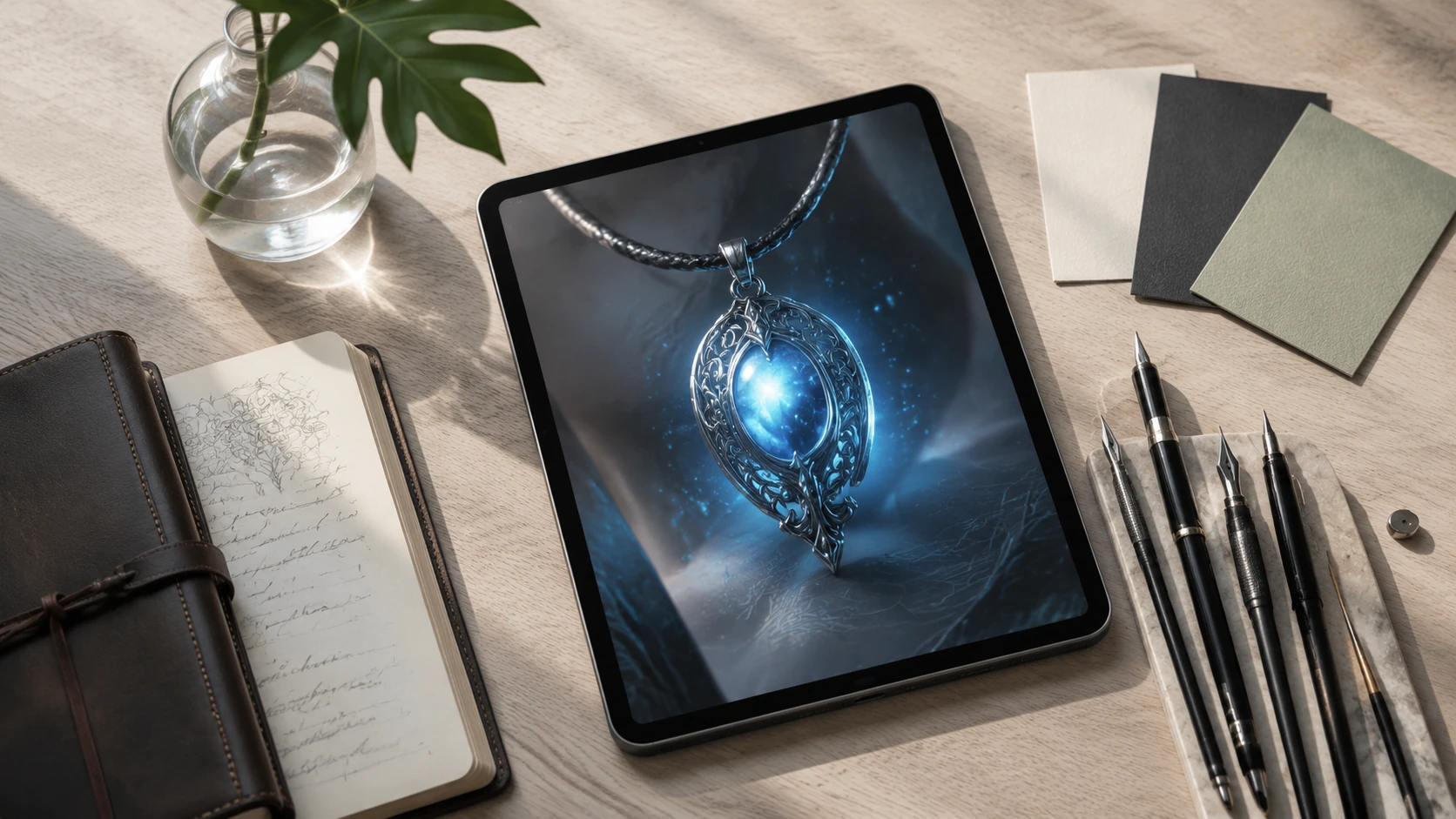
By 2026, the global comic and webtoon market has moved past the 'content volume' era into the 'entity recognition' era. With AI-assisted production flooding platforms with technically proficient but often visually generic series, creators face a new challenge: how to remain memorable in a sea of infinite scrolling. The 2026 Narrative Anchor Framework addresses this by treating visual motifs not just as artistic choices, but as structural 'anchors' for your IP’s identity. These anchors are specific, recurring visual elements—ranging from unique artifacts to color signatures—that serve as the primary cognitive link between a reader and your story. In a world where AI discovery engines now index visual assets as semantic entities, these anchors are also critical for search visibility, allowing your work to be identified and categorized by its unique visual DNA rather than just its genre tags.
The Anatomy of a Narrative Anchor
A Narrative Anchor is defined as a high-frequency visual motif that maintains its symbolic meaning and aesthetic consistency throughout a series. Unlike general character designs, an anchor is engineered to be 'extractable.' It is something a reader could sketch from memory or recognize instantly in a thumbnail, even without seeing the main character's face. In the 2026 landscape, we categorize these into three primary tiers: Object Anchors, Environmental Anchors, and Chromatic Anchors. Each serves a different psychological function, from driving the plot forward to establishing a specific emotional atmosphere that acts as a brand signature.
Tier 1: Object Anchors (The Physical Entity)
- Unique Artifacts: A specific weapon, a piece of jewelry, or a recurring mundane object with a distinct silhouette (e.g., a cracked porcelain tea cup).
- Symbolic Persistence: The object must appear in at least 60% of chapters to build strong neural associations.
- Licensing Potential: High-quality anchors are designed with physical merchandise or 3D licensing in mind from day one.
Why Visual Entities Outrank Genre Tags in 2026
Modern search engines, including Google’s visual-first AI and platform-specific discovery tools, no longer rely solely on keywords like 'fantasy manga' or 'romance webtoon.' Instead, they utilize Computer Vision (CV) to map 'visual entities.' If your series consistently features a specific architectural style or a recurring runic language, the AI identifies these as unique identifiers. This creates a 'Visual SEO' effect. When readers search for 'stories with floating steampunk cities,' a series that has engineered a consistent 'City Anchor' will rank higher because its visual metadata is more coherent and recognizable to the machine. This shift makes the Narrative Anchor Framework a vital part of a series' technical growth strategy, ensuring the IP is discoverable in an environment where text-based metadata is increasingly saturated and less effective.
Step-by-Step: Implementing the Anchor Framework
Integrating anchors into a webtoon requires strategic planning during the pre-production phase. It is not enough to simply have a recurring item; it must be woven into the narrative's visual grammar. Creators should start by identifying the core emotional theme of their story and translating that into a physical or visual shorthand. For example, a story about 'isolation' might use a recurring anchor of 'vertical blue light' or 'geometric glass structures' that appear whenever the protagonist is most vulnerable.
- Phase 1: Silhouette Audit. Ensure your primary anchor has a distinct silhouette that remains recognizable at 100px width (mobile thumbnail size).
- Phase 2: Semantic Tagging. In your production notes and AI-assisted workflows, consistently tag the anchor with unique descriptors to reinforce its identity in the metadata.
- Phase 3: Emotional Anchoring. Place the anchor in scenes of high emotional intensity to 'burn' the image into the reader's memory.
- Phase 4: Consistency Check. Use style-consistency tools to ensure the anchor's color, texture, and lighting remain uniform across different artists or assistants.
Common Mistakes: Over-Cluttering vs. Under-Utilizing
The most common failure in visual branding is 'Anchor Friction'—introducing too many unique symbols at once. This dilutes the reader's attention and confuses the AI's entity mapping. A successful 2026 IP typically focuses on one primary 'Hero Anchor' and two secondary 'Support Anchors.' Another mistake is under-utilizing the anchor in the first three chapters. Because 2026 retention data shows that readers decide to commit to a series within the first 45 seconds of scrolling, the primary anchor must be established immediately to create that crucial first 'memory hook' that leads to a subscribe action.
The Future of Visual IP: Anchors as Data
As we move further into the decade, Narrative Anchors will serve as the bridge between 2D webtoons and immersive 3D/AR experiences. By building a series around a robust Narrative Anchor Framework, creators are effectively creating a 'World Bible' of modular assets that are ready for the next era of storytelling. These anchors become the assets that fans collect, the filters they use on social media, and the search signals that keep an IP relevant long after the final chapter is published. In the 2026 economy, your story is your hook, but your anchor is your legacy.
FAQ
What is the difference between a character design and a Narrative Anchor?
A character design is the overall look of a person, while a Narrative Anchor is a specific, repeatable visual motif (like an object or color scheme) that can exist independently of the character to represent the IP.
How many anchors should a new webtoon series have?
Ideally, one 'Hero Anchor' (the most iconic) and two 'Support Anchors.' Having too many can clutter the visual identity and confuse AI discovery engines.
Can a color palette be a Narrative Anchor?
Yes. In the 2026 framework, this is a 'Chromatic Anchor.' It involves using a specific, non-standard color combination consistently to define the mood and brand of the series.