The 2026 Multi-Ending Architecture: Engineering Branching Narratives for Vertical Scroll W
Discover how the 2026 Multi-Ending Architecture is transforming linear webtoons into interactive, choice-driven experiences. Learn to design branching paths that maximize reader retention and IP value.
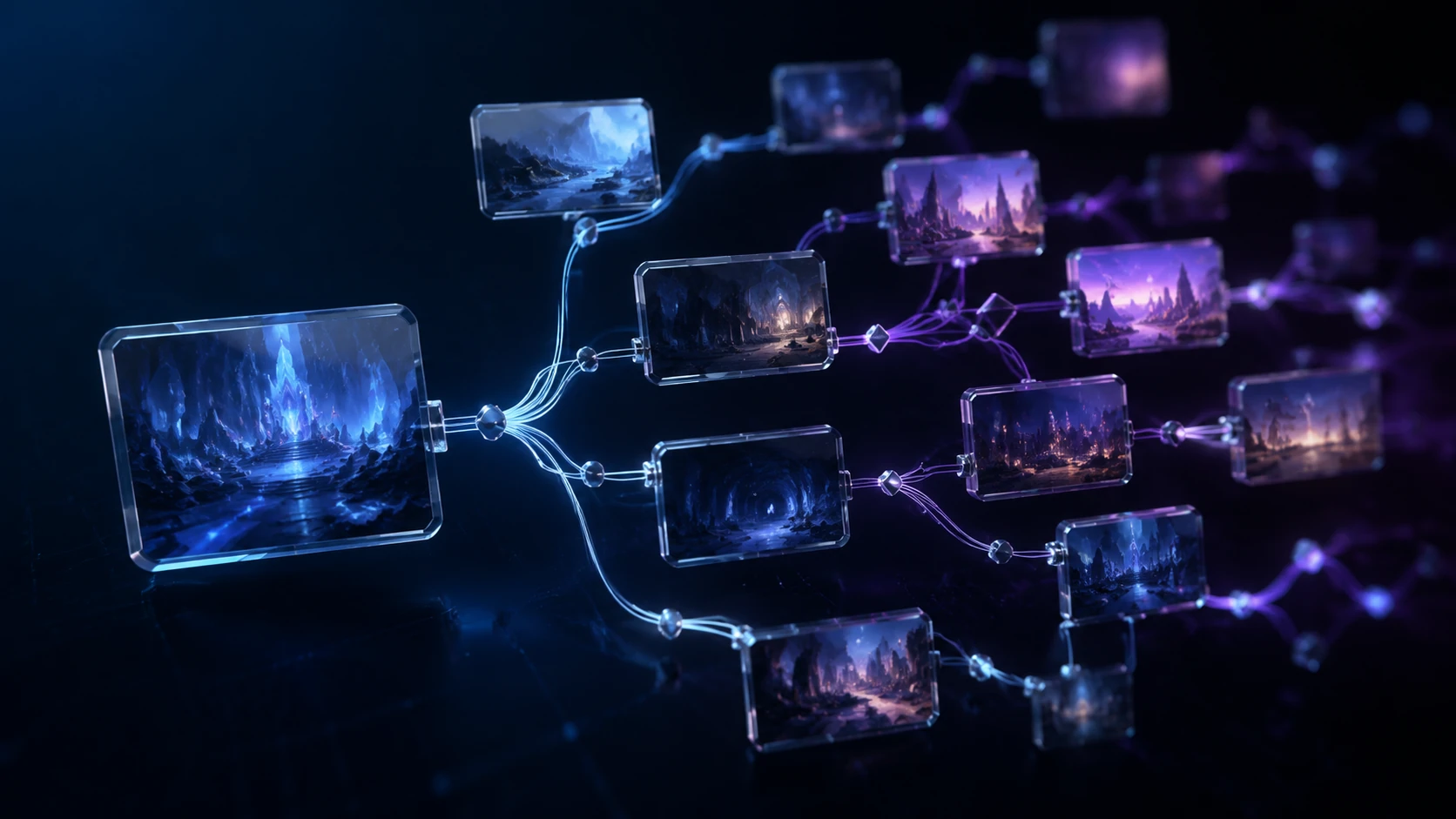
By mid-2026, the traditional linear 'infinite scroll' has evolved into a dynamic, multi-pathed experience. As readers increasingly demand agency and personalized experiences, the industry has shifted toward the 'Multi-Ending Architecture' (MEA). This framework allows creators to move beyond a single story thread, offering readers critical decision points that alter character fates, world-building outcomes, and visual climaxes. Unlike traditional gaming, which often sacrifices narrative depth for mechanics, the 2026 MEA for webtoons prioritizes visual continuity and emotional resonance. This shift is not merely a trend; it is a response to a saturated market where 'replayability' and community-led theory-crafting have become the primary drivers of long-term IP value and platform retention.
The Core Logic of Branching Scroll Narratives
Designing a branching webtoon requires a fundamental rethink of vertical pacing. In a linear scroll, every panel leads to the next. In an MEA structure, panels must be engineered as 'modular units' that can seamlessly transition regardless of the reader's previous choices. This involves creating 'Decision Panelling'—high-impact visual moments where the scroll speed slows, and the UI presents the reader with a divergence. The logic is handled through 'Narrative State Tracking,' where the platform remembers reader choices to serve the correct subsequent assets. To maintain production efficiency, creators utilize 'Narrative Funnels,' where diverse paths occasionally merge back into a 'Golden Path' before diverging again for the finale.
Variable State Tracking and Logic Gates
- Binary Choice Gates: Simple 'Yes/No' decisions that lead to immediate visual variations.
- Accumulative State Gates: Hidden variables based on multiple interactions (e.g., a character's 'Trust Meter') that unlock a secret true ending.
- Visual-Only Variations: Subtle changes in background or character expression that don't alter the plot but increase immersion.
- Hard Divergence: Entirely unique chapters that cater to different reader archetypes (e.g., Romance vs. Action focus).
Asset Recycling: The Secret to Production Efficiency
A common misconception in 2026 is that a three-ending story requires three times the work. Professional studios use the '80/20 Efficiency Model.' Approximately 80% of the narrative assets—backgrounds, secondary characters, and core world-building—are shared across all paths. The remaining 20% is where the divergence happens. By strategically reusing assets through semantic tagging and automated compositing, creators can offer a 5-ending experience with only a 30-40% increase in total production time. This is achieved by designing 'Anchor Panels' that serve as universal transition points, ensuring that no matter which branch a reader takes, the visual flow remains professional and coherent.
The Reader Psychology of Choice in 2026
The success of a multi-ending webtoon depends on 'Consequence Weight.' If a reader makes a choice and the outcome feels arbitrary, engagement drops instantly. In 2026, the most successful IPs use 'Delayed Payoff,' where a choice made in Chapter 5 doesn't manifest its consequences until Chapter 20. This creates a powerful sense of ownership and encourages readers to discuss their unique experiences in community forums, effectively turning the story into a social event. Furthermore, the 'Completionist Drive' ensures that readers will spend more 'ink' or tokens to unlock the 'Bad Ending' or the 'Hidden Chapter,' significantly increasing the per-user revenue compared to linear narratives.
Technical Implementation: Metadata and Schema for Branches
From a technical SEO and discovery perspective, branching narratives require robust semantic metadata. Each branch must be tagged with its specific 'Emotional Resonance' and 'Genre Pivot.' This allows AI-driven discovery engines to recommend specific endings to readers based on their historical preferences. For instance, if a reader typically prefers tragic endings, the platform might nudge them toward the 'Melancholy Branch' during their first read-through. Implementing a standardized 'Narrative Schema' ensures that these choices are tracked accurately across devices, allowing for a seamless transition from mobile scroll to tablet or AR environments.
2026 MEA Checklist for Creators
- Identify 3-5 'Critical Pivot Points' in the 12-chapter arc.
- Establish a 'Golden Path' that serves as the narrative baseline.
- Create a 'State Variable Spreadsheet' to track reader flags (e.g., Item Found, Character Saved).
- Design 'Universal Backgrounds' that work across multiple emotional contexts.
- Audit the 'Friction-to-Reward' ratio for every reader choice.
The move toward Multi-Ending Architecture represents the maturation of the webtoon medium. It acknowledges that the modern reader is no longer a passive observer but an active participant in the story's world. By mastering these branching frameworks, studios and independent creators can build IPs that are not only stories but dynamic ecosystems that thrive on discovery, community interaction, and sustained digital ownership.
FAQ
Does a multi-ending webtoon take twice as long to produce?
No. By using the 80/20 Efficiency Model and recycling core assets like backgrounds and character rigs, you can offer multiple endings with roughly a 30-40% increase in workload.
How do platforms handle choices in a vertical scroll format?
Platforms in 2026 use interactive 'Choice Panels' that pause the scroll and record a reader's selection as a data flag, which then triggers the loading of the corresponding chapter branch.
What is a 'Narrative Funnel'?
A narrative funnel is a technique where multiple branching paths are brought back together into a single shared sequence to save on production costs before diverging again later.