The 2026 Micro-Release Revolution: Why 'Daily Drops' are Outperforming Weekly Serializatio
The traditional weekly webtoon chapter is being disrupted by a new 'Daily Drop' model that prioritizes algorithmic recency and mobile-first attention spans. In 2026, creators are finding that consistent micro-engagement outperforms the high-friction weekly wait.
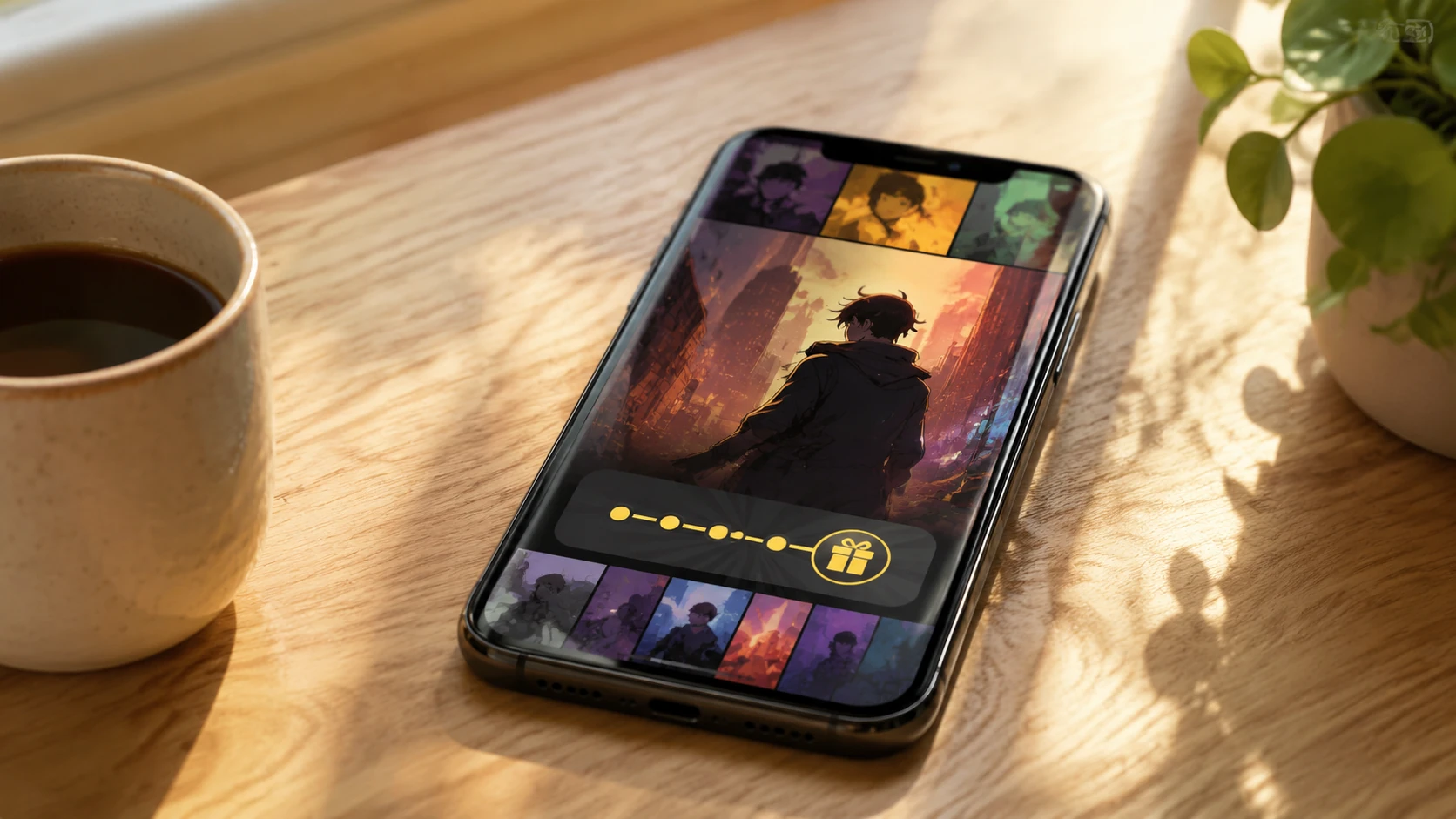
For over a decade, the 'Weekly Update' has been the ironclad law of the webtoon industry. Creators pushed themselves to produce 60 to 80 panels every seven days to satisfy platform algorithms and reader expectations. However, as we move through 2026, a seismic shift in consumption habits has rendered this model increasingly inefficient. The rise of 'Daily Drops'—releasing 10 to 15 panels every single day instead of a massive weekly batch—is proving to be the most significant strategic pivot for independent and studio creators alike. This transition isn't just about output; it is a fundamental reconfiguration of narrative pacing, algorithmic signal frequency, and reader psychology designed to combat the 'scroll fatigue' prevalent in modern mobile environments.
The Mathematics of Recency: Why Algorithms Favor Daily Drops
In the 2026 digital landscape, 'Algorithmic Recency' has become a more potent ranking signal than 'Batch Volume.' Discovery engines on major webtoon platforms and social-reading apps are now tuned to reward consistency and frequent re-entry. When a creator updates daily, they generate seven distinct 'ping' signals to the platform’s recommendation engine per week, compared to just one for a weekly series. This constant stream of new content keeps the series at the top of 'Recently Updated' feeds and significantly increases the chances of appearing in personalized 'For You' recommendations. Furthermore, daily updates drastically reduce the 'churn window'—the period where a reader might forget a plot point or lose interest—by keeping the narrative fresh in the user's mind every 24 hours.
The Compound Interest of Daily Engagement
- Higher Search Visibility: Frequent updates trigger more frequent indexing by search crawlers and internal platform discovery tools.
- Reduced Narrative Friction: Shorter chapters are easier for mobile users to consume during micro-moments (commutes, breaks, waiting rooms).
- Streak Mechanics: Daily releases allow platforms to implement 'Reading Streaks,' which have proven to increase long-term user retention by 45% compared to weekly engagement.
- Data-Driven Pivots: Creators receive feedback seven times more often, allowing for faster adjustments to character popularity or pacing issues.
Engineering the 'Micro-Hook': How Scripting Changes
The move to micro-releases requires a radical departure from traditional three-act chapter structures. In a weekly 60-panel chapter, a writer has space for a slow setup, a rising action, and a major cliffhanger. In a 10-panel daily drop, every single release must function as a complete emotional unit. This has led to the development of the 'Pulse Scripting' method, where each day delivers a specific 'beat'—be it a punchline, a world-building reveal, or a minor character moment—that concludes with a micro-hook. The challenge for 2026 creators is maintaining narrative depth while working within these tighter constraints. Writers must ensure that when the daily drops are eventually read as a 'collected' arc, the pacing doesn't feel disjointed or repetitive, a phenomenon known as 'staccato narrative.'
Monetization and the 'Fast Pass' Evolution
The business model for webtoons is shifting to accommodate this high-frequency output. While traditional 'Fast Pass' models charged for a full 60-panel chapter, 2026 platforms are introducing 'Micro-Transfers' and 'Subscription Streaks.' Instead of paying $0.50 for a weekly update, readers are increasingly subscribing to 'Daily Access' tiers or using 'Micro-Coins' to unlock the next three days of content. This 'drip-feed' monetization mirrors the success of mobile gaming, where small, frequent purchases are less psychologically taxing for the consumer than larger, infrequent ones. For independent creators, this model provides a more stable, predictable daily revenue stream rather than the 'spike and valley' income associated with weekly releases.
Production Sustainability: Avoiding the Burnout Trap
The primary criticism of the daily model is the perceived pressure on the artist. However, 2026 workflow automation and modular asset management have made this more sustainable than it appears. Many studios now use a 'Buffer-First' strategy, where they produce a large volume of content in a batch but release it incrementally. This allows the creator to maintain the same workload as a weekly series but benefit from the algorithmic advantages of daily distribution. Additionally, the move to fewer panels per update allows for a more focused 'sprint' workflow, reducing the cognitive load of managing a massive 80-panel project file. By breaking the production into smaller, manageable chunks, creators can actually maintain higher visual quality and reduce the physical strain of long, uninterrupted drawing sessions.
A Checklist for Transitioning to Daily Micro-Releases
- Audit your current pacing: Can your story beats be broken into 10-panel increments without losing coherence?
- Build a 30-day buffer: Never start a daily release schedule without at least a month of content pre-staged.
- Sync with platform UI: Ensure your chosen platform supports daily updates without burying your series in notification spam.
- Communicate the shift: Explain to your audience that they are getting the same amount of content, just delivered with higher frequency.
The Risks: When Micro-Releases Fail
While the benefits are significant, the daily model is not a silver bullet. The most common pitfall is 'Narrative Dilution,' where creators stretch thin plot points across too many days, leading to reader frustration. In 2026, audience patience is high for frequent content but low for 'filler.' If a daily drop feels like it could have been a single panel, the reader is likely to break their 'streak' and drop the series. Furthermore, the daily model requires a highly organized social media presence to maintain the momentum. Without a strong community management strategy, the constant noise of daily updates can lead to 'follower fatigue,' where fans begin to mute notifications because they feel overwhelmed by the volume of content.
FAQ
Is the total amount of content higher in a daily drop model?
Not necessarily. Most creators simply take their typical 70-panel weekly output and divide it into seven 10-panel daily updates, maintaining the same workload while increasing algorithmic frequency.
Does daily posting hurt the reading experience for binge-watchers?
Actually, it can improve it. When a series is completed, the smaller chapters act as 'natural breaks,' allowing binge-readers to stop and start more easily on mobile devices.
Which genres work best for the micro-release model?
Comedy, Slice-of-Life, and Romance thrive in this format because they rely on frequent emotional beats. Action and Mystery require more careful scripting to ensure each 10-panel drop feels satisfying.