The 2026 MENA Webtoon Expansion: Strategies for Localizing IP in the World’s Fastest-Growi
As the Middle East and North Africa (MENA) emerge as the fastest-growing mobile reading markets in 2026, webtoon studios are shifting from simple translation to deep cultural transcreation. This guide outlines the strategic framework for capturing the high-LTV audience across the Riyadh-Dubai corrid
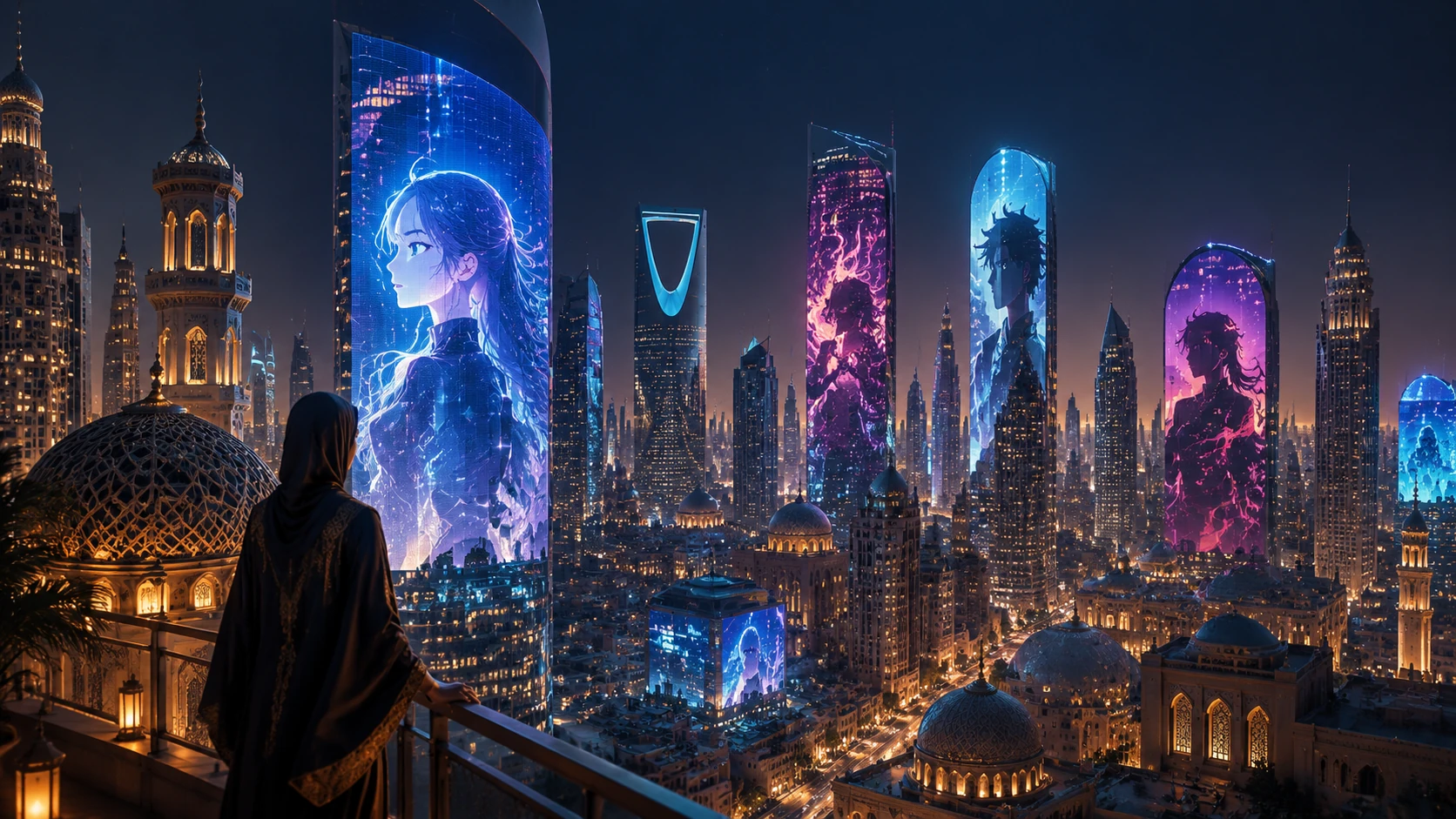
By the first quarter of 2026, the Middle East and North Africa (MENA) region has officially surpassed Southeast Asia as the fastest-growing market for vertical scroll webtoons and digital manga. Driven by a massive youth demographic—where over 60% of the population is under 30—and nearly 100% smartphone penetration in key hubs like Saudi Arabia and the UAE, the demand for localized digital content has reached a fever pitch. However, for global studios and independent creators, 'localization' in 2026 no longer means simple text translation. It requires a sophisticated understanding of 'Transcreation'—the art of adapting narrative beats, visual symbols, and social dynamics to resonate with a culture that values both ultra-modernity and traditional heritage. This article explores the strategic framework for entering this high-growth corridor and why it represents the single largest revenue opportunity for webtoon IP this decade.
The 2026 Demographic Dividend: Why MENA Matters Now
The shift toward the MENA region is supported by aggressive government-led investments in the 'creative economy.' Platforms are no longer just importing Korean or Japanese content; they are actively seeking localized IPs that reflect regional sensibilities. In 2026, the average revenue per user (ARPU) in the Gulf Cooperation Council (GCC) countries is significantly higher than in traditional western markets, largely due to a cultural preference for high-quality mobile entertainment and a robust ecosystem of digital micro-payments. For creators, this means the region is not just a secondary market for 'leftover' IP, but a primary launchpad for premium content designed for a mobile-first, high-engagement audience.
The Transcreation Standard: Moving Beyond Translation
In 2026, standard Arabic translation is considered the bare minimum. Leading webtoon studios are now adopting a 'Transcreation' workflow that audits every chapter for cultural resonance. This includes the 'Visual Compliance Layer,' where character clothing, public interactions, and even background architecture are subtly adjusted to align with regional standards without losing the artistic soul of the work. This isn't about censorship; it's about audience comfort and marketability. A series that feels 'native' to the region consistently outperforms literal translations by a factor of four in terms of reader retention and social shares.
Key Elements of Cultural Adaptation
- Social Dynamics: Adjusting dialogue to reflect regional nuances in family hierarchy and social etiquette.
- Visual Symbols: Auditing color palettes and icons that may have different connotations (e.g., the significance of certain animals or religious motifs).
- Pacing and Tone: Adapting humor and emotional beats that may not translate directly from East Asian or Western contexts.
- Right-to-Left (RTL) Layout: Ensuring that the vertical scroll experience and panel flow are optimized for Arabic reading directions without breaking the narrative rhythm.
The Infrastructure of 2026: Mobile Payments and 5G
The success of the webtoon model in MENA is intrinsically tied to the region's digital infrastructure. By 2026, 5G is the standard in urban centers, allowing for high-fidelity, sensory-rich webtoons featuring haptics and embedded audio. More importantly, the 'Platform Monopoly' has been challenged by local payment gateways. Integration with regional wallets like STC Pay, Apple Pay, and local carrier billing is essential. Studios that fail to integrate these frictionless payment methods see a 40% drop-off at the 'Fast Pass' checkout screen. The 2026 market demands a 'Zero-Friction' monetization path where readers can unlock chapters in a single tap.
Strategic Partnerships: The Riyadh-Seoul Corridor
We are seeing a surge in 'Co-Production Protocols' between East Asian tech giants and Middle Eastern media conglomerates. These alliances are designed to create 'Hybrid IP'—stories developed by Korean or Japanese storyboards but written by Arab scriptwriters. This model ensures that the technical quality of the webtoon remains at AAA standards while the narrative heart is authentically regional. For independent studios, seeking a local distribution partner is no longer optional; it is the most efficient way to navigate regulatory landscapes and tap into local influencer networks that drive 70% of new series discovery in the region.
Market Entry Risks: Compliance and IP Protection
While the rewards are high, the 2026 MENA market requires strict adherence to local media regulations. This involves a two-tier compliance check: one for visual content and one for thematic content. Furthermore, IP protection in the region has modernized significantly, but creators must still register their trademarks and copyrights within local jurisdictions to prevent unauthorized 'scanlation' and merchandising. The most successful studios in 2026 are those that view compliance not as a hurdle, but as a framework for building a sustainable, long-term brand in a loyal market.
FAQ
Which MENA countries have the highest webtoon engagement in 2026?
Saudi Arabia, the UAE, and Egypt lead the region. Saudi Arabia and the UAE drive the highest revenue via micro-transactions, while Egypt provides the largest volume of active readers and community engagement.
Is 'Modern Standard Arabic' (MSA) the best choice for webtoon translation?
While MSA is used for narration, 2026 trends show that using localized dialects (like Khaleeji or Egyptian) for dialogue significantly increases reader immersion and emotional connection.
How do I handle Right-to-Left (RTL) formatting for webtoons?
Vertical webtoons are naturally easier to adapt than page-based manga, but you must ensure that speech bubble placement and character eye-lines are mirrored or adjusted to follow the Arabic reading flow.