The 2026 ‘Lore-Led Community Engineering’ (LLCE) Framework: Building Brand Moats Beyond th
Discover how the 2026 Lore-Led Community Engineering (LLCE) framework allows creators to build 'lore-moats' that protect their IP from algorithmic volatility. Learn to transform passive readers into active world-building stakeholders.
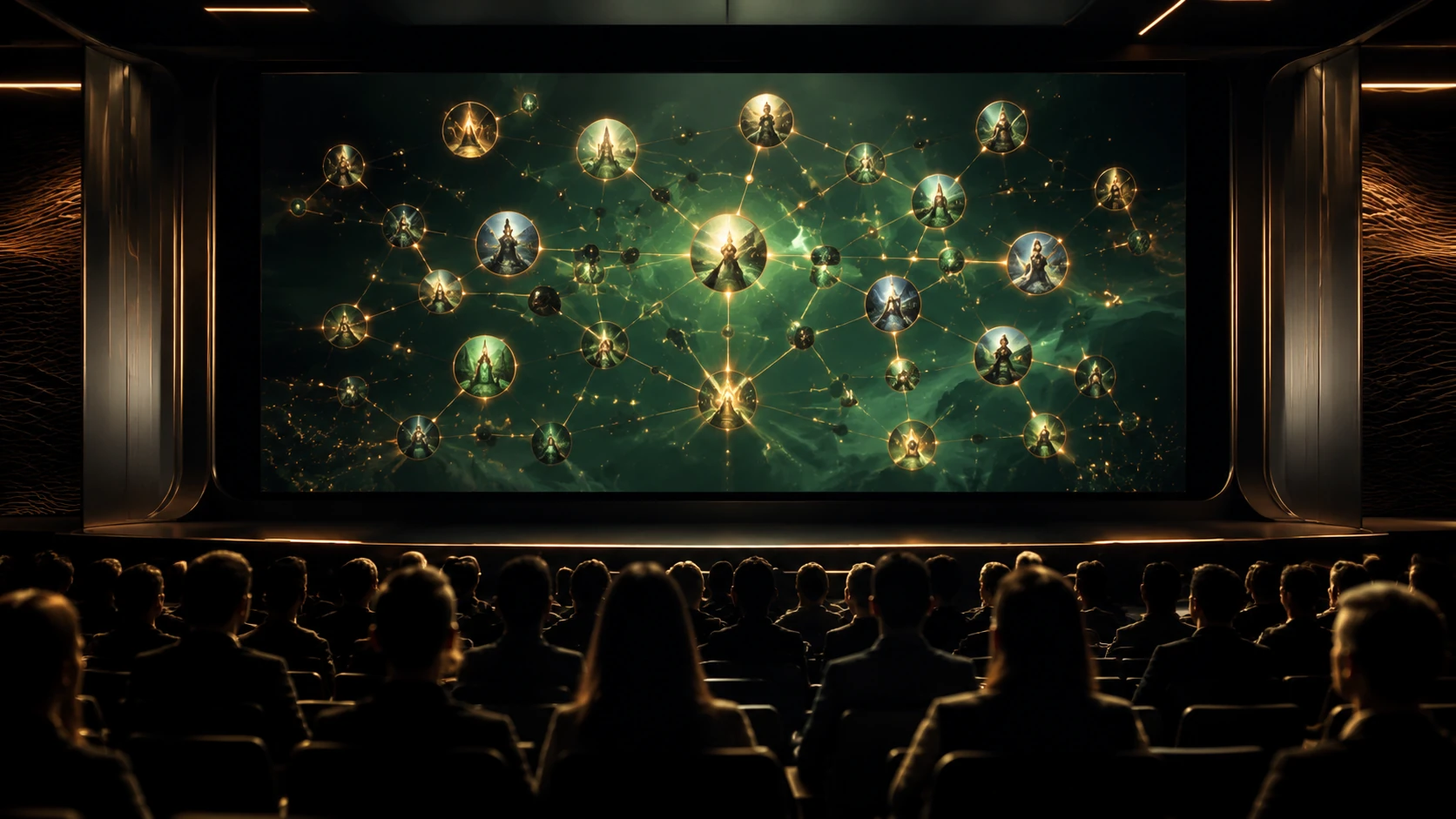
By 2026, the era of relying solely on platform algorithms for discovery has ended. As major webtoon and manga hubs move toward 'Zero-Latency' delivery and hyper-saturated content feeds, the most successful creators have pivoted from simple 'audience growth' to the 'Lore-Led Community Engineering' (LLCE) framework. This strategic shift recognizes that while an algorithm can bring a reader to a chapter, only a deep, participatory narrative ecosystem—a 'lore-moat'—can keep them there for a decade. LLCE is the process of architecting a story’s world-building not just for the page, but as a social infrastructure that invites fans to become permanent stakeholders in the IP's longevity.
The 2026 Shift: From Passive Consumption to Narrative Agency
In the previous decade, community management for comic creators was largely reactive: responding to comments, hosting occasional Q&As, or posting behind-the-scenes sketches. The 2026 LLCE model replaces this with proactive 'Lore-Gating' and 'Canonical Contribution' mechanics. Readers no longer want to just watch a story unfold; they want to inhabit the world. This desire for agency has made narrative depth the primary driver of Brand Resilience. When a creator builds a lore-moat, they are creating a barrier to entry for competitors and a barrier to exit for fans. Even if a platform's discovery algorithm changes overnight, a community engineered around lore remains tethered to the IP through shared knowledge and collective theory-crafting.
The Three Pillars of the LLCE Framework
To successfully implement Lore-Led Community Engineering, creators must balance three distinct architectural pillars that transform a serialized story into a living cultural entity.
1. Canonical Scarcity and 'The Theory Economy'
Information is the currency of 2026 communities. By strategically withholding key world-building details—canonical scarcity—creators stimulate a 'Theory Economy.' This involves planting modular narrative clues (Easter eggs) that require community collaboration to solve. When fans successfully predict a plot twist based on deep-lore clues, their sense of ownership over the story skyrockets. This is not 'gatekeeping'; it is 'lore-incentivization,' where the community’s collective intelligence is used to fuel the story's viral reach.
2. Modular World-Building Kits for Fans
Successful LLCE requires providing fans with the tools to create within the universe without breaking canon. This is achieved through 'Modular World-Building Kits'—publicly accessible lore bibles, character power-scaling charts, and geographical maps provided in a structured, machine-readable format. By standardizing the 'rules' of the magic system or the 'history' of the world, creators empower fan-fiction and fan-art to act as official extensions of the brand's footprint, effectively turning the community into a secondary marketing arm.
3. The 'Lore-Gated' Reward System
In 2026, monetization is increasingly tied to narrative status. The LLCE framework utilizes lore-gated rewards, where access to exclusive content, physical merchandise, or digital collectibles is earned through 'community contributions'—such as identifying a hidden reference in Chapter 50 or participating in a cross-platform lore hunt. This gamification of the reading experience ensures that the most loyal fans are the most rewarded, creating a self-sustaining cycle of high-value engagement.
Implementation Workflow for Independent Studios
- Audit Narrative Density: Before launching a community, ensure your lore has enough 'unsolved' nodes to sustain a theory economy for at least 24 months.
- Establish a Sovereign Lore-Hub: Do not rely on Discord or Reddit alone. Host a centralized, searchable Wiki or 'Lore-Vault' on your own domain to capture zero-party data and SEO traffic.
- Deploy 'Lore-Leads': Appoint community moderators who are specifically trained as 'Lore-Keepers' to manage canon disputes and highlight brilliant fan theories.
- Standardize Asset Portability: Use the 2026 NAP Standard to allow fans to use character assets in sanctioned, non-commercial community projects.
Risks of LLCE: Avoiding 'Lore-Bloat' and Alienation
While LLCE is powerful, it carries the risk of 'Lore-Bloat,' where the barrier to entry for new readers becomes too high. To mitigate this, creators must maintain a 'Dual-Track' narrative. The primary story must be accessible and emotionally resonant for casual readers, while the deep lore remains an optional layer for the 'engineered' community. Furthermore, creators must be wary of 'Canon Friction'—when a fan theory becomes so popular that the official story feels like a betrayal if it goes in a different direction. Managing expectations through transparent communication and 'Community-Led Continuity' (CLC) frameworks is essential for maintaining trust.
FAQ
How do I start building a lore-moat for an existing webtoon?
Begin by identifying 'loose threads' in your story and creating a centralized wiki. Invite readers to help categorize these threads, turning the mystery into a community project.
Does LLCE require a complex fantasy or sci-fi setting?
No. Even romance or slice-of-life stories can use LLCE by focusing on character backstories, hidden motivations, and detailed setting history (e.g., the lore of a specific neighborhood or family tree).
What tools are best for managing lore-led communities in 2026?
Creators are increasingly using 'Semantic Wiki' platforms and private lore-gated portals that integrate directly with their reading apps and CRM systems.