The 2026 ‘Live-Studio’ Co-Creation Standard: Engineering Real-Time Reader Input for High-R
Learn how the 2026 Live-Studio model transforms webtoon production into an interactive event, driving record-breaking retention through real-time reader input. This guide explores the 'Decision-Gate' framework for maintaining creative vision while empowering fans.
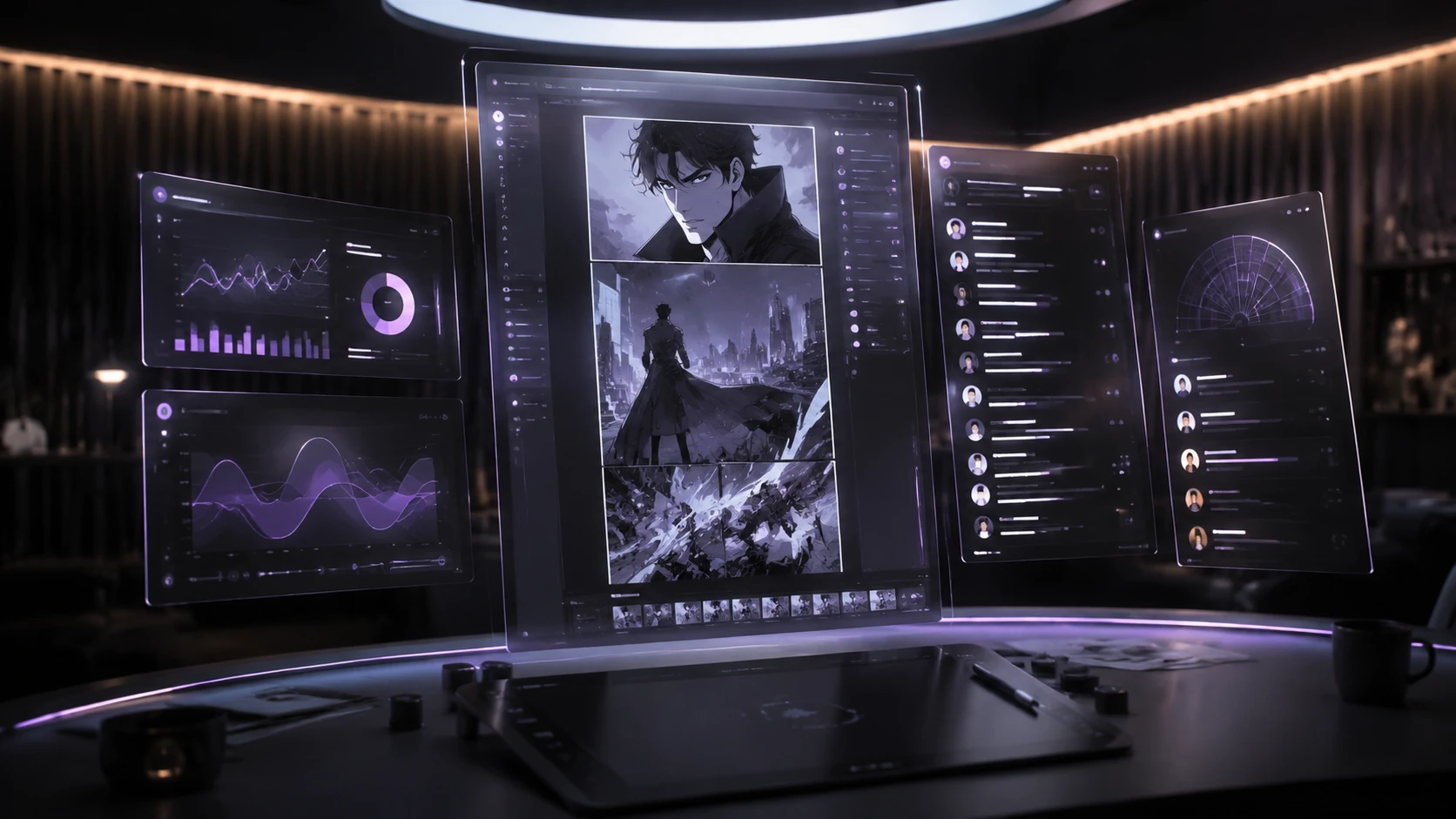
By 2026, the boundary between creator and consumer has dissolved into the 'Live-Studio' model. No longer is webtoon production a solitary, behind-closed-doors process; it has become a high-stakes, interactive performance that drives unprecedented reader retention. The 2026 Live-Studio Co-Creation Standard is a strategic framework that allows independent creators and boutique studios to integrate real-time reader input into their production pipeline without sacrificing narrative integrity. This shift is driven by the 'Engagement Economy,' where readers prioritize narratives they feel they have helped shape. For creators, this means moving beyond static social media updates to 'Live-Build' sessions where fans influence minor plot directions, character aesthetics, and world-building details in real-time. This article details the engineering required to master this standard, from technical infrastructure to the psychological 'Decision-Gate' logic that prevents community-led creative collapse.
The Architecture of the Live-Studio Workflow
The Live-Studio model functions as a hybrid between traditional asset production and livestreaming entertainment. Unlike 'behind-the-scenes' content, which is retrospective, Live-Studio sessions are prospective—they happen while the narrative is still fluid. To engineer this successfully, creators must adopt a modular production workflow. Assets are developed in layers: the core narrative skeleton (the 'Canon Layer') remains under the creator's absolute control, while the 'Aesthetic' and 'Micro-Narrative' layers are opened to community influence. This separation ensures that while fans might vote on the color of a protagonist’s aura or the design of a background shop, the fundamental character arc remains consistent with the creator's vision. Technically, this requires low-latency streaming setups and AI-assisted asset management tools that can swap textures or character skins almost instantly during a live broadcast.
The 'Decision-Gate' Framework: Balancing Control and Input
The most significant risk in co-creation is 'design by committee,' which often leads to diluted, generic storytelling. The 2026 Standard solves this through the Decision-Gate Framework. This logic dictates exactly which story elements are 'Open' vs. 'Locked.' Creators pre-determine 'Gated Moments'—specific production beats where community input is sought. For instance, a creator might present three potential designs for a new secondary character and allow a live vote to decide the winner. Crucially, all three designs must be pre-vetted by the creator to ensure they fit the world's logic. This creates an 'Illusion of Choice' that is actually a 'Curated Agency,' providing the reader with a sense of ownership while maintaining a high-fidelity narrative standard. By engineering these gates into the production schedule, creators can maintain a weekly release cycle while still incorporating the 'live' energy that modern audiences crave.
Types of Decision-Gates in 2026
- Aesthetic Gates: Real-time voting on color palettes, fashion choices, or weapon designs.
- Lore Gates: Choosing which 'history' for a location is revealed first, influencing world-building priority.
- Pacing Gates: Letting fans decide whether to linger on a romantic subplot or accelerate into an action sequence.
- Interactive Easter Eggs: Allowing fans to name background characters or suggest specific items to be hidden in a panel.
Monetization through 'Producer' Status
The Live-Studio model isn't just an engagement tool; it is a powerful monetization engine. In 2026, creators are moving away from simple tips to 'Tiered Agency.' Fans who contribute at higher levels receive 'Producer Credits' or 'Voting Multipliers,' giving their input more weight during live sessions. This transforms the reading experience from a $0.99-per-chapter transaction into a high-value community membership. High-intent readers are willing to pay for the 'right to influence,' creating a sovereign revenue stream that bypasses platform ad-revenue splits. Furthermore, assets created during these sessions—such as a community-voted character design—can be sold as limited-edition digital collectibles or 'phygital' merchandise, creating a direct link between the live event and tangible revenue.
Technical Requirements for the 2026 Live-Studio
Engineering a professional Live-Studio environment requires more than a webcam and a drawing tablet. To meet the 2026 Standard, creators utilize 'Multi-Signal Interfaces.' This includes a primary art-production feed, a secondary audience-sentiment dashboard, and a tertiary 'Asset Repository' where community-voted changes are tracked and logged. AI assistants are often deployed to moderate chat and summarize sentiment in real-time, allowing the creator to focus on the creative task without being overwhelmed by data. Low-latency streaming is critical; the delay between a fan's vote and the creator's reaction must be under 500ms to maintain the feeling of true co-creation. This technical stack is what separates professional 'Live-Studios' from casual hobbyist streams, signaling a high level of E-E-A-T (Experience, Expertise, Authoritativeness, Trustworthiness) to both fans and search engines.
Avoiding the 'Community Fatigue' Trap
While real-time input is powerful, over-utilizing it can lead to 'Community Fatigue,' where readers feel the burden of creative labor. The 2026 Standard suggests a '70/30 Rule': 70% of the production should be creator-driven and 30% should be co-created. This maintains the 'magic' of storytelling. If readers know every single plot twist in advance because they voted on it, the narrative tension collapses. The goal is to use co-creation to enhance the *world*, while the creator maintains the *story*. Strategically, this means using live sessions for world-building and character design, but keeping the actual plot execution and 'cliffhangers' as surprises. This balance ensures that the community remains invested without feeling responsible for the entire narrative success.
The SEO and Discovery Benefit of Live-Studio Content
From a search perspective, the Live-Studio model generates a massive amount of 'Helpful Content' signals. Search engines in 2026 prioritize creators who demonstrate active community engagement and transparent production processes. Each live session produces a wealth of metadata—transcripts, community sentiment data, and unique asset creation logs—that AI search engines use to verify 'Human-Centric' authority. By archiving these sessions and linking them to the finished webtoon chapters, creators build a 'Trust Moat' that is impossible for purely synthetic, AI-generated content to replicate. This creates a feedback loop: high-engagement live sessions lead to better search visibility, which brings in new readers who then join the co-creation ecosystem.
FAQ
Does the Live-Studio model mean fans own my IP?
No. The 2026 Standard utilizes clear Terms of Service where community input is legally defined as 'non-exclusive creative contribution' in exchange for participation and credit, ensuring the creator retains 100% IP ownership.
How often should I host Live-Studio sessions?
The industry standard is once per week during the pre-production or layout phase of a chapter. This aligns with the 7-day retention cycle and keeps the community engaged without burning out the creator.
What if the community votes for something that breaks the story?
This is prevented by the 'Decision-Gate' logic. Creators should only ever put options up for a vote that they are equally happy to implement. Never leave the 'Canon Layer' to a blind vote.