The 2026 ‘Just-in-Time’ (JIT) Print-on-Demand Standard: Engineering Physical Collectibles
Discover the 2026 workflow for 'Just-in-Time' physical publishing. Master the technical bridge between digital-first vertical scrolls and premium printed collectibles.
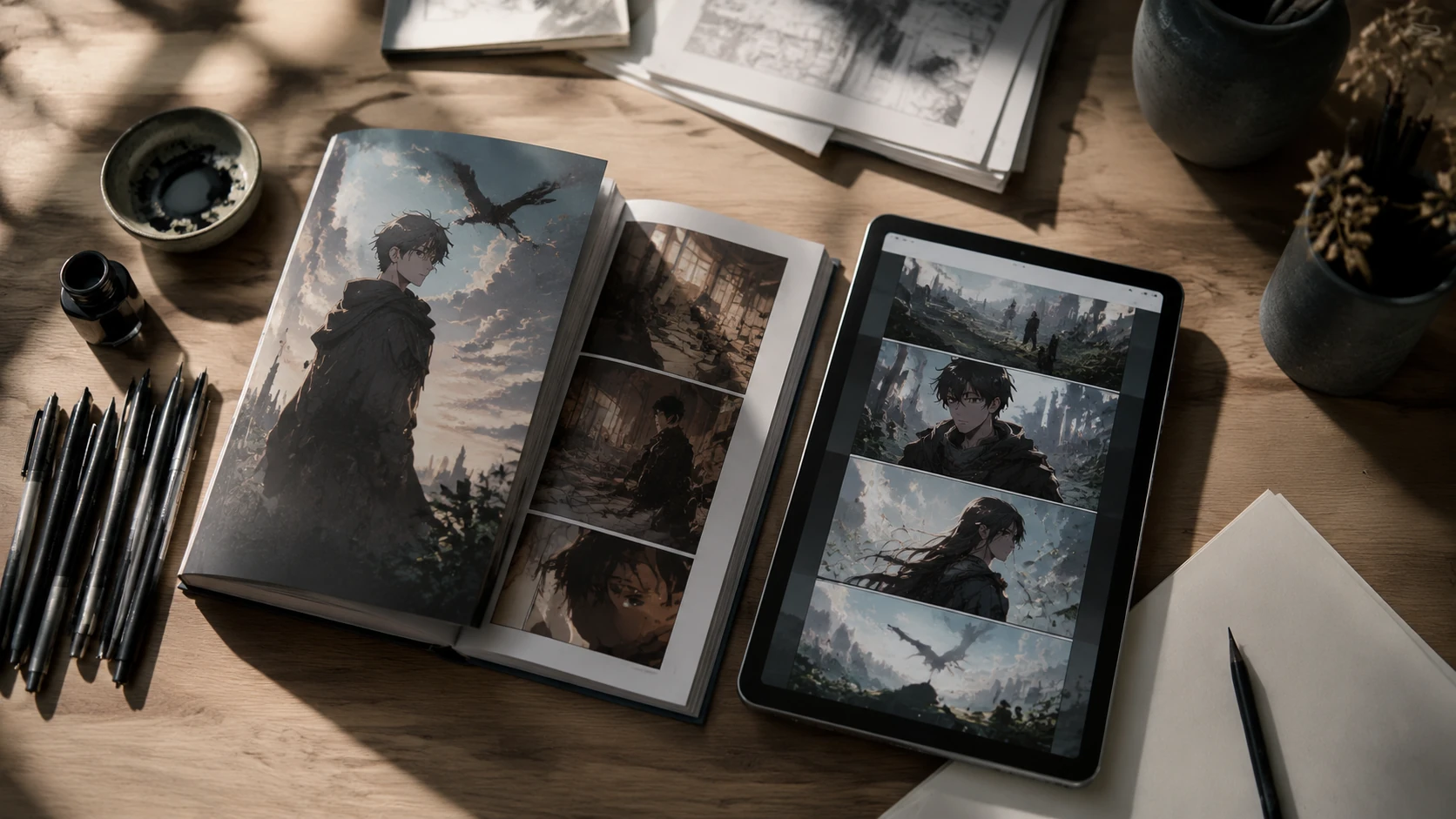
For years, digital-first creators faced a binary choice: remain purely digital or gamble thousands of dollars on bulk printing. By 2026, the 'Just-in-Time' (JIT) Print-on-Demand standard has effectively dismantled this barrier. This framework allows webtoon and manga creators to offer high-fidelity physical volumes to their audience without holding a single unit of inventory. Unlike the low-quality POD services of the early 2020s, the 2026 standard leverages hyper-local micro-fulfillment centers and high-speed inkjet technology that rivals traditional offset printing. This guide outlines the engineering requirements for transitioning your vertical-scroll IP into a physical asset that satisfies the high standards of modern comic collectors while maintaining the high margins necessary for independent career sustainability.
The Financial Logic: Why Inventory is a 2026 Liability
In the current market, 'Narrative Liquidity'—the ability to pivot your content across formats without financial friction—is the most critical metric for a creator. Traditional publishing models require massive upfront capital, leading to 'Inventory Debt' that can stifle a creator's ability to fund their next season. The JIT model flips this. By integrating print APIs directly into your sovereign webstore or platform profile, every physical sale is printed and shipped only after the transaction is confirmed. This eliminates the risk of unsold stock and storage fees. More importantly, it allows for 'Hyper-Personalization,' where readers can order volumes with custom covers or serialized numbering, a high-value signal that AI-generated or mass-produced content cannot easily replicate.
The Technical Bridge: Engineering for Paper and Pixels
Converting a vertical webtoon to a physical page isn't just about cutting and pasting panels; it's a structural re-engineering of the reading experience. The 2026 JIT standard requires a 'Dual-Master' workflow where assets are created in a resolution-independent format (like SVG or high-DPI raster layers) to ensure clarity on both 8K screens and 400-DPI paper. Creators must account for the 'Tactile-Trust' factor: the physical weight, texture, and color accuracy of the print. If the digital version uses neon RGB palettes, the JIT workflow must use sophisticated 'GCR' (Gray Component Replacement) profiles to ensure that CMYK prints maintain the vibrancy of the screen-lit original.
Automating the Vertical-to-Page Re-Layout
Manual re-paneling is the primary bottleneck for independent creators. To solve this, the 2026 workflow utilizes 'Semantic Anchoring.' By tagging panels with narrative importance metadata during the digital drawing phase, automated layout engines can suggest optimal page breaks, gutter widths, and 'Golden Ratio' panel placements for standard A5 or B5 formats. This ensures that the narrative rhythm—originally designed for a continuous scroll—is preserved through the physical page turn.
- Resolution Standard: Minimum 400 DPI at the target print size to ensure line art crispness.
- Color Space: Pre-calculate Out-of-Gamut colors early using automated 'Soft-Proofing' layers.
- Bleed and Gutter: A standard 3mm bleed and a 15mm inner gutter to prevent loss of detail in the spine.
- File Format: The Layer-Semantic File Standard (LSFS) is now the preferred format for JIT providers, allowing them to adjust transparency and layer effects for different paper stocks.
The Collector’s Premium: Scarcity and Provenance
JIT printing in 2026 isn't just about accessibility; it’s about creating 'Physical Scarcity.' Many creators now use 'Time-Locked JIT Drops,' where a physical volume is only available for 48 hours. Because the printing is on-demand, the creator has no overhead, but the limited window creates an 'Event-Based' purchasing intent. Furthermore, the 2026 standard supports 'Digital-to-Physical Provenance,' where a QR code or NFC chip embedded in the back cover links the physical book to a 'Verified Reader' badge on the creator’s platform, merging the physical ownership experience with digital community status.
Common Mistakes in Digital-to-Print Transition
The most frequent error is ignoring 'Eye-Flow' differences. On a phone, the reader’s eye is fixed while the thumb moves the content. On a page, the thumb is fixed while the eye scans. Webtoons with heavy 'White-Space Timing' often feel empty in print if not compressed correctly. Another pitfall is 'Font Legibility'; fonts that look clear on a backlit 500ppi OLED screen often become muddy or too small on a matte 70lb paper stock. Always test your 'Type-to-Trim' ratio before committing the master file to the JIT provider's API.
Conclusion: The Future is Hybrid
The 2026 JIT Print-on-Demand standard represents the ultimate empowerment of the independent creator. By mastering this workflow, you transition from being a 'platform-dependent artist' to a 'multi-format IP owner.' As the global appetite for physical collectibles continues to grow alongside digital consumption, those who can seamlessly bridge the two will command the highest loyalty and the most sustainable revenue. Physicality is no longer a luxury for the few; it is a strategic necessity for the many.
FAQ
Does JIT printing affect my profit margins compared to bulk printing?
While the per-unit cost of JIT is higher than bulk offset printing, the absence of storage fees, shipping logistics, and unsold inventory risk usually results in a higher net profit for independent creators with mid-sized audiences.
Can I use the same files for webtoon platforms and JIT printing?
Not directly. You must export a separate 'Print Master' that handles CMYK color conversion, adds bleed margins, and re-organizes the vertical panels into a paginated layout.
What is the best paper stock for webtoon JIT volumes?
For 2026 standards, a 70lb or 80lb matte coated paper is recommended to handle high-ink saturation without bleed-through, preserving the 'digital' vibrancy on physical pages.