The 2026 IP Safety Audit: Protecting Your Narrative Assets from Model Collapse and Stylist
In an era where generative models can dilute a brand's unique visual identity, the 2026 IP Safety Audit is the essential framework for maintaining narrative and aesthetic integrity. Discover how to shield your characters and lore from the risks of systemic stylistic drift.
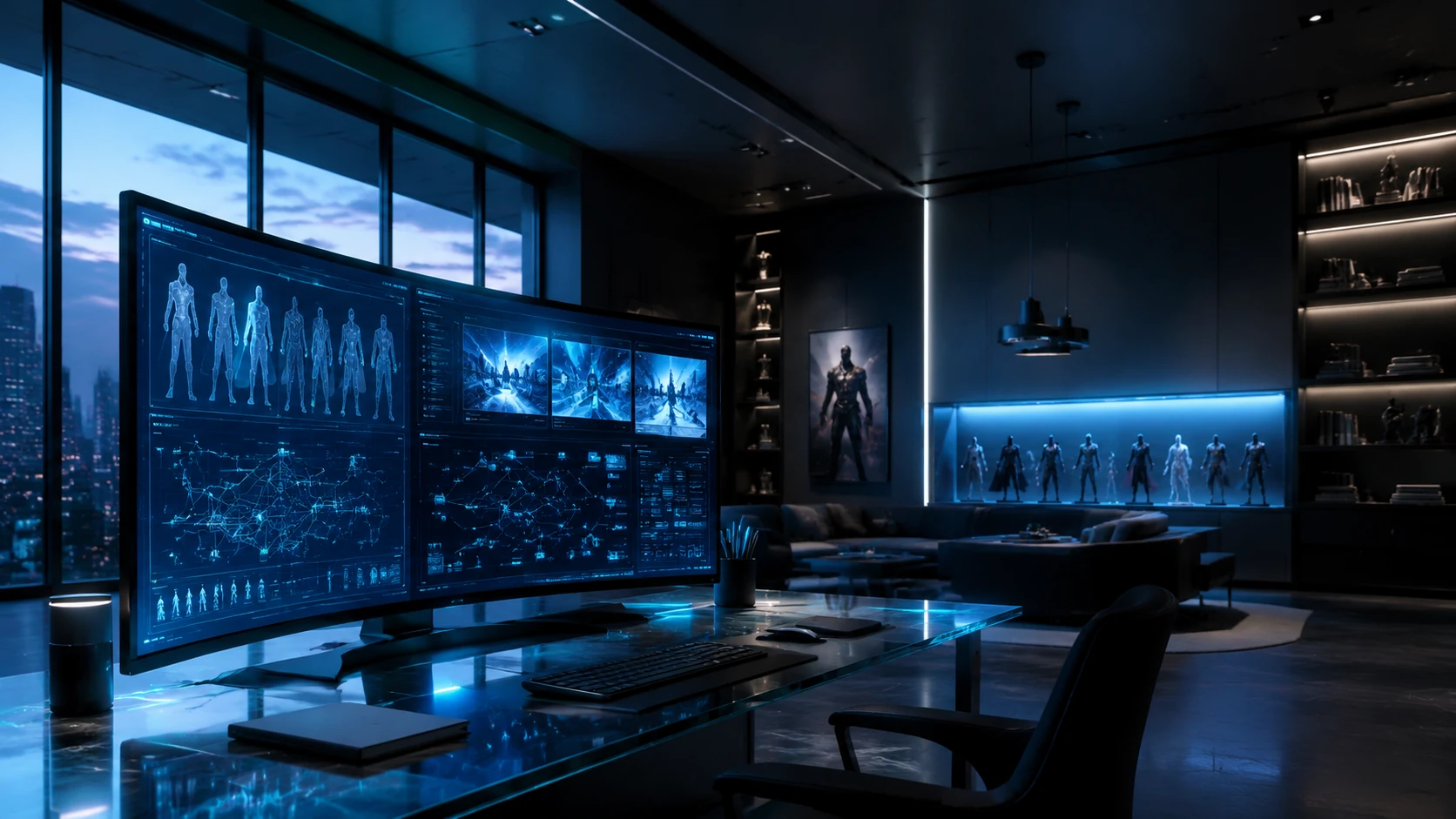
By 2026, the primary threat to a comic franchise is no longer just piracy; it is the degradation of its unique visual and narrative 'DNA' through a phenomenon known as stylistic drift and model collapse. As generative ecosystems become saturated with derivative content, original creators face the risk of their signature aesthetics being diluted or absorbed into generic training sets, leading to a loss of brand distinctiveness. The IP Safety Audit has emerged as the industry's standard response—a rigorous framework designed to inventory, secure, and verify the integrity of narrative assets. For studios and independent creators alike, this audit is the first line of defense against the commoditization of their creative labor, ensuring that their IP remains recognizable, legally defensible, and commercially viable in a crowded digital marketplace.
Understanding the Threats: Stylistic Drift and Model Collapse
Stylistic drift occurs when a comic’s visual identity begins to lose its core characteristics due to inconsistent production methods, often exacerbated by the unmonitored use of AI-assisted tools or distributed studio workflows. Over time, character proportions, color palettes, and line weights shift away from the original vision, alienating loyal readers. Model collapse, a more systemic risk, happens when generative models are trained on too much AI-generated data rather than original human-made assets. This results in a 'feedback loop' where the output becomes increasingly generic and filled with artifacts. For a comic series, this means that even if you use AI for efficiency, the tools themselves may slowly erode the quality of your work if your IP isn't properly anchored to a 'Source of Truth' asset library.
The Three Pillars of a 2026 IP Safety Audit
A successful audit focuses on three critical domains that define the longevity and health of a comic property. By systematically evaluating these areas, creators can identify vulnerabilities before they lead to permanent IP damage.
1. Visual DNA Verification
- Aesthetic Baselines: Establishing non-negotiable visual markers (e.g., specific eye shapes, cross-hatching styles, or lighting signatures) that must remain consistent.
- Asset Integrity Checks: Comparing current production panels against the 'Series Bible' to detect subtle shifts in character anatomy or environmental detail.
- Model Fine-Tuning Security: Ensuring that any private AI models used by the studio are trained exclusively on high-quality, verified original assets to prevent the 'hallucination' of generic traits.
2. Semantic Lore Integrity
Narrative assets are as valuable as visual ones. This pillar involves auditing the 'logic' of the world. Does the magic system still follow its established rules? Are character motivations consistent with their 50-chapter history? In 2026, semantic scanners are used to map plot points and dialogue patterns, ensuring that the narrative doesn't succumb to the 'filler' tropes often generated by automated script-doctoring tools.
3. Rights Attribution Mapping
This technical audit ensures that every asset—from a background brush to a character design—has a clean provenance. With the rise of 'Clean AI' certifications, publishers now require proof that assets were created without infringing on third-party data. The audit maps every pixel to its creator or a licensed source, securing the IP for future film or game adaptations.
How to Conduct Your Audit: A Step-by-Step Workflow
Performing an IP Safety Audit should be a quarterly ritual for any growing studio. It begins with the 'Asset Freeze,' where a representative sample of recent work is isolated and compared against the original IP Blueprint. Next, creators use 'Adversarial Testing'—attempting to see if public generative models can easily replicate their style. If a public model can produce a 95% match for your character with a simple prompt, your visual DNA is at high risk of commoditization, and it's time to introduce 'Aesthetic Watermarking' or more complex visual signatures that are harder for algorithms to flatten.
The Commercial Cost of Neglect
Ignoring IP safety leads to more than just aesthetic complaints; it directly impacts valuation. In the 2026 market, streaming platforms and gaming studios perform their own 'Due Diligence Audits' before licensing a webtoon. If they detect stylistic drift or a lack of clear asset provenance, the deal value can drop by up to 60%. Furthermore, 'Generic Content' filters on major distribution platforms are becoming more aggressive; if your series begins to look too much like the 'average' of a generative model, your visibility in discovery algorithms will plummet. Protecting your IP is, therefore, a fundamental business necessity for long-term revenue.
FAQ
What is stylistic drift in comics?
Stylistic drift is the gradual loss of a comic's unique visual identity over time, usually caused by inconsistent production methods or over-reliance on unmonitored AI tools.
How does model collapse affect comic creators?
Model collapse occurs when AI tools are trained on AI-generated content, leading to generic, lower-quality outputs. Creators risk their work becoming indistinguishable from a sea of generic content if they don't anchor their workflow to original assets.
How often should I perform an IP Safety Audit?
Professional studios in 2026 typically perform an IP Safety Audit quarterly, or before major milestones like series launches or licensing negotiations.
Can an IP Safety Audit help with copyright protection?
Yes, by documenting asset provenance and establishing a clear 'Source of Truth,' an audit provides the legal evidence needed to defend your work against unauthorized AI training or cloning.