The 2026 ‘IP-Ready’ Portfolio Standard: Engineering Your Comic Assets for Global Acquisiti
In 2026, a great portfolio requires more than just high-quality art; it requires 'acquisition-ready' architecture. Learn how to structure your work to attract global studios and streaming platforms.
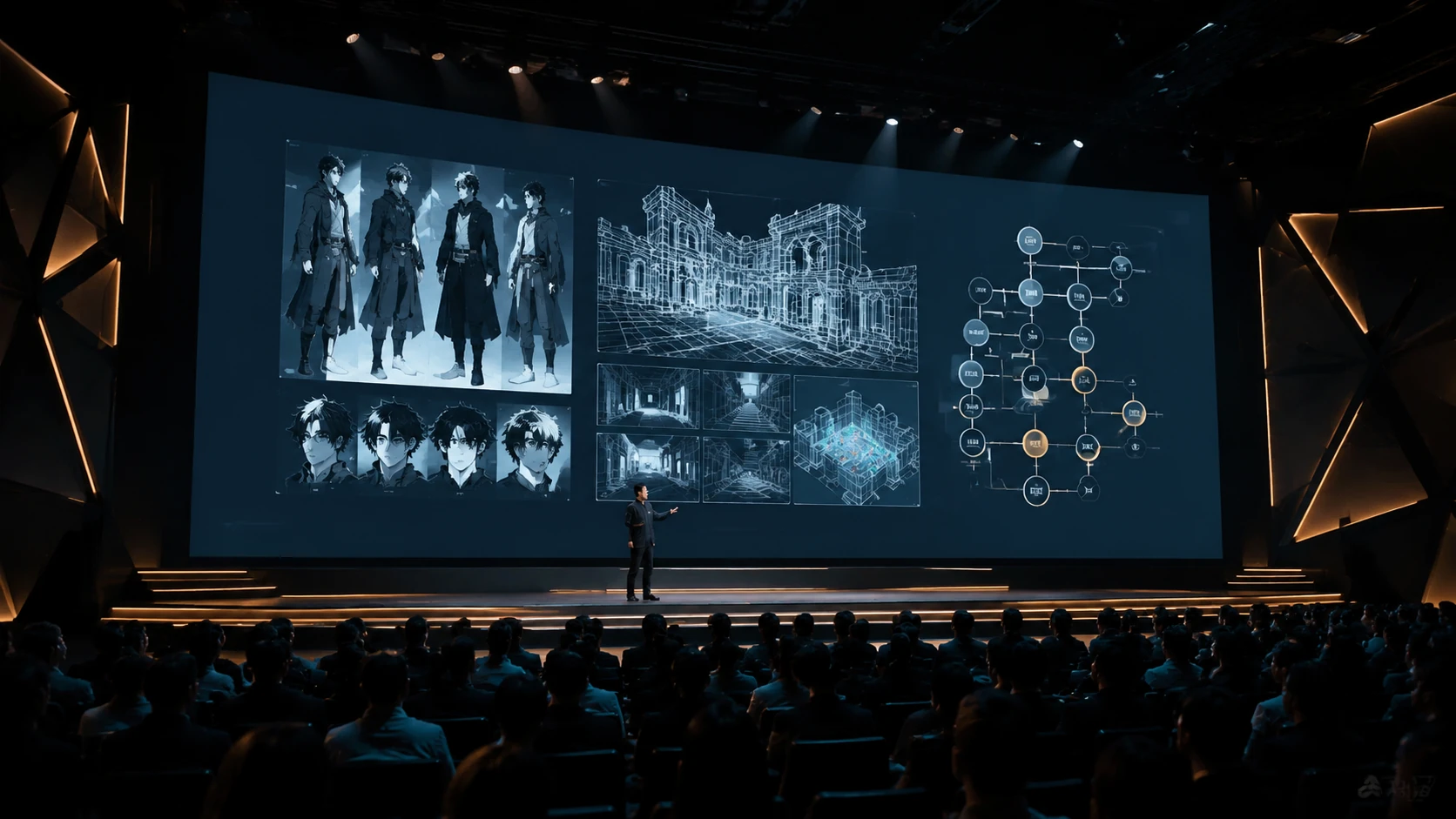
By 2026, the traditional 'PDF portfolio' has become a relic of the past. As global streaming giants, gaming studios, and vertical-scroll platforms aggressively scout for new Intellectual Property (IP), their selection criteria have shifted from purely aesthetic appreciation to 'acquisition readiness.' Today's talent scouts aren't just looking for artists who can draw; they are looking for architects who can deliver a scalable narrative ecosystem. An IP-Ready Portfolio is a structured data package that proves your story can be seamlessly integrated into multi-billion dollar production pipelines with minimal friction. This transition represents a fundamental shift in the creator economy—from being a 'hired hand' to becoming an 'IP owner' whose work is ready for immediate commercial expansion.
The Shift from Aesthetic Portfolios to Asset Packages
In the 2026 market, a portfolio's primary function is to demonstrate technical and narrative interoperability. Studios are no longer satisfied with seeing finished panels; they want to see the 'blueprint' behind the art. This means your portfolio must showcase your ability to maintain consistency across formats. If a studio acquires your webtoon, they need to know that the character designs can be translated into 3D models for gaming, that the environments are structured for cinematic lighting, and that the narrative logic can survive a 50-episode adaptation without breaking.
- Asset Modularity: Providing character rigs, background layers, and reusable props.
- Narrative Metadata: Including semantic descriptions of characters and world-building rules.
- Format Agnosticism: Demonstrating that your story works across vertical scroll, print, and interactive media.
- Production Transparency: Showing the workflow stages from thumbnailing to final post-processing.
Pillar 1: Semantic Character and World Entities
The most critical component of a 2026 IP-Ready portfolio is the 'Entity Breakdown.' Instead of simple character sheets, creators must provide Semantic Character Entities. This involves documenting not just the visual appearance, but the narrative 'constants'—the psychological triggers, vocal tonality, and core motivations that define the character. This level of detail allows AI-assisted production teams and human directors to maintain character integrity during a transmedia transition. Your world-building should follow a similar logic, documented as a 'Lore Graph' that establishes the rules of your universe, preventing the 'narrative debt' that often plagues adaptations.
Pillar 2: Technical Interoperability and Workflow Proof
Studios in 2026 prioritize creators who utilize standardized workflows. Your portfolio should explicitly state your compatibility with modern industry standards like the 'Vertical Scripting Syntax' (VSS) or 'Global Color-Sync Standard' (GCSS). By showing that your source files are organized into modular, non-destructive layers, you signal to technical directors that your work is 'low-friction.' This technical professionalism often outweighs raw artistic talent in the eyes of acquisition executives, as it significantly reduces the cost of onboarding your project into a studio’s proprietary engine.
The 2026 Submission Toolkit
An IP-Ready submission should consist of four distinct modules: The Narrative Engine (the pitch and logic), The Visual Bible (the aesthetic standard), The Production Sample (standardized chapters), and The Scalability Audit (a roadmap for adaptation). This structured approach demonstrates a professional understanding of the business of comics, positioning the creator as a partner rather than just a vendor.
Common Pitfalls: What 2026 Scouts Reject
The most common reason for rejection in 2026 isn't a lack of skill, but 'proprietary friction.' This occurs when a creator’s files are disorganized, or their story is so tightly bound to a specific platform's quirks that it cannot be moved. Over-rendering—adding so much detail that the style cannot be replicated by a production team—is also a major red flag. Studios look for 'Aesthetic Sovereignty'—a style that is distinct yet reproducible. If your portfolio looks like a one-off masterpiece that took six months to draw, a studio will see it as a liability, not an asset.
- Avoid 'Flat' Files: Never submit flattened images; show that you understand asset layering.
- Avoid Narrative Bloat: Don't submit 500 pages of lore; submit a 5-page 'Narrative Engine' that explains how the lore generates conflict.
- Avoid Platform Dependency: Ensure your story beats aren't solely reliant on one specific app's interactive features.
Conclusion: Preparing for the Global Stage
The 2026 comic industry is no longer a localized hobbyist market; it is a global IP factory. By adopting the IP-Ready Portfolio Standard, you are not just making it easier for studios to hire you—you are increasing the valuation of your personal brand. In an era where content is abundant, the creators who provide 'ready-to-scale' assets are the ones who will lead the next generation of global franchises. Start thinking of your portfolio as a product, and your art as the data that powers it.
FAQ
What is an IP-Ready portfolio?
It is a portfolio structured as a modular asset package, designed to show how a comic or webtoon can be easily scaled and adapted into other media like film or games.
Do I need to be a 3D artist to be 'IP-Ready'?
No, but you must provide 2D assets that are structured in a way that 3D modelers and animators can easily interpret, such as clean turnarounds and orthographic views.
Why is metadata important in a 2026 portfolio?
Metadata helps AI-driven scouting tools and studio directors understand the 'searchable' qualities of your story, such as genre tags, emotional resonance, and narrative complexity.