The 2026 IP Portability Protocol: A Guide to Platform-Agnostic Webtoon Architecture
In an era of shifting platform dominance, the ability to migrate your IP between services is the ultimate creator safeguard. This guide outlines the 2026 standards for engineering portable, platform-agnostic comic assets.
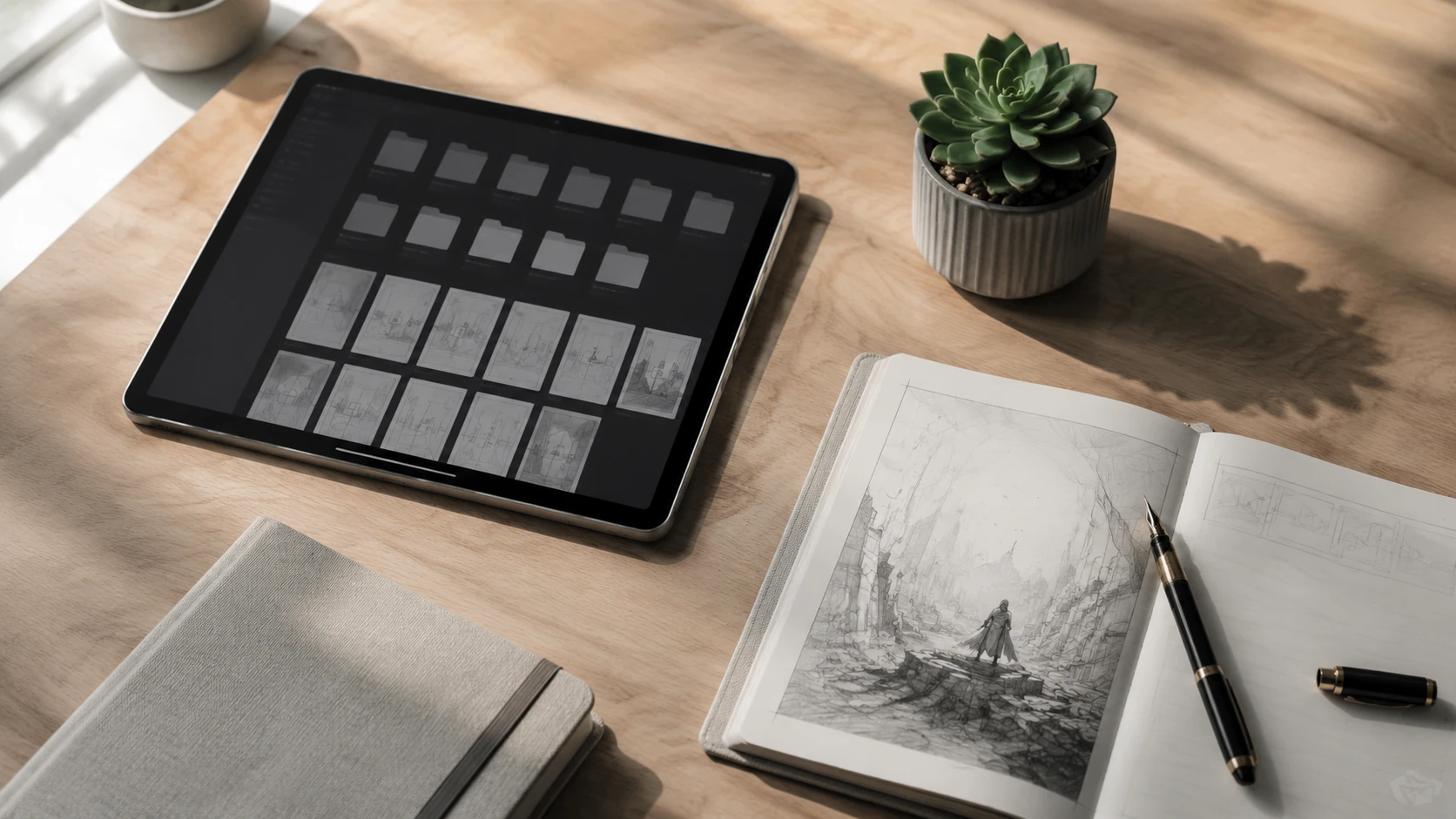
By 2026, the 'platform-first' era of digital comics has officially ended, replaced by a strategic 'IP-first' movement. As major webtoon and manga platforms undergo significant algorithmic shifts and monetization changes, creators are realizing that being locked into a single platform’s ecosystem is a massive business risk. IP Portability—the ability to seamlessly move your story, assets, and audience from one hosting service to another—has become the gold standard for independent studios and high-growth creators. This guide provides a comprehensive framework for architecting your comic assets to ensure they remain platform-agnostic, allowing you to maintain sovereignty over your intellectual property regardless of where it is currently hosted.
The 3-Layer Asset Standard for IP Portability
To achieve true portability, you must move away from 'flat' production workflows where your story is tied to a specific platform's aspect ratio or interactive features. In 2026, professional studios utilize a 3-layer asset standard that separates the core narrative from the delivery mechanism. This ensures that if a platform changes its technical requirements or if you choose to migrate to a private 'lore-gated' community, your work remains intact and adaptable.
Layer 1: The Master Narrative Engine
This layer consists of your script, world-building documentation, and character sheets in a universal, non-proprietary format (such as Markdown or JSON). Avoid using platform-specific script tools. Your narrative engine should include semantic tags for every scene, allowing AI-driven search engines to index your story independently of the platform's metadata.
Layer 2: Resolution-Independent Visual Assets
The visual layer must be produced at the highest possible fidelity, far exceeding current mobile display standards. We recommend working in vector-native formats or 600 DPI raster canvases. Panels should be drawn as individual 'objects' rather than a fixed vertical strip. This 'Asset-Modular' approach allows you to re-flow the panels for vertical scroll, traditional print, or even spatial computing interfaces without redrawing a single line.
Step-by-Step: Building a Migration-Ready Workflow
Transitioning to a platform-agnostic model requires a shift in your daily production habits. Follow this workflow to ensure your next series is fully portable from day one.
- Audit Platform Contracts: Before signing any distribution deal, identify 'Platform Poison Pills'—clauses that claim ownership of your source files or restrict your right to host the IP on a personal domain simultaneously.
- Implement a Unified Naming Convention: Use a global asset ID system (e.g., SERIES_CH01_P05_V02) across all platforms. This allows you to sync reader data and lore across different services using the Narrative API standard.
- Decouple Lettering from Art: Always keep your dialogue and SFX on separate, editable layers. Localization and platform-specific font rendering are the biggest hurdles in migration; having clean art layers makes the transition 80% faster.
- Establish an Out-of-Platform Audience Hub: Never rely on a platform's notification system as your sole point of contact. Use an independent newsletter or a 'First-Party Audience Protocol' to own your reader data.
Managing Audience Migration without Churn
The technical side of portability is only half the battle; the other half is moving your readers. In 2026, audience migration is handled through 'Narrative Incentives.' Rather than simply telling readers to move, creators offer 'migration rewards'—such as exclusive side-stories or lore-drops—that are only accessible on the new destination. By using the 'Omni-Reader' identity standard, you can allow fans to carry their reading progress and unlocked achievements from the old platform to the new one, drastically reducing the friction of moving.
Common Mistakes in IP Portability
Many creators realize too late that their workflow has trapped them. One common mistake is utilizing platform-exclusive interactive tools (like specific music triggers or branching logic) that don't exist elsewhere. To avoid this, always design for a 'Core Experience' that works on a basic vertical scroller, then layer 'Platform-Specific Enhancements' on top. Another mistake is neglecting your rights audit. In 2026, many 'standard' contracts include subtle clauses about digital distribution rights that can block you from moving to a D2C (Direct-to-Community) model.
FAQ
What is the best file format for IP portability in 2026?
For visual assets, use high-resolution (600 DPI) layered PSD or Clip Studio files as your master, while keeping a vector-native version of characters. For narrative data, use Markdown or JSON for universal compatibility.
Does platform portability hurt my visibility on major apps?
No. In fact, most 2026 algorithms reward creators who bring outside traffic. Being platform-agnostic allows you to be 'everywhere,' which increases your overall search presence and entity authority.
How do I handle lettering when moving between platforms?
Keep lettering on a separate vector layer. Use the 2026 Neural SFX Standard to automate the re-rendering of onomatopoeia if the target platform has different aspect ratio requirements.