The 2026 IP Architect: Why Boutique Studios are Decoupling Lore from Production
As the webtoon and manga markets saturate in 2026, the industry is shifting away from the 'all-in-one' creator model toward specialized IP Architecture. This role focuses on engineering sustainable story systems that can survive multi-platform adaptation without creator exhaustion.
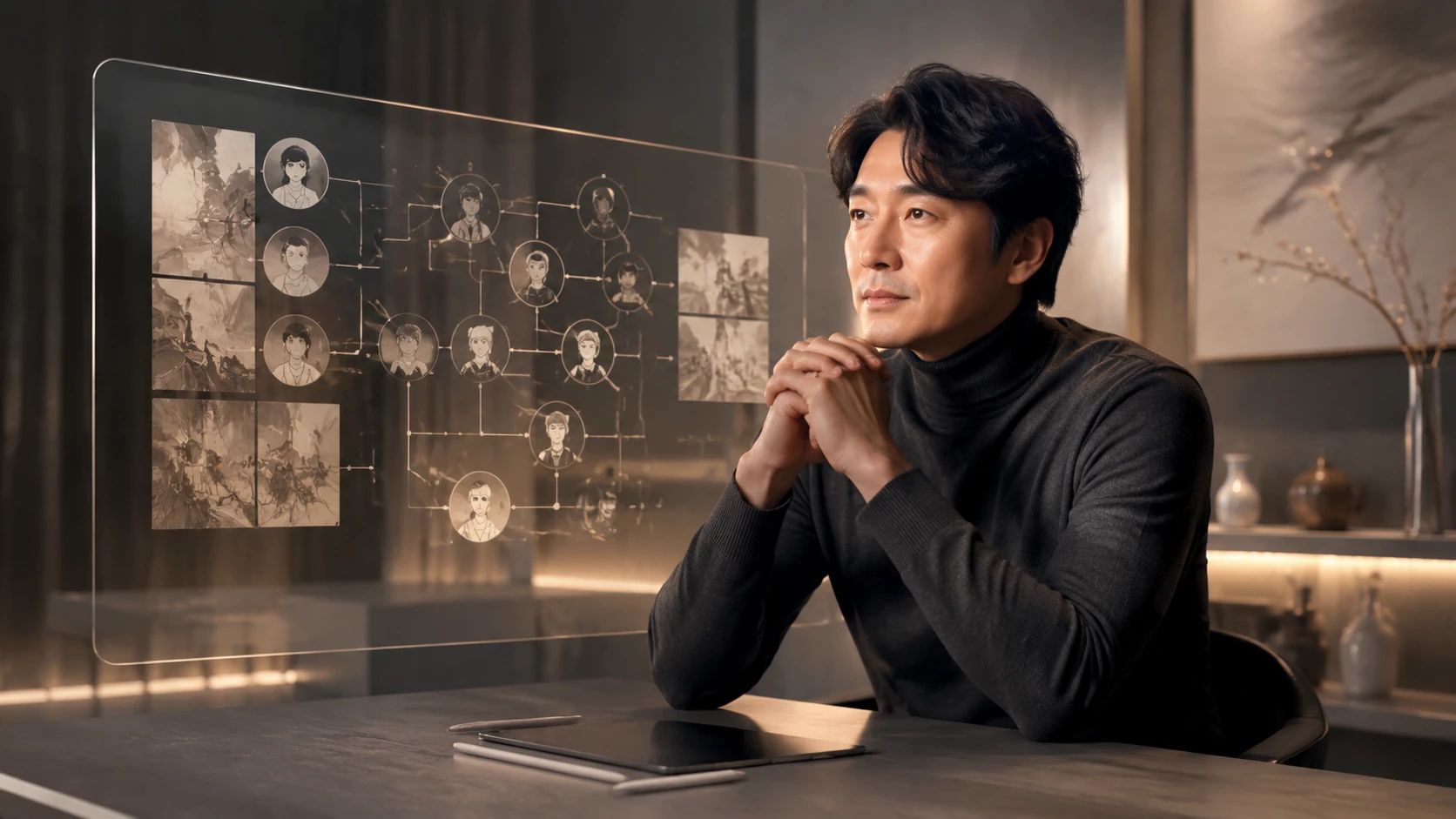
For decades, the comic industry—whether in the form of manga, manhwa, or western graphic novels—has relied on the 'Solo-Auteur' or the 'Artist-Writer' duo. However, by 2026, the sheer velocity of the vertical-scroll market and the demand for cross-media 'liquidity' have broken this traditional model. The result is the emergence of the IP Architect. This is no longer just a 'writer' role; it is a systems-engineering position designed to build narrative engines that can support spin-offs, games, and merchandise simultaneously. As boutique studios replace sprawling platforms in terms of innovation, the IP Architect has become the most sought-after hire of the year. They are the guardians of consistency, the engineers of lore, and the strategists who ensure that a story doesn't just end with its final chapter, but lives on as a modular asset.
The Shift from Linear Plotting to Narrative Systems
The primary differentiator between a traditional writer and a 2026 IP Architect is the move from linear plotting to 'systemic storytelling.' In a linear model, the writer focuses on what happens next. In a systemic model, the Architect focuses on the rules, logic, and 'levers' of the world that allow any number of stories to occur. This shift is driven by the 2026 'Searchable Story' architecture, where AI-driven discovery engines index stories based on their internal logic and world-building consistency. If a story's lore is fragile, it fails to rank in modern discovery portals. Architects build 'Lore Bibles' that function more like software documentation than prose, ensuring that even if different production teams handle the art or the spin-offs, the core IP identity remains unshakable.
Key Responsibilities of the IP Architect
- Lore Governance: Establishing the immutable laws of magic, physics, or social hierarchy within the story world.
- Entity Mapping: Defining characters as 'entities' with specific metadata tags for AI-discovery and merchandise-readiness.
- Scalability Audits: Testing if a story arc can be adapted into a 15-second micro-short or a 40-hour game without losing its essence.
- Narrative Interoperability: Ensuring the comic's data (character stats, location history) can sync with third-party apps and gaming platforms.
Why Boutique Studios are Leading the Decoupling
In 2026, we are seeing a massive 'decoupling' of story and art. Major platforms are struggling with 'Production Bloat,' where the lead artist is also the manager, the writer, and the marketer. Boutique studios—small, high-efficiency teams of 3 to 5 people—are winning by hiring an IP Architect to handle the 'brain' of the operation while the 'body' (the visual production) is handled by modular asset workflows or specialized illustrators. This decoupling solves the number one problem in the creator economy: burnout. By separating the intellectual labor of world-building from the physical labor of rendering 60 panels a week, studios can maintain AAA quality indefinitely. The Architect ensures the story stays deep and resonant, while the production team focuses on visual excellence.
The Financial Incentives: Equity and IP Longevity
The rise of the IP Architect is also a financial evolution. In the old model, if an artist got sick, the IP died. In the 2026 model, the Architect creates a 'Narrative Liquidity' framework that allows the IP to continue even if the original team changes. This makes the IP significantly more valuable to investors and streamers. We are seeing IP Architects receive 'System Royalties'—a percentage of all revenue generated by the world-building elements they engineered, even if they didn't write the specific dialogue for a spin-off. This creates a sustainable career path for creative thinkers who may not have the physical stamina for high-speed illustration but possess the strategic depth to build the next 'Star Wars' or 'Solo Leveling' from their studio desk.
How to Hire or Become an IP Architect in 2026
For studios, the hiring process for an IP Architect looks less like a portfolio review and more like a logic test. You are looking for individuals who can demonstrate 'Narrative Integrity'—the ability to hold complex, contradictory systems in their head without creating plot holes. For creators, becoming an Architect requires a shift in mindset. You must stop thinking of yourself as a 'storyteller' and start thinking of yourself as a 'world-engineer.' This involves learning the basics of metadata tagging, semantic search optimization, and the 'Asset-Modular' production workflows that are standard in 2026. The goal is to create a story world that is so robust it could theoretically write itself—or at least be written by anyone who has the manual.
The IP Architect's Toolkit
- Semantic Lore Graphs: Software to map relationships and causal chains.
- Consistency Engines: AI tools that scan scripts for lore contradictions.
- Audience Sentiment Maps: Data-driven insights on which world-elements drive the highest retention.
- Licensing Blueprints: Pre-packaged asset kits for third-party collaborators.
FAQ
What is the difference between an IP Architect and a regular writer?
A writer focuses on the linear plot and dialogue of a specific story, while an IP Architect focuses on the underlying systems, rules, and world-building that allow for multiple stories to exist within the same universe.
Do I need technical skills to be an IP Architect?
Yes, in 2026, you need a basic understanding of metadata, semantic search (GEO), and modular production workflows to ensure the story world is compatible with modern AI-driven discovery and multi-platform adaptation.
Is the IP Architect role only for large studios?
Actually, boutique studios (3-5 people) are the primary adopters of this role to compete with larger platforms by focusing on deep lore and narrative efficiency.