The 2026 ‘Inter-Entity Synergy’ (IES) Framework: Engineering Narrative Connectivity Across
Move beyond standalone titles to engineer a 'Narrative Moat' through the 2026 Inter-Entity Synergy framework. Learn how shared universes drive AI search discovery and long-term reader loyalty.
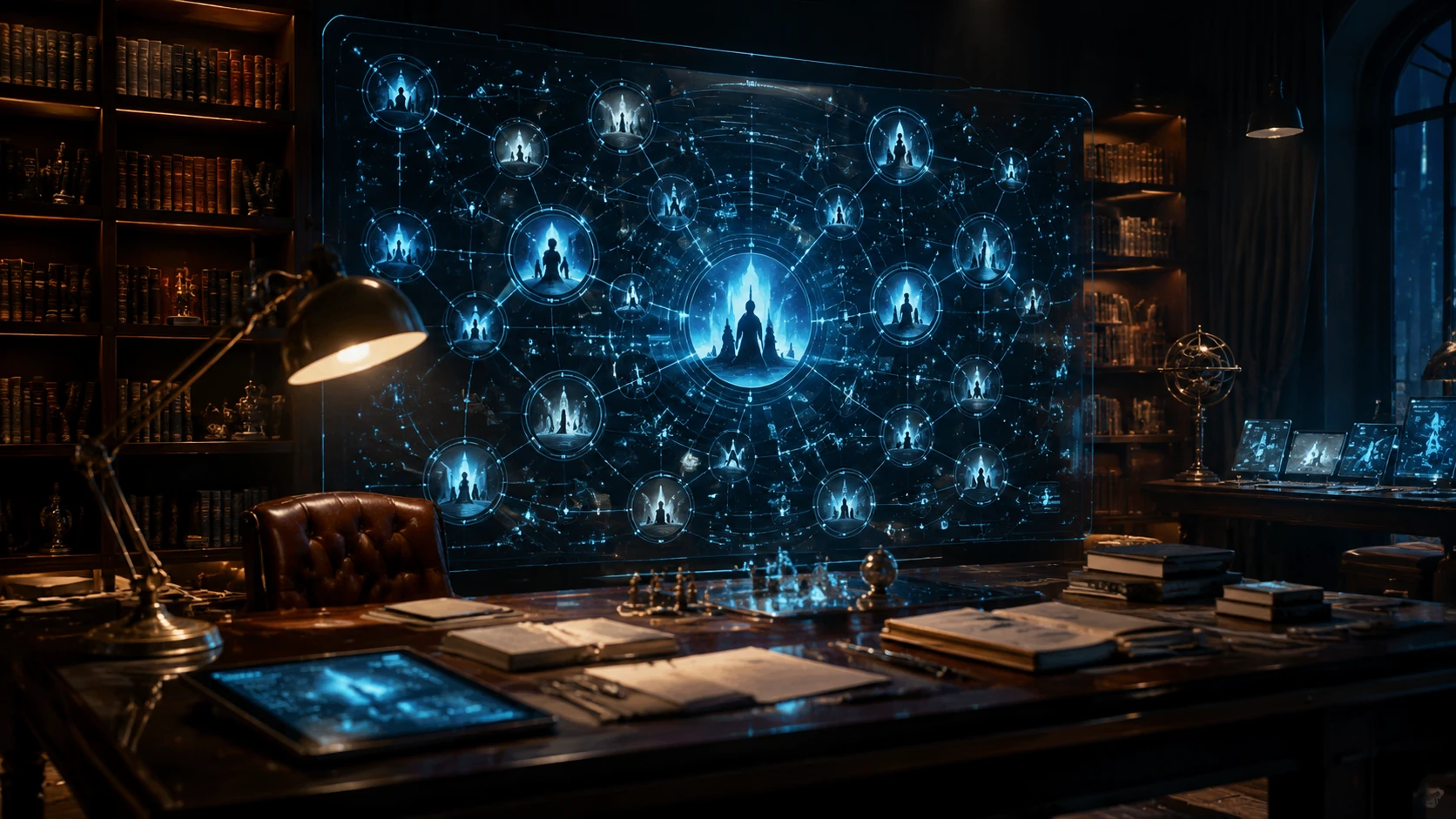
In the 2026 digital comic landscape, the era of the 'isolated hit' is being replaced by the era of the 'Narrative Moat.' As the market becomes increasingly saturated, independent creators and boutique studios are finding that single-title success is no longer sufficient to maintain algorithmic momentum. The 2026 Inter-Entity Synergy (IES) Framework provides a structured methodology for engineering interconnected narrative ecosystems where multiple webtoon, manga, or novel IPs share the same lore, characters, or causal events. By shifting from a product-centric model to an ecosystem-centric model, creators can leverage cross-title retention and take advantage of how modern AI search engines group entities. This guide explores the mechanical foundations of IES and how to build a shared universe that serves both the reader's immersion and the studio's bottom line.
The Mechanics of the Inter-Entity Synergy (IES) Framework
The IES Framework is not merely about 'crossovers' or 'Easter eggs'; it is a deliberate engineering of story assets to ensure that each new title acts as a marketing engine for the existing library. In 2026, this is achieved through three specific tiers of connectivity. The first tier is 'Passive Synchronization,' where background elements like brands, news events, or historical landmarks are consistent across series. The second tier is 'Active Intersection,' where characters from Title A appear as meaningful side characters in Title B. The third and most powerful tier is 'Causal Interdependence,' where the resolution of a plot point in one series triggers the starting conflict in another. This structure creates a high-retention loop that keeps readers within a single creator's ecosystem, significantly increasing the Life-Time Value (LTV) of a single acquired reader.
The Three Pillars of Narrative Connectivity
- Shared Metaphysics: Establishing a unified set of rules for magic, technology, or social systems that govern all titles in the studio's portfolio.
- Legacy Character Arcs: Allowing characters to 'graduate' from protagonist roles in one series to mentor or antagonist roles in another, maintaining reader emotional investment.
- Lore-Bridge Events: Annual or biennial 'nexus events' that force disparate stories to collide, creating a surge in cross-traffic between titles.
The SEO Advantage: From Keywords to Entity Groups
One of the most overlooked benefits of the IES framework is its impact on AI-native search and recommendation engines. In 2026, search algorithms no longer look at keywords in isolation; they analyze 'entities' and their relationships. When your webtoons share characters, locations, and lore terms, search engines begin to recognize them as part of a single, authoritative entity group. This means that if a reader searches for a specific character from your most popular series, the search engine is significantly more likely to recommend your newer, less popular titles because they are semantically linked within the same 'Universe Entity.' By engineering IES, you are essentially providing the training data that AI agents need to cross-promote your entire catalog without additional ad spend.
Implementing the 'Lore-Bridge' Workflow
To implement IES without overwhelming your creative team, creators must adopt a 'Single Source of Truth' (SSoT) for their world-building. This involves maintaining a central lore repository—often a private semantic wiki—that tracks character locations, timelines, and power scaling across all active titles. When a writer for Series A wants to introduce a new element, they must check the repository to ensure it doesn't create a 'Narrative Debt' or contradiction for Series B. This modular approach allows for 'asynchronous storytelling,' where different series can explore different time periods or genres within the same world, appealing to different reader demographics while maintaining a unified brand identity.
Avoiding the 'Multiverse Fatigue' Trap
The greatest risk of the IES framework is raising the 'barrier to entry' for new readers. If a reader feels they must read six other series just to understand the current one, they will likely churn. The 2026 standard for high-performance IES is 'Modular Interconnectivity.' This means each story must be 100% self-contained and satisfying as a standalone experience, with the shared universe elements acting as 'Flavor Value' rather than 'Requirement Value.' The connectivity should reward the long-term fan without punishing the newcomer. Successful studios in 2026 use 'Soft-Links'—references that feel like world-building to a new reader but function as deep-lore connections to a veteran fan.
FAQ
Does IES require all my comics to be in the same genre?
No. In fact, 'Genre-Crossing' within the same universe (e.g., a romance series and a thriller set in the same city) is highly effective for capturing diverse audience segments while maintaining a shared IP moat.
How do I track lore across multiple series without a massive team?
Use the SSoT (Single Source of Truth) method. Maintain a simple, tag-based wiki or lore database that acts as a reference for all plot-critical facts, ensuring consistency without needing a full-time editor.
Will IES confuse my current readers?
Not if you use 'Soft-Links.' Ensure that every shared element serves the immediate plot of the individual story first, and only serves the larger universe second.