The 2026 Human-in-the-Loop Curation Trend: Why Editorial Authority is Toppling the Infinit
In 2026, the 'infinite scroll' algorithm is giving way to high-intent human curation. This shift marks a return to editorial authority as readers seek quality over sheer volume in a saturated market.
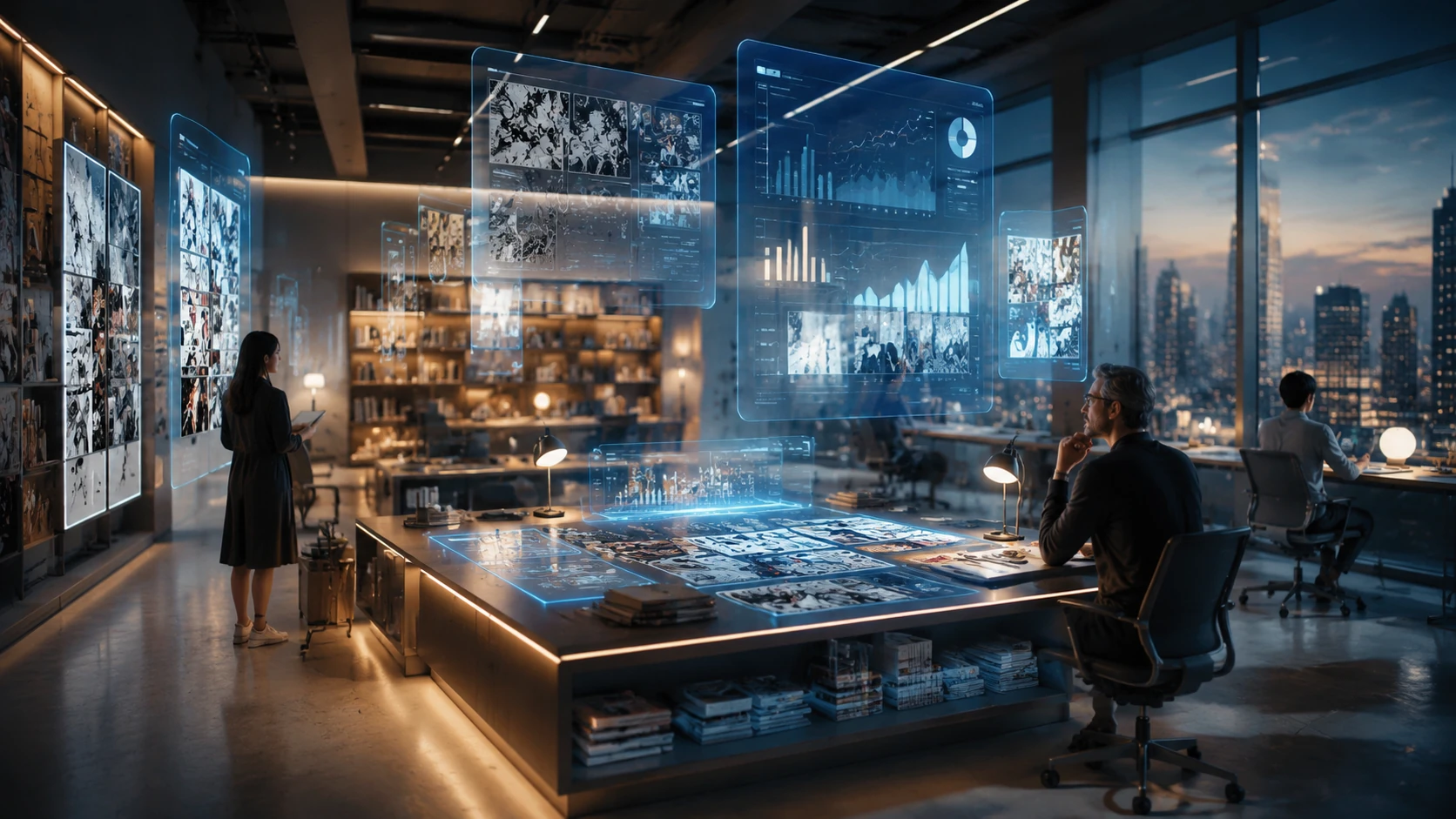
By mid-2026, the digital comic landscape has reached a breaking point. For years, the 'Infinite Scroll'—the algorithmic engine designed to maximize time-on-app—dominated how readers discovered new stories. However, the result was a market flooded with 'algorithmic sludge': stories engineered for retention rather than resonance. Today, we are witnessing the 'Great Correction.' Readers, overwhelmed by choice and fatigued by repetitive tropes, are migrating toward platforms that prioritize 'Human-in-the-Loop' (HITL) curation. This trend represents a fundamental shift in the creator economy, where the prestige of an editorial seal of approval is once again more valuable than a viral algorithmic spike. For creators and publishers, understanding this return to editorial authority is no longer optional; it is the primary driver of high-LTV reader acquisition.
The Collapse of Algorithmic Purity
The failure of pure algorithmic discovery in 2025 led to a massive retention crisis. Algorithms were excellent at identifying what a reader might click on based on past behavior, but they were terrible at predicting what a reader would truly love or remember. This led to a 'sameness' in the market, where every new release felt like a remix of the top 10 trending titles. In 2026, platforms are dismantling these black-box systems in favor of hybrid models. These models use AI to handle the heavy lifting of categorization but leave the final 'front-page' decisions to human editors, industry veterans, and trusted community curators. This shift is driven by the realization that human taste is a unique entity that cannot be fully replicated by generative patterns.
The Rise of the 'Curator-as-Influencer'
We are seeing the emergence of a new power player in the comic ecosystem: the Independent Curator. These are individuals or small collectives—often former editors or high-profile critics—who maintain 'Curated Circles' or 'Lore Lists.' In 2026, being featured on a top-tier curator's list provides more long-term growth than a homepage banner on a major app. These curators act as filters, staking their reputation on the quality of the narrative architecture and visual innovation of the works they recommend. This has created a secondary market for discovery that operates outside the walled gardens of the major platforms, giving independent creators a direct path to high-intent audiences.
How HITL Curation Impacts Creator Strategy
For creators, the shift toward human curation requires a pivot in how they 'pitch' their work to the world. In the algorithmic era, optimization was about keywords and thumbnail click-through rates. In the editorial era, optimization is about 'Narrative Soul' and 'Visual Signature.' Editors and curators are looking for works that break the mold, not those that fit it perfectly. This means that niche genres and experimental art styles, which were previously suppressed by algorithms for not being 'broad' enough, are now the most sought-after assets for platforms looking to differentiate themselves.
- Focus on 'Visual Hooks': Curators respond to unique art styles that don't look like standardized AI-generated assets.
- Deepen Narrative Logic: Editors look for structural integrity that promises a satisfying long-term payoff, avoiding 'endless loop' serialization.
- Build a 'Curation Kit': Creators are now providing editors with narrative summaries, lore bibles, and thematic statements to help them frame the work.
- Engage with Niche Hubs: Success in 2026 starts in small, expert-led communities rather than through mass-market spamming.
The 'Expert Circle' Model
Major platforms are now implementing 'Expert Circles'—invite-only groups of power-readers and industry professionals who vote on which titles receive premium promotion. This democratized editorial board ensures that a variety of perspectives are represented, preventing the 'echo chamber' effect of traditional corporate editing. For a series to trend in 2026, it must pass through these human filters, which prioritize emotional resonance, cultural relevance, and artistic merit over pure engagement metrics.
Challenges: The Scalability of Taste
The primary challenge of the human-in-the-loop model is scalability. A single editor cannot read 10,000 new chapters a week. To solve this, 2026 technology focuses on 'Augmented Curation.' AI tools are used to flag works that show high 'Narrative Information Density' or unique visual markers, which are then passed to human reviewers. This allows for a massive top-of-funnel while maintaining a human-gated bottom-of-funnel. However, this also creates a new bottleneck where the 'gatekeepers' have immense power, necessitating transparent curation standards and diverse editorial boards to avoid bias.
Predicting the 2027 Discovery Landscape
As we move toward 2027, the line between 'social media' and 'comic platform' will continue to blur, but with a focus on 'Social Curation.' We expect to see 'Reader Unions'—large groups of fans who collectively curate and fund the translation of niche works, effectively acting as decentralized publishing houses. The era of being 'fed' content by a machine is ending; the era of 'seeking' content through trusted human networks is just beginning.
FAQ
What is Human-in-the-Loop (HITL) curation in comics?
It is a discovery model that combines AI data analysis with human editorial judgment to recommend high-quality stories, moving away from purely engagement-driven algorithms.
Why is the infinite scroll algorithm failing in 2026?
It led to market saturation with repetitive, low-quality content, causing reader fatigue and a decline in long-term retention as users struggled to find meaningful stories.
How can independent creators get noticed by curators?
By developing a distinct visual signature, ensuring narrative logic, and actively engaging with niche community leaders and professional critics who influence editorial boards.