The 2026 Heatmap Narrative Framework: Mapping Reader Friction and Emotional Heat to Optimi
Discover the 2026 standard for data-informed storyboarding. Learn how to map reader friction and emotional heat to transform scroll behavior into actionable narrative improvements.
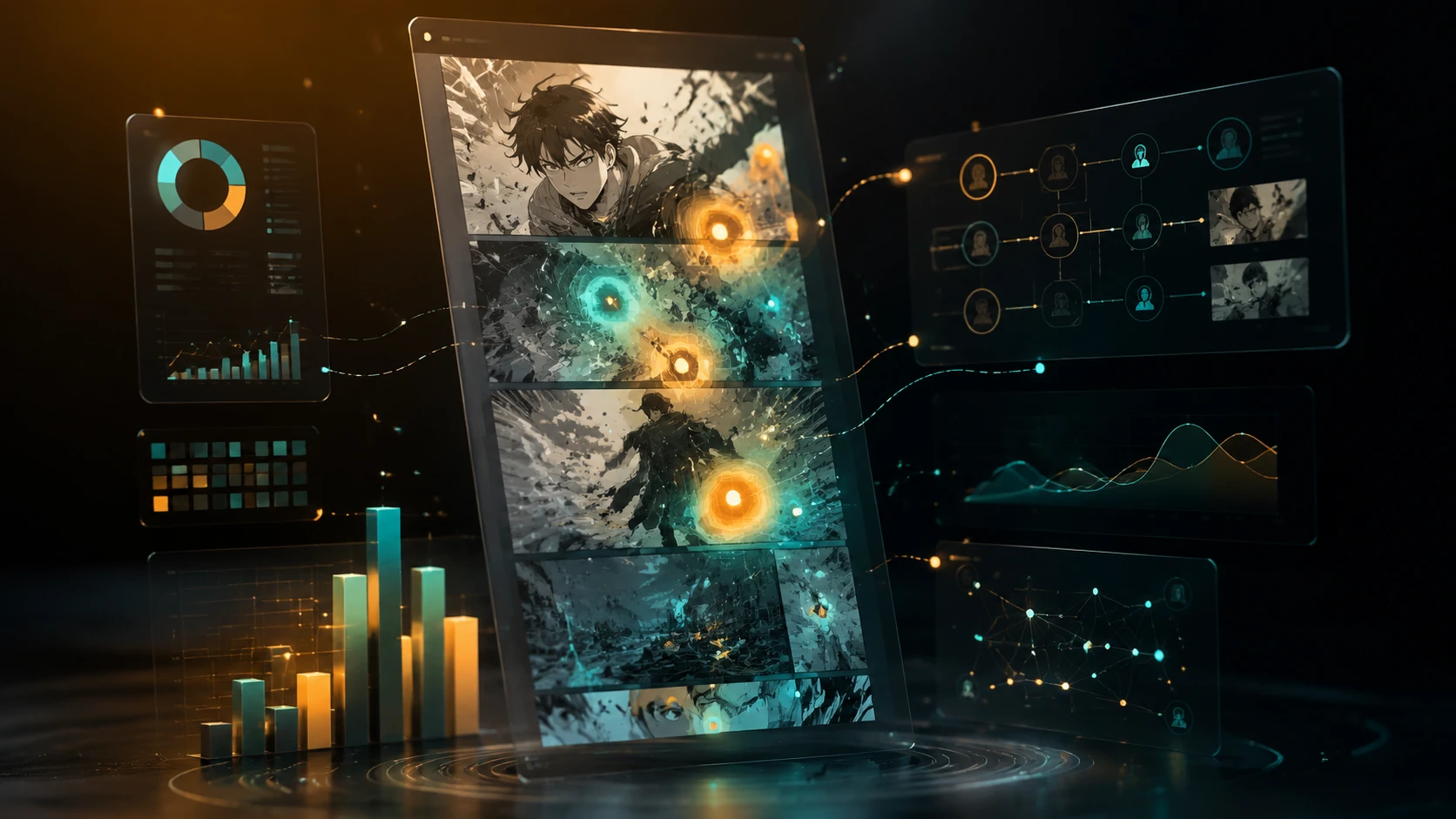
By 2026, the era of 'guessing' chapter pacing has come to an end. As global competition for reader attention intensifies, professional creators and boutique studios are moving beyond basic view counts to adopt the Heatmap Narrative Framework. This methodology leverages granular behavioral data—specifically scroll velocity, pause-points, and re-read clusters—to visualize exactly how a reader consumes a story. Instead of relying on vague comments, creators can now see the precise panel where a reader’s interest wanes or where a visual beat triggers a high-intensity emotional reaction. Understanding these 'Heat' and 'Friction' zones is the new prerequisite for maintaining a 90%+ retention rate in a saturated market.
Defining the Heatmap Narrative Framework
The framework operates on the principle that every scroll action is a data point reflecting cognitive engagement. In the 2026 ecosystem, platforms provide creators with anonymized 'Heat Maps' that overlay the vertical canvas. High-Heat zones indicate areas where readers slowed down, zoomed in, or shared a specific panel. Conversely, 'Friction Zones' represent areas of high-velocity scrolling, where readers are effectively skimming to reach the next plot point. The goal of the framework is not to eliminate all fast-scrolling, but to ensure that the 'Heat' aligns with your intended narrative peaks.
The Two Pillars of Data-Informed Pacing
- Engagement Heat: Clusters of long-duration pauses that correlate with complex visual storytelling, emotional payoffs, or dense world-building details.
- Velocity Friction: Rapid scroll segments that often signal repetitive dialogue, overly long transitions, or visual layouts that fail to guide the eye effectively.
Identifying Friction Points: Why Readers Drop Off
A friction point is any sequence that causes a 'bounce' or a significant increase in scroll speed that bypasses critical narrative information. Through 2026 analytics, we’ve identified that the most common cause of mid-chapter drop-off isn't 'bad art,' but rather 'cognitive congestion.' This occurs when the panel layout requires too much mental effort to navigate, or when the 'dialogue-to-visual ratio' becomes unbalanced for the mobile format. By mapping these friction points, creators can identify exactly which 500-pixel segment of their webtoon is causing a dip in retention.
Common friction triggers include redundant 'talking head' panels that don't advance the visual narrative and 'scroll-stalls'—large gaps of white space that are too long, breaking the reader's immersion and making them feel like the content has ended prematurely. The framework teaches creators to 'smooth' these areas by either increasing visual interest or tightening the script to match the scroll-native rhythm of 2026 audiences.
Converting 'Heat' into Revenue and Loyalty
High-heat zones are your IP's most valuable assets. These are the moments that drive social sharing, fan art, and micro-transactions. In 2026, many creators use 'Heat-Syncing' to determine which panels should be used for merchandise, promotional teasers, or even limited-edition digital collectibles. If a specific character reveal consistently generates a 'Deep Pause' across 80% of your readership, that panel is a high-intent anchor for your brand.
The Workflow: From Heatmap to Redraw
Implementing the Heatmap Narrative Framework requires an iterative approach to production. Top-tier studios now utilize a 'Pilot-and-Pivot' workflow. Before committing to a full 50-chapter season, they release 'Micro-Arcs' and analyze the heatmap data to refine the visual language of the series. This data-led iteration ensures that by the time the series hits its stride, the pacing is perfectly calibrated to the target demographic’s reading habits.
The 4-Step Iteration Cycle
- Data Collection: Aggregate scroll-velocity and pause-duration data over a 7-day period post-release.
- Friction Audit: Highlight sections with a scroll speed 2x higher than the chapter average.
- Narrative Adjustment: Shorten dialogue or dynamicize the paneling in identified friction zones for future chapters.
- Heat Amplification: Identify high-pause visuals and double-down on those aesthetic elements in the next arc.
Ethical Data Usage: Balancing Vision with Analytics
A common pitfall in 2026 is 'Algorithm Over-Optimization,' where creators strip away all nuance in pursuit of perfect retention. The Heatmap Narrative Framework is intended to be a diagnostic tool, not a creative dictator. A master creator knows when to intentionally introduce 'Slow Heat'—sections where the reader is meant to linger and reflect—even if it technically lowers the 'completion speed.' The goal is to eliminate accidental friction while protecting the artistic soul of the work.
Authenticity remains the ultimate retention signal. Data can tell you *where* people are leaving, but it cannot tell you the *why* of a soul-stirring story. Use heatmaps to fix technical pacing errors, but rely on your narrative intuition to build the emotional world that makes readers want to stay in the first place.
Conclusion: The Future of Narrative Engineering
As we move further into 2026, the gap between 'hobbyist' and 'professional' creators will be defined by their ability to interpret and act on reader behavior. The Heatmap Narrative Framework provides a bridge between the subjective art of storytelling and the objective reality of digital consumption. By mastering this framework, you aren't just drawing a comic; you are engineering an experience that respects the reader's time and rewards their attention.
FAQ
What is considered a 'good' retention rate for a webtoon in 2026?
In the 2026 market, a 'healthy' series maintains a 75-80% chapter-to-chapter retention. Elite, top-tier IPs using data-driven pacing frameworks often achieve 92% or higher.
How do I access heatmap data for my series?
Most major 2026 platforms now include a 'Creator Analytics' dashboard. For independent creators, third-party hosting tools and semantic metadata layers can provide similar scroll-behavior insights.
Will optimizing for heatmaps make my story feel formulaic?
Only if used blindly. Use heatmaps to fix 'mechanical' issues like poor panel flow or cluttered lettering, while keeping your unique narrative voice and experimental beats intact.
Does high scroll velocity always mean the reader is bored?
Not necessarily. It can also indicate a high-octane action sequence where the layout encourages fast reading. The key is to match the 'intended' speed with the 'actual' reader speed.