The 2026 'Fractional Studio' Model: Scaling High-Quality Webtoons on a Solo Creator Budget
Discover how the fractional studio model is allowing solo creators to achieve studio-level output without the overhead of full-time staff. Learn the 2026 workflow for modular comic production and IP scaling.
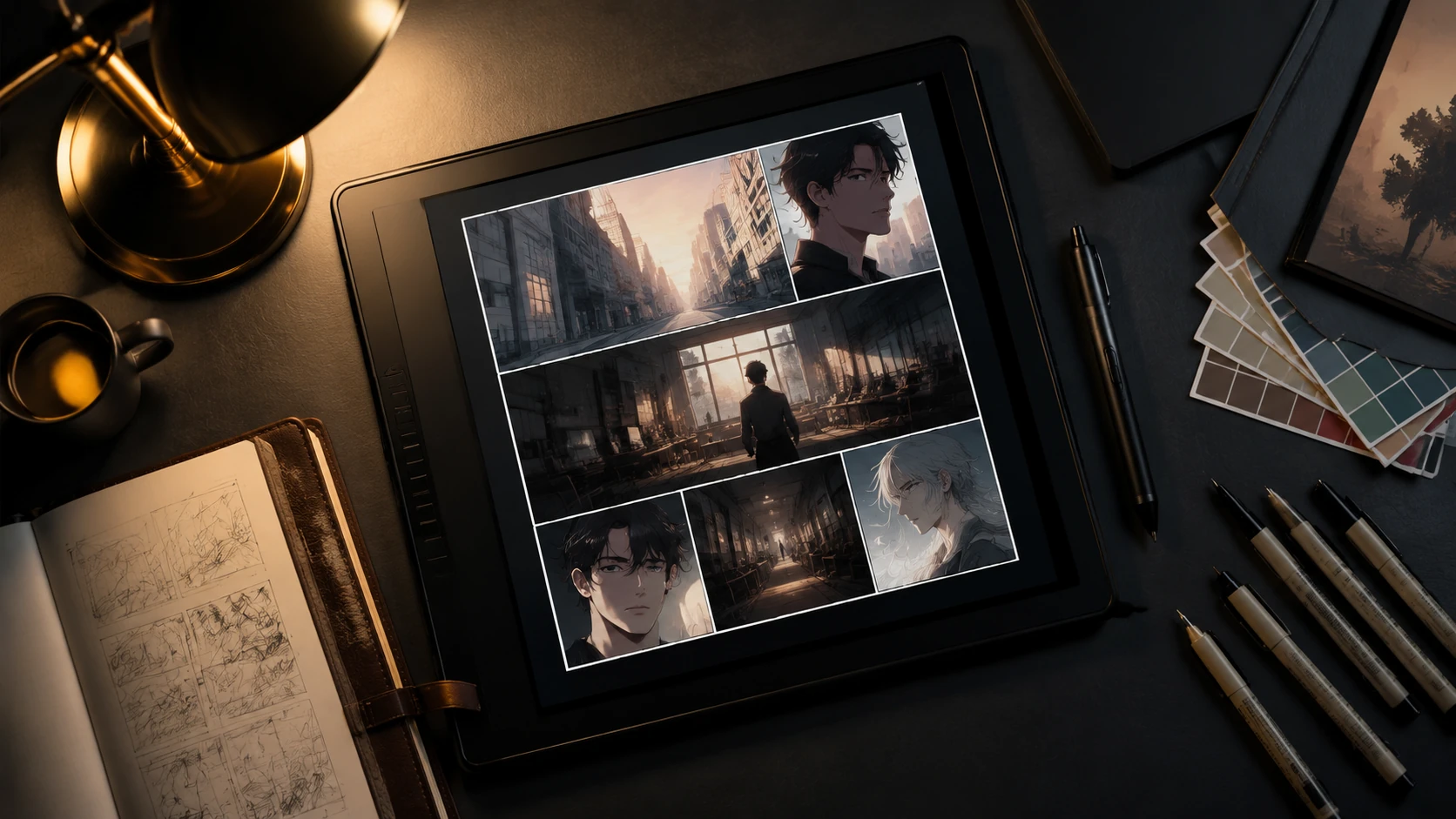
By 2026, the archetype of the 'starving solo artist' has been replaced by the 'Sovereign Creator'—a strategic lead who manages a high-output production pipeline without the burden of traditional studio overhead. The central driver of this shift is the 'Fractional Studio' model. Unlike the old method of hiring full-time assistants or struggling through every stage of production alone, the fractional model treats every part of the webtoon process—from flatting and background rendering to lettering and semantic tagging—as a modular service. This allows creators to scale their output to meet the high-frequency demands of modern platforms while maintaining a lean, solo-led budget. In an era where reader retention is tied to consistent, high-density updates, mastering this modular workflow is no longer optional; it is the baseline for professional sustainability in the global comic market.
Understanding the Fractional Studio Architecture
The Fractional Studio model is built on the principle of 'disaggregated production.' Instead of viewing a webtoon chapter as a single task, it is broken down into its constituent technical layers. A creator in 2026 functions as a Showrunner, focusing 80% of their energy on high-value tasks like storyboarding (name/draft), character acting, and emotional pacing. The remaining technical layers—color rendering, 3D asset placement, and clean-up—are outsourced to fractional specialists or AI-augmented pipelines. This ensures that the 'visual soul' of the IP remains consistent while the time-consuming labor is handled by external nodes. This approach also mitigates the risk of creator burnout, which remains the primary cause of series cancellation and IP value erosion.
Key Components of a Modular Workflow
- Semantic Model Sheets: Using AI-ready character turnarounds to ensure consistency across fractional colorists.
- Prop & Environment Libraries: Pre-built 3D assets that allow for instant background composition across different chapters.
- Layer-Specific Outsourcing: Hiring specialized flatters or background artists on a per-chapter basis through vetted 2026 talent marketplaces.
- Automated Quality Control (QC): Using semantic vision tools to check for visual drift and anatomical errors before final export.
Managing the TCO (Total Cost of Ownership) per Panel
One of the most critical aspects of the Fractional Studio model is understanding the cost-per-panel metrics. In 2026, successful independent creators treat their series as a business, calculating exactly how much investment each panel requires versus the projected revenue from platform ads, micro-transactions, and licensing. By utilizing fractional help, a creator can lower their TCO by only paying for specialized labor when it is needed. For example, a high-action chapter might require more fractional assistance for line-art clean-up, whereas a dialogue-heavy 'filler' chapter can be handled mostly by the lead creator. This elasticity in production costs allows for a healthier profit margin and enables creators to reinvest in their IP's marketing and community growth.
Step-by-Step Transition to a Fractional Model
Transitioning from a solo workflow to a fractional one requires a shift in mindset from 'drawing' to 'directing.' The first step is creating a comprehensive World Bible and Style Guide that acts as a single source of truth for all fractional contributors. This document must include color hex codes, brush settings, and character proportions. Once the infrastructure is set, creators typically begin by outsourcing the most repetitive task—usually flatting—to test the communication loop. By the time a creator reaches the 10th chapter of their series, they should have a vetted roster of 2-3 fractional assistants who understand the 'visual shorthand' of the IP. This creates a scalable engine that can pivot quickly if the series is picked up for a major platform deal or cross-media adaptation.
Avoiding Common Modular Pitfalls
- Lack of Unified Style: Failing to provide clear brush and lighting specs leads to 'visual drift' between chapters.
- Over-Reliance on Raw AI: Using unedited AI backgrounds can break immersion and lower the perceived luxury value of the IP.
- Poor Communication Loops: Not having a centralized project management tool for asset delivery can cause significant production delays.
- Underestimating QC Time: Even with fractional help, the lead creator must budget time for a final 'polish' pass to ensure a cohesive look.
Conclusion: The Future of the Sovereign Creator
The 2026 webtoon market rewards speed, quality, and IP longevity. The Fractional Studio model provides the only viable path for independent creators to compete with major studios while retaining 100% ownership of their narrative assets. By embracing modularity and strategic delegation, creators can move away from the unsustainable 'crunch' culture and toward a professionalized, data-led production environment. As the barriers to entry continue to fall, the winners will be those who can best manage their creative energy as a finite resource, using technology and fractional talent to amplify their unique storytelling voice across the global digital landscape.
FAQ
How do I find fractional assistants in 2026?
Most creators use specialized talent marketplaces that focus on webtoon production, such as ArtStation Pro, specialized Discord talent hubs, or AI-integrated freelance platforms that offer semantic asset matching.
Is the fractional model more expensive than being a solo artist?
While it requires upfront capital, it significantly reduces the 'time-to-market' and increases the quality of the final product, which leads to higher reader retention and better monetization potential, making it more profitable in the long run.
Can I use AI as my 'fractional' team?
Yes, many 2026 creators use AI for specific layers like background generation, flatting assistance, and lettering. However, human oversight (QC) is essential to maintain the 'Proof of Human' premium required for high-tier IP.