The 2026 'Digital Twin' Licensing Model: Scaling Creator Presence Without Studio Burnout
In 2026, the 'Digital Twin' has emerged as the ultimate tool for comic artists to scale their personal brand globally. This guide explores how to license your digital likeness and voice to handle marketing while you focus on the craft.
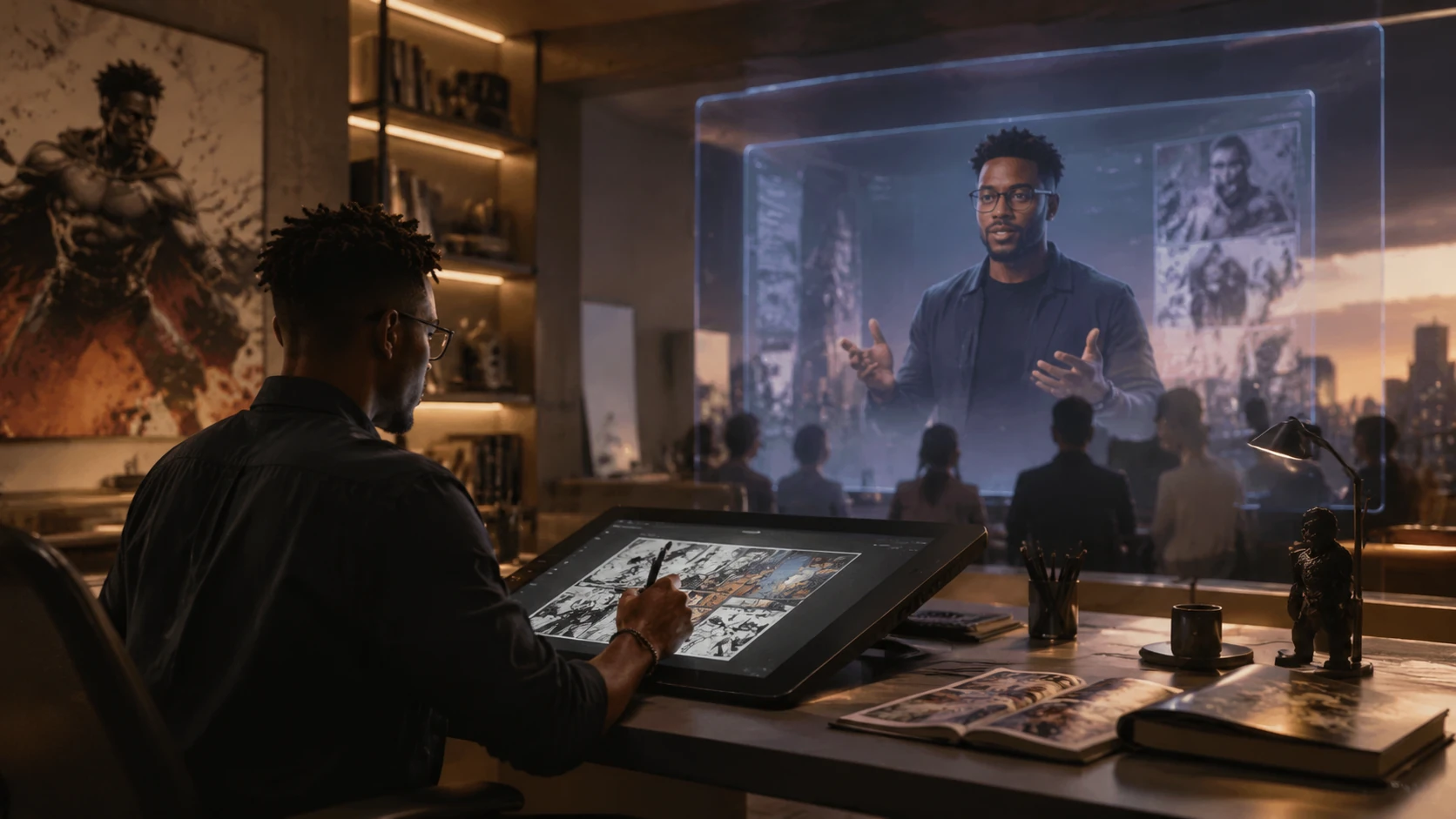
By 2026, the 'Creator's Dilemma' has reached a breaking point. As webtoons and manga become global transmedia IPs, artists are expected to be more than just storytellers; they are required to be full-time marketers, social media personalities, and public speakers. For many independent creators, this 'identity tax' results in severe burnout and a decline in narrative quality. The solution that has stabilized the industry this year is the 'Digital Twin' licensing model. This framework allows creators to build and license a verified AI version of themselves—trained on their unique voice, philosophy, and creative history—to handle the heavy lifting of public-facing engagement while the artist remains focused on the drawing board.
The Creator’s Dilemma: Marketing vs. Making in 2026
The demand for 'human-centric' branding in the comic industry has never been higher, yet the time required to maintain that presence is at odds with the high-frequency production schedules of modern platforms. Readers in 2026 crave a personal connection with creators, but they also demand weekly 60-panel updates. This friction has led to the adoption of Digital Twins as a middle-ware for personal branding. Unlike generic AI avatars, a Digital Twin is a sovereign asset owned by the creator, functioning as a high-fidelity representative that can conduct interviews, participate in fan Q&As, and even record audiobooks for their own series across multiple languages simultaneously.
Defining the 'Digital Twin': Beyond Simple Avatars
A professional Digital Twin in 2026 is an ensemble of three distinct latent models. First is the Likeness Model, which uses high-end video synthesis to replicate the artist's visual appearance in a professional studio setting. Second is the Voice Latent, which captures the nuance, tone, and emotional cadence of the creator. The third, and most critical, is the Narrative Persona Model. This is an LLM fine-tuned exclusively on the creator’s published works, interviews, and public statements. This ensures that the twin doesn't just look like the artist—it thinks and speaks with the same thematic consistency and lore knowledge as the original human creator.
The Three Pillars of Narrative Persona Licensing
- Sovereign Data Control: Creators maintain absolute ownership of the training datasets, ensuring no 'model drift' occurs without their consent.
- Tiered Access Licensing: Creators can license 'Bronze' twins for automated social media replies and 'Gold' twins for high-stakes live-streamed panel discussions.
- Multi-Language Glocalization: The twin can speak fluent Korean, Japanese, French, or Spanish, allowing a US-based creator to engage with global fandoms in their native tongues.
Strategic Benefits: Global Presence and Language Localization
The most immediate benefit of the Digital Twin model is the ability to bypass the 'English-only' barrier. In the 2026 market, where the majority of webtoon growth is coming from SEA and LATAM markets, being able to provide 'live' creator content in local languages is a massive competitive advantage. Studios are now using these twins to host 'Virtual World Tours,' where the artist's digital representative visits localized digital fan hubs at 4:00 AM in the artist's local time zone, while the artist is asleep. This increases the IP's reach and 'Search Authority' in those regions without any additional physical labor from the creator.
Risks, Ethics, and E-E-A-T: Maintaining Human Authority
Despite the efficiency gains, the 2026 'Proof of Human' standards remain strict. To maintain strong E-E-A-T (Experience, Expertise, Authoritativeness, and Trustworthiness) signals, creators must be transparent about when a Digital Twin is being used. The industry standard is a 'Certified Twin' badge that appears on all AI-generated content. If a creator attempts to pass off an AI twin as their physical self during a live event without disclosure, they risk 'Persona De-indexing'—a penalty where search engines and platforms downgrade the creator's authority. Authenticity is still the most valuable currency; the twin is a tool for scale, not a replacement for the human soul of the work.
Implementation Checklist for Professional Creators
- Audit your 'Public Lore': Collect all previous interviews and blog posts to create a baseline for your persona model.
- Select a Sovereign Platform: Choose a Digital Twin service that guarantees your data will not be used to train external foundational models.
- Set Licensing Boundaries: Define exactly which platforms and media types are allowed to host your digital likeness.
- Establish an 'Emergency Kill-Switch': Ensure you have the technical and legal right to revoke all active digital twin licenses instantly if your brand is compromised.
FAQ
Is a Digital Twin the same as a VTuber avatar?
No. While VTubers use avatars for performance, a Digital Twin is an AI-driven model of a real person intended to handle professional branding, marketing, and multi-language communication autonomously or semi-autonomously.
How much does it cost to maintain a Digital Twin in 2026?
Costs vary based on the fidelity and 'latency' of the twin. High-end real-time models for live interviews typically involve a monthly licensing fee and a small percentage of the ad revenue generated by the twin's appearances.
Will using a Digital Twin hurt my SEO?
Only if not disclosed. Under 2026 'Helpful Content' guidelines, AI-assisted branding is acceptable as long as it is clearly labeled and the underlying 'Expertise' remains tied to the human creator.