The 2026 ‘Digital-Collectibility’ Standard: Engineering Webtoon IP for Scarcity-Based Mone
In 2026, the 'attention economy' is being replaced by the 'ownership economy.' This guide explores how creators can engineer digital scarcity and narrative-gated assets to build sustainable, high-margin revenue streams.
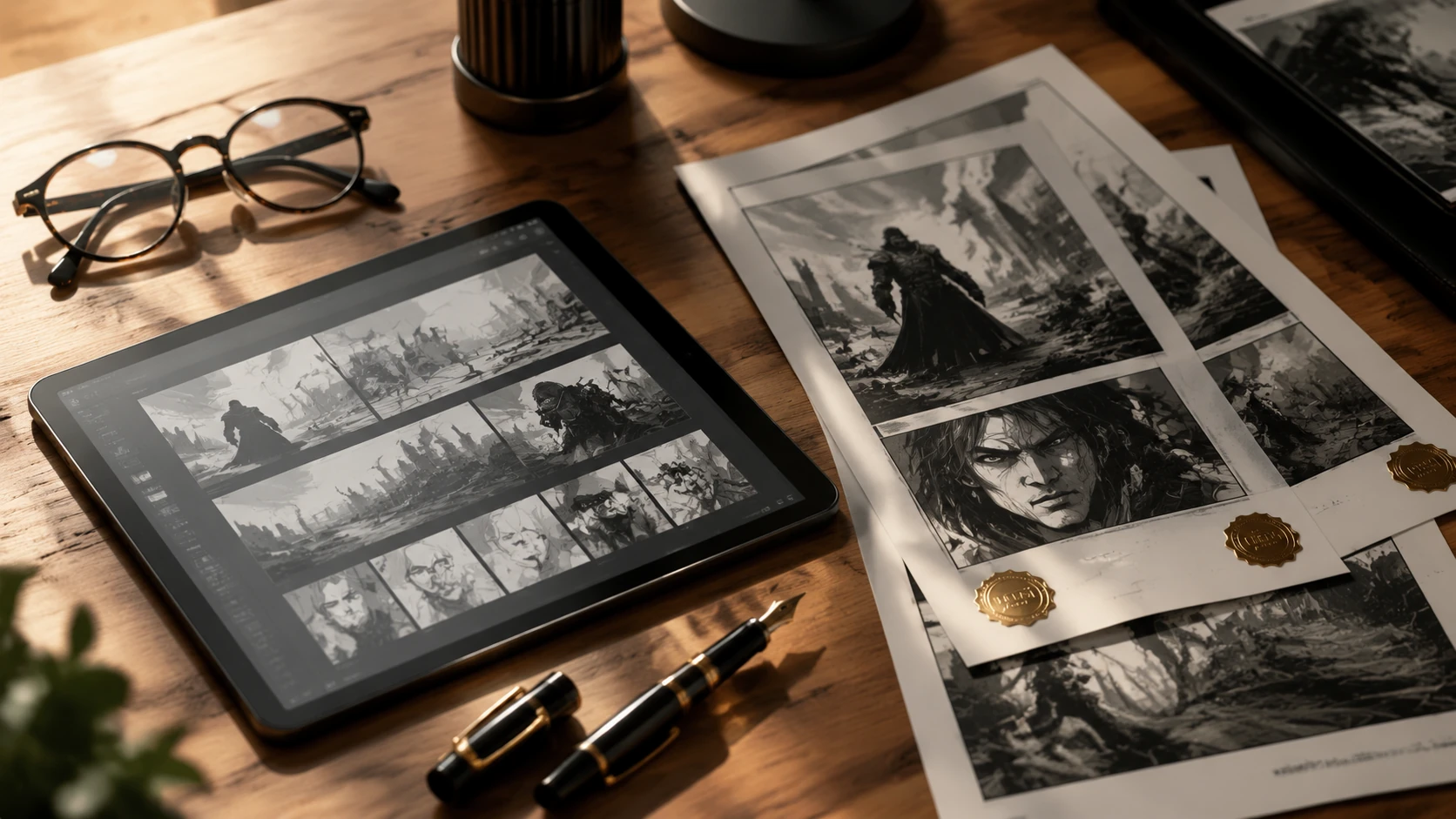
By 2026, the saturation of free-to-read content has reached a tipping point, leading to a massive shift in reader psychology. Modern audiences are no longer satisfied with merely consuming content; they are increasingly seeking 'sovereign ownership' of the stories they love. This shift has given rise to the Digital-Collectibility Standard (DCS), a monetization framework that prioritizes scarcity, provenance, and utility over raw view counts. For independent creators and boutique studios, this represents a pivot from the low-margin 'attention economy'—dominated by platform-controlled ad-rev shares—to a high-margin 'loyalty economy' where the narrative itself is engineered to support exclusive, limited-edition digital assets. Mastering this standard is no longer optional; it is the primary differentiator for creators looking to maintain financial independence in an AI-commoditized market.
The 2026 Pivot: From Infinite Reach to Intentional Rarity
The traditional webtoon model relied on 'infinite reach'—the idea that if you get millions of readers, a tiny fraction will pay for early access. However, in 2026, the cost of acquiring that reach has skyrocketed while the per-reader revenue from ads has plummeted. The Digital-Collectibility Standard flips this script by engineering 'intentional rarity' directly into the IP's release cycle. This isn't about speculative NFTs of the past; it's about providing tangible, verifiable digital value. This include 'First-Edition' digital drops, where the first 500 readers of a chapter receive a unique version of the file containing director's notes or alternate art, or 'Narrative-Gated Assets'—modular story pieces that can only be unlocked through active participation in the comic's ecosystem.
The Narrative Scarcity Framework (NSF)
To successfully implement digital collectibility, a creator must bake scarcity into the story's DNA. This is achieved through the Narrative Scarcity Framework (NSF), which identifies specific 'High-Value Junctions' in the plot where reader emotional investment is at its peak. At these junctions, creators can introduce limited-edition digital artifacts. Unlike generic merchandise, these assets must have 'Narrative Utility'—meaning they enhance the reading experience or offer deeper lore insights that are not available in the mass-distributed version. This creates a tiered reading experience where the 'core' story remains accessible, but the 'complete' lore experience is reserved for the collector tier.
- Digital First-Editions: Time-stamped, serialized versions of flagship chapters with exclusive cover art.
- Lore Artifacts: Digital files (maps, letters, character journals) that provide context to the current arc.
- Aesthetic Variants: Style-swapped panels that allow collectors to view a key moment in a different artistic style (e.g., Noir, Cyberpunk, or Traditional Ink).
- Community Governance Tokens: Rare digital badges that grant the holder the right to vote on minor world-building details (e.g., naming a background shop or a minor character).
Technical Implementation: Gating and Provenance
The success of the DCS depends on technical trust. In 2026, creators are moving away from platform-specific 'wallets' and toward 'Open-Asset' protocols that allow readers to display their collections across multiple apps. Implementing this requires a modular approach to comic production. Instead of a single static image file, a chapter is treated as a container of assets. The primary narrative layer is served to all, while the 'collectible' layers are dynamically injected based on the reader's verified ownership. This requires a 'Script-to-Asset' workflow where the writer and artist collaborate to identify which panels or lore-bits will be 'gated' during the production phase, rather than trying to add them as an afterthought.
Ethical Monetization: Building Value, Not Hype
One of the greatest risks to the Digital-Collectibility Standard is the 'speculation trap.' If readers buy assets only to flip them for profit, the community's emotional health degrades. To combat this, 2026 standards emphasize 'Consumption-Locked Value.' This means the most valuable rewards are unlocked by *reading* and *engaging*, not just by spending money. For instance, a reader might only be eligible to purchase a 'First-Edition' file if they have been a subscriber for at least three months or have completed a specific narrative questline within the app. This ensures that the collectibles remain in the hands of genuine fans, stabilizing the secondary market and preserving the IP's long-term integrity.
The 2026 Roadmap for Independent Creators
Transitioning to a scarcity-based model doesn't happen overnight. It requires a strategic three-stage rollout. First, the 'Foundational Stage' focuses on building a 'Sovereign Audience'—a community that follows the creator across platforms. Second, the 'Utility Stage' introduces non-monetized digital rewards to train the audience on how to interact with gated assets. Finally, the 'Liquidity Stage' introduces the actual scarce assets, backed by a clear roadmap of how these items will retain or grow in narrative value over time. Creators who master this roadmap in 2026 will find themselves less dependent on the 'infinite scroll' grind and more focused on high-quality, high-value storytelling.
- Stage 1: Build a direct-to-fan communication channel (Discord, Newsletter, or Sovereign App).
- Stage 2: Launch 'Lore-Drops'—free, non-scarce digital extras to test engagement.
- Stage 3: Release 'Season 1 Collector Bundles' containing limited digital first-editions and exclusive process art.
- Stage 4: Integrate secondary-market royalties to ensure the creator benefits from long-term IP appreciation.
FAQ
Is digital collectibility just another name for NFTs?
No. While it uses similar underlying technology for verification, the 2026 standard focuses on 'Narrative Utility' and reader experience rather than financial speculation. Most DCS assets are integrated directly into the reading app and have functional uses within the story's world.
Will this alienate fans who can't afford to pay?
Not if implemented correctly. The 'core' story should always remain accessible. Digital collectibility is an 'extra' layer for super-fans, much like physical collector's editions of books or Blu-rays.
How do I protect my digital assets from being screenshotted and shared?
While you can't stop a screenshot, you can provide 'Verifiable Provenance.' The value lies in the official serial number and the unique interactive features (like director's commentary or 3D views) that only the official file owner can access within the reading environment.