The 2026 Cross-Border Co-Production Protocol: Architecting Global Webtoon Alliances
The era of the isolated comic studio is ending, replaced by the 2026 Cross-Border Co-Production Protocol. Learn how to architect international alliances that share risk, technical assets, and global IP ownership.
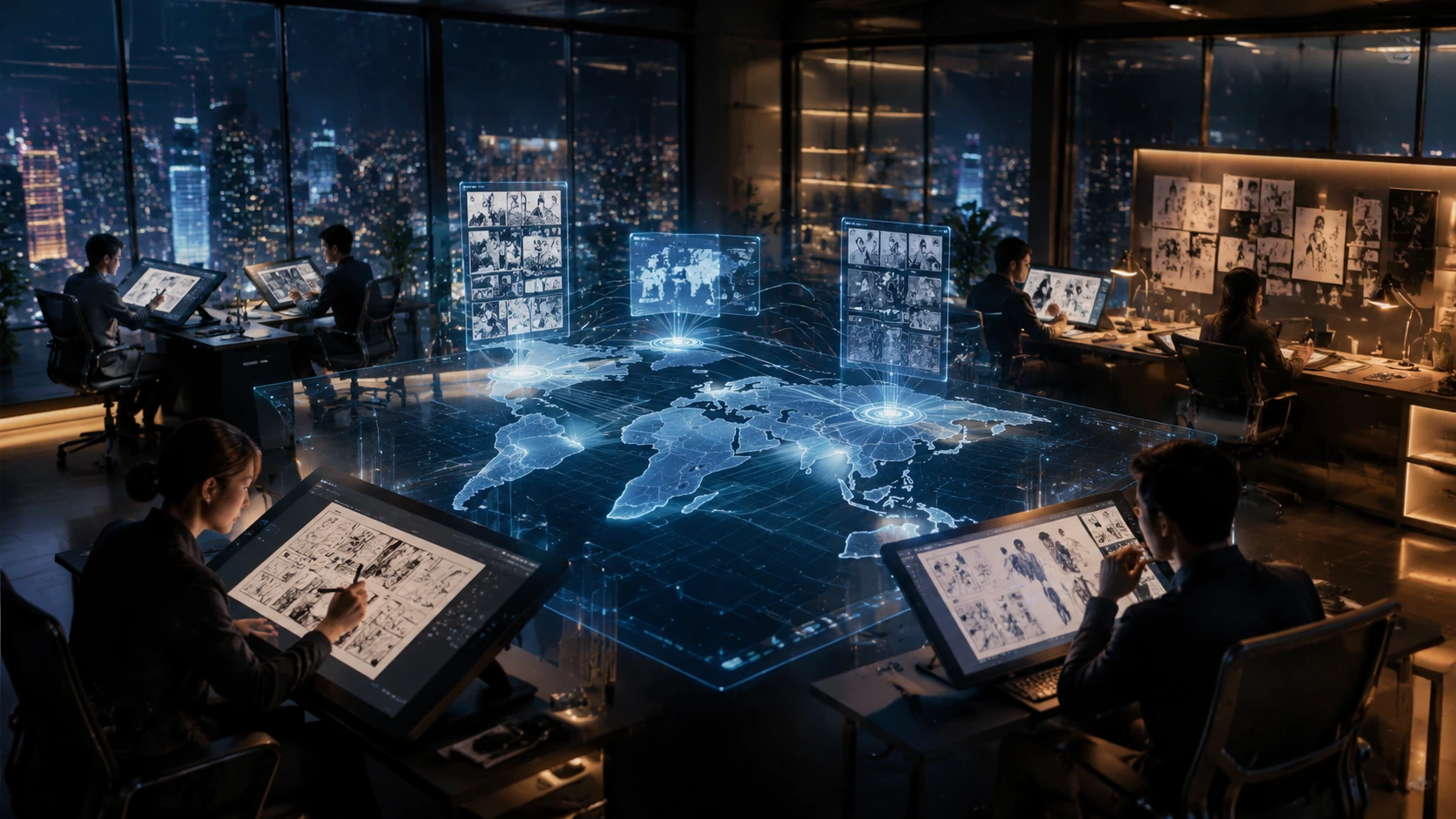
By 2026, the 'solo studio' model for high-budget webtoons and manga has evolved into a complex, decentralized ecosystem known as the Cross-Border Co-Production Protocol (CBCP). Driven by the rising costs of premium visual fidelity and the necessity of simultaneous global launches, creators and publishers are no longer working in silos. Instead, they are forming strategic alliances where a script team in Los Angeles, a line-art studio in Seoul, and a color-rendering hub in Southeast Asia operate as a single unified entity. This shift isn't just about outsourcing; it's about shared IP equity and the democratization of production risk across international borders. Understanding this protocol is now the primary differentiator between local success and global franchise dominance.
The Architecture of the 2026 Co-Production Model
The 2026 protocol moves beyond traditional work-for-hire contracts toward a 'Venture Studio' approach. In this model, multiple studios contribute their specialized strengths in exchange for a fractional share of the IP's back-end revenue and licensing rights. This ensures that every stakeholder, from the lead writer to the technical asset rigger, is incentivized to maintain the long-term quality of the series. The complexity of these arrangements requires a robust framework for narrative continuity and technical interoperability, ensuring that a character designed in one country remains visually and emotionally consistent when rendered by a team thousands of miles away.
Key Components of Cross-Border Alliances
- Distributed Asset Libraries: Centralized, cloud-native repositories of rigged 3D backgrounds, semantic character models, and lighting presets accessible by all partner studios.
- The Global Showrunner: A new executive role responsible for maintaining creative vision and cultural sensitivity across distributed teams.
- Smart Contract Revenue Splits: Automated payout systems that distribute micro-royalties based on real-time platform performance data.
- Synchronized Production Sprints: Time-zone optimized workflows that allow for 24-hour production cycles, significantly reducing time-to-market.
Managing Technical and Creative Drift
One of the greatest risks in global co-production is 'narrative drift'—where the tone or visual style of a comic subtly changes as it passes through different hands. To combat this, 2026 studios utilize 'Lore-Consistency Engines' (LCEs) and unified style guides that are programmatically enforced. These tools act as a semantic layer over the production pipeline, flagging deviations in character behavior, dialogue pacing, or color palettes before they reach the final assembly stage. This level of technical oversight is what allows three different studios to work on the same chapter without the reader ever noticing a shift in the creative hand.
The Legal Framework: Rights, Revenue, and Recourse
Legal agreements in 2026 have moved toward the 'Master Service and Equity Agreement' (MSEA). This document defines the boundaries of IP ownership, specifying which studio owns the underlying 'World Bible' and how derivative rights (animation, games, merchandise) are split. Unlike the predatory contracts of the early 2020s, the 2026 standard emphasizes 'Proportional Equity,' where a studio's share of the IP grows based on their long-term contribution to the series' success. This protects smaller studios from being squeezed out after the initial development phase.
Audit and Compliance Checklist
- IP Fractionalization: Does the contract clearly define the percentage of ownership for 'Narrative Assets' vs. 'Visual Assets'?
- Exit Clauses: What happens to the shared asset library if one studio leaves the partnership mid-production?
- Localization Sovereignty: Who has the final say on cultural adaptations in specific regional markets?
- Data Residency: Are production logs and AI-training data stored in compliance with international IP protection standards?
Cultural Synchronization: The Invisible Barrier
Beyond technical specs, successful 2026 alliances require 'Cultural Sync.' A story that resonates in the US may fail in the Southeast Asian market if the nuances of social hierarchy or humor are lost during the co-production process. The CBCP encourages the inclusion of 'Cultural Auditors' within the core production team—not as consultants, but as active participants in the scripting and storyboarding phases. This ensures that the global IP is 'born global' rather than translated as an afterthought, maximizing its value in every target territory simultaneously.
Conclusion: The Future of the Modular Studio
The transition to cross-border co-production is not merely a trend; it is the industry's response to an increasingly saturated and high-expectation market. By embracing the 2026 Cross-Border Co-Production Protocol, studios can scale their output, diversify their creative risks, and build IPs that are truly universal. The future of comics belongs to the collaborators—those who can bridge the gap between regional aesthetics and global narrative standards to create the next generation of multi-media franchises.
FAQ
What is the Cross-Border Co-Production Protocol?
It is a 2026 industry standard for international comic studios to collaborate on IP development, sharing technical assets, creative risk, and revenue equity.
How do studios split revenue in a co-production?
Most 2026 alliances use 'Proportional Equity' models through smart contracts, distributing revenue based on contributions to narrative, art, and technical infrastructure.
Who owns the IP in a multi-studio partnership?
Ownership is typically fractionalized, with a lead 'Showrunner' studio holding the Master rights while partner studios hold equity in derivative licensing and back-end royalties.
How is visual consistency maintained across different countries?
Through shared cloud-native asset libraries, semantic character rigging, and Lore-Consistency Engines that programmatically enforce style guides.