The 2026 ‘Creative Longevity’ Protocol (CLP): Engineering Sustainable Career Frameworks fo
The 2026 Creative Longevity Protocol (CLP) marks a historic shift from the 'infinite grind' to structured, health-conscious serialization cycles. Discover how top studios are prioritizing creator wellness to protect the long-term value of their most successful IP.
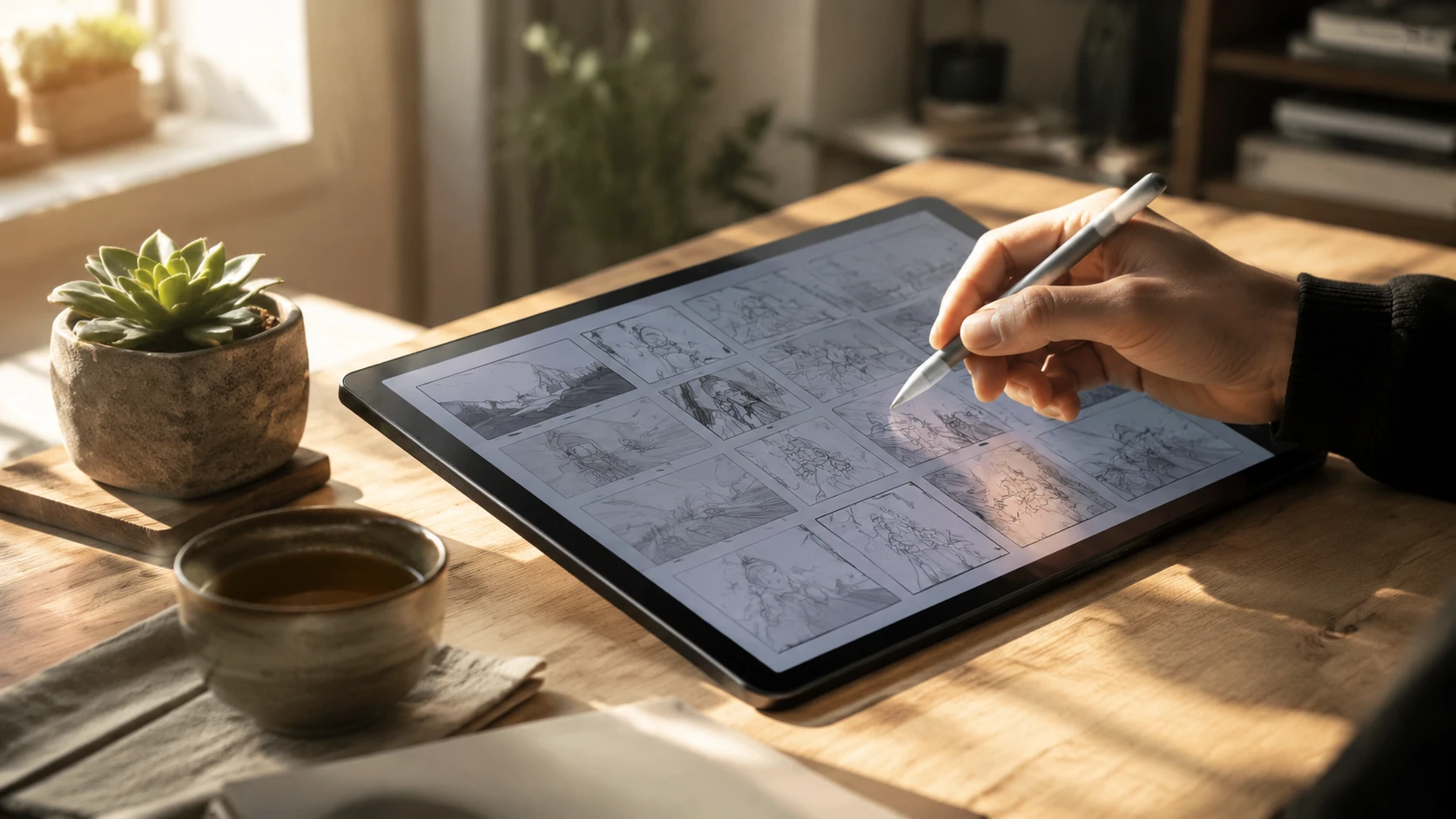
By the start of 2026, the comic and webtoon industry reached a critical breaking point. The 'infinite scroll' culture of the early 2020s—characterized by relentless weekly deadlines and a lack of seasonal breaks—led to a record-high burnout rate among top-tier creators. In response, the 2026 Creative Longevity Protocol (CLP) has emerged as the new industry gold standard. This framework isn't just about wellness; it is a strategic economic shift. Major platforms and boutique studios have realized that a creator’s health is the most valuable asset in their portfolio. When a lead artist or writer burns out, the intellectual property (IP) often loses its narrative soul, leading to massive reader churn. The CLP provides a structured architectural approach to storytelling that balances high-velocity mobile consumption with the biological and cognitive limits of human creators.
The 12-4-2 Serialization Standard
The most significant pillar of the 2026 CLP is the '12-4-2' serialization cycle, which has replaced the traditional 'infinite weekly' release model. Under this standard, creators release content in 12-week bursts (one full season arc), followed by a 4-week 'Narrative Buffer' and a 2-week 'Absolute Rest' phase. During the 12-week release phase, the focus is on high-engagement community interaction and delivery. The 4-week buffer is dedicated to pre-production for the next arc—restocking asset libraries, refining storyboards, and conducting Narrative Market Fit (NMF) audits. The final 2-week rest phase is a mandatory 'dark' period where creators disconnect entirely to prevent cognitive fatigue. This cycle ensures that the creative 'engine' remains efficient and that the quality of the art and story does not degrade over time.
Why Infinite Scrolling Failed the Creator Economy
- Diminishing Returns: As fatigue sets in, panel quality and story pacing inevitably suffer, causing long-term LTV (Life-Time Value) to drop.
- Talent Hemorrhaging: Top creators were leaving the industry for gaming or film, where production cycles are more structured.
- AI-Saturation Friction: Low-quality, high-volume AI content forced human creators into a 'quantity race' they could not win without sacrificing health.
- Reader Fatigue: Audiences in 2026 have shown a preference for 'Event-Based' reading over endless, filler-heavy chapters.
Cognitive Load Management (CLM) in Production
The 2026 CLP introduces the concept of Cognitive Load Management (CLM) into the production pipeline. This involves using specialized technical workflows to strip away repetitive, non-creative tasks. Modern creators are now utilizing 'Modular Asset Banking'—a method where backgrounds, character poses, and lighting presets are pre-rendered and categorized before the season begins. By reducing the number of 'micro-decisions' an artist has to make per panel, the CLP allows the creator to focus 90% of their energy on emotional expression and narrative pacing. Studios that implement CLM report a 40% reduction in production time without a loss in visual fidelity, effectively decoupling 'work hours' from 'output volume'.
The Economic Shift: Rewarding Quality Over Quota
In 2026, platform algorithms have been recalibrated to reward 'Retention Density' rather than just 'Update Frequency.' This algorithmic shift supports the CLP by ensuring that creators who take breaks are not penalized by the discovery engine. In fact, series that follow the CLP often see a 'Hype Surge' during their 4-week buffer period, as fans revisit previous chapters and build anticipation for the next season. This 'Scarcity-Driven Engagement' has proven more profitable than the 'Abundance-Driven Apathy' of previous years. Advertisers and sponsors are also prioritizing CLP-compliant creators, as they offer a more stable and predictable environment for brand integrations.
Implementing the CLP: A Creator’s Checklist
- Audit your current production velocity: Are you spending more than 50 hours a week on a single chapter?
- Establish an 'Asset Bank': Spend your next hiatus building 50+ reusable 3D assets or background templates.
- Communicate the 'Seasonal' shift to your audience: Transparency builds loyalty; explain how the 12-4-2 model improves story quality.
- Adopt 'Narrative Foresight' tools: Use data to map out your story arcs 12 weeks in advance to avoid last-minute scripting stress.
FAQ
Will my revenue drop if I take a 4-week break between seasons?
Data from 2026 shows that while immediate ad-revenue might dip slightly, long-term LTV increases due to higher retention and 'seasonal hype' surges that drive new subscriptions.
What is the 12-4-2 model?
It is a 2026 production standard consisting of 12 weeks of content release, 4 weeks of pre-production/buffer, and 2 weeks of absolute rest.
Do readers accept these breaks?
Yes. Readers in 2026 prefer high-quality, 'event-style' releases over lower-quality weekly chapters, and transparency about creator health actually increases community loyalty.