The 2026 ‘Community-Led Continuity’ (CLC) Framework: Engineering Fan-Driven Lore without C
The 2026 CLC framework allows creators to harness fan creativity as a growth engine. Learn how to architect a 'Sandboxed Canon' that protects your IP while empowering your community.
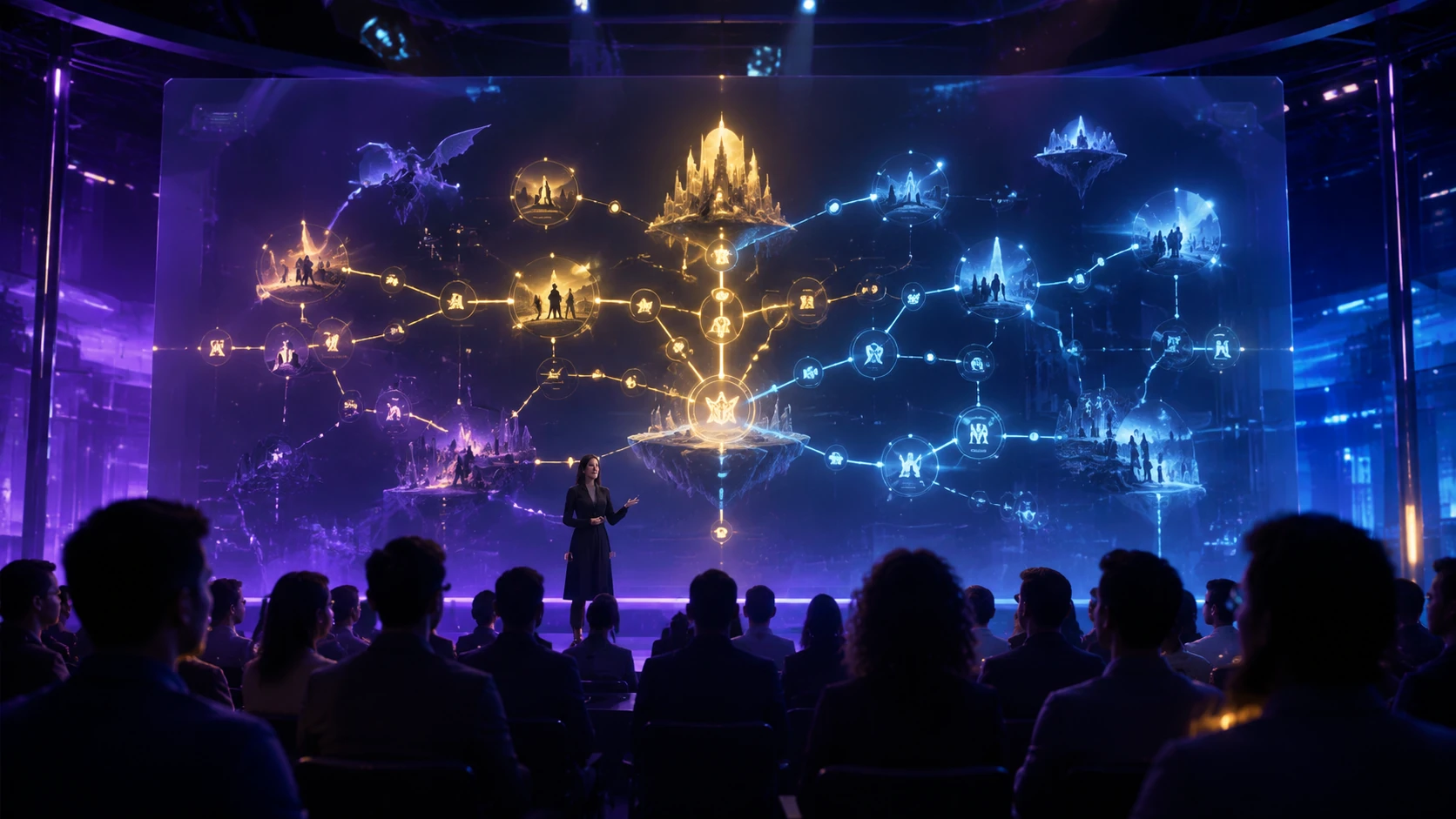
In 2026, the traditional 'walled garden' of narrative IP has collapsed. As webtoons and manga transition into decentralized platforms, readers are no longer passive consumers—they are active contributors to the lore. However, this surge in fan participation often leads to 'canonical drift,' where contradictory fan theories and unofficial 'mods' dilute the core brand and confuse new readers. The 2026 ‘Community-Led Continuity’ (CLC) Framework provides a professional-grade architecture for managing this friction. By establishing clear tiers of truth, creators can harness the viral power of community world-building without losing control of their intellectual property. This guide outlines the strategic implementation of CLC, from setting up validation layers to engineering 'Sandboxed Canon' zones that drive long-term LTV and community loyalty.
Understanding the Tiers of Narrative Truth
The core of the CLC framework is the 'Tri-Tier Architecture.' In 2026, successful IP is no longer a binary of 'Canon' vs. 'Fan-fiction.' Instead, creators must categorize narrative information into three distinct layers to maintain order while encouraging creativity. Tier 1 is 'Prime Canon,' which includes the creator’s original panels, scripts, and official world-building documents. Tier 2 is 'Verified Community Lore,' which consists of fan-generated theories or side-stories that have been officially reviewed and 'stamped' by the creator’s editorial team. Tier 3 is 'Open Lore,' the wild west of fan imagination where anything goes. By clearly labeling these tiers on platform dashboards, creators provide a roadmap for readers to understand what truly 'happened' in the story world.
The Risk of Canonical Drift
Canonical drift occurs when Tier 2 or Tier 3 information becomes so popular that it overpowers the Prime Canon in search results and AI-driven discovery. If a fan theory about a character's backstory gains more social traction than the actual comic, the IP loses its narrative gravity. The CLC framework mitigates this by using metadata tags that signal 'canonical weight' to search engines and AI assistants, ensuring that Prime Canon always ranks first in lore-based queries.
Architecting the 'Sandboxed Canon' Zone
One of the most effective strategies in 2026 is the 'Sandboxed Canon.' This is a specific narrative space—often a spin-off arc or a dedicated digital 'lore-garden'—where fans are invited to build. Unlike a free-for-all, the sandbox has 'Boundary Rules' (BRs). For example, a creator might state: 'In this sandbox, you can build the history of the Northern Kingdom, but you cannot kill the King.' This allows fans to feel a sense of ownership and agency while the creator retains the 'Key Assets' for the main story. This method not only increases engagement but acts as a low-cost R&D department for future official expansions.
- Define Boundary Rules: Clearly list off-limit characters and events.
- Establish Asset Libraries: Provide fans with official background art and character sheets to ensure visual consistency.
- Implement a 'Lore Bounty' System: Reward fans whose contributions are promoted to Verified Community Lore.
- Use Semantic Metadata: Tag sandbox content as 'Non-Prime' to prevent AI indexing confusion.
The Verification Pipeline: From Fan Theory to Official Lore
Moving a piece of community lore into the official canon requires a structured verification pipeline. In 2026, this is often handled by 'Lore Stewards'—community managers who are trained in the story's internal logic. The pipeline involves three stages: Logic Check (Does this contradict existing Prime Canon?), Brand Alignment (Does this fit the tone?), and Legal Clearance (Does the creator own the rights to this contribution?). Only after passing these stages can a fan-made element be integrated into the IP's official wiki or side-stories. This process turns the community into a talent incubator, often leading to fans being hired as official writers or consultants.
Technical Implementation: Lore-Gating and AI Anchoring
To support the CLC framework, creators are increasingly using 'Lore-Gating' technologies. This involves using digital identifiers (often on-chain or via platform-specific IDs) to track the origin of every narrative asset. When a fan contributes a piece of lore that becomes verified, their ID is permanently linked to that asset as a 'Contributor.' Furthermore, creators must use AI Anchoring—feeding their Prime Canon into a private LLM (Large Language Model)—to act as an automated 'Continuity Cop.' This AI can instantly scan fan submissions and flag potential contradictions with the 1,000+ panels already published, saving thousands of hours in editorial review.
Avoiding Common Pitfalls in Community Continuity
The most common mistake is 'Lore Over-Correction,' where a creator becomes too restrictive, stifling the community's passion. If every fan theory is met with a 'cease and desist' or a public debunking, the community will migrate to a more welcoming IP. Conversely, 'Lore Laziness'—accepting everything without a filter—leads to an incoherent story that alienates casual readers. The balance lies in the 'Validation Loop': acknowledging fan creativity publicly while maintaining a firm, silent boundary on Prime Canon. Successful 2026 creators act as curators of a garden, rather than guards of a fortress.
Strategic Checklist for CLC Adoption
- Audit your current lore for 'White Spaces' where fans can safely contribute.
- Set up a 'Community Lore Submission' portal with a clear TOS for rights transfer.
- Appoint or hire a Lore Steward to manage the Verification Pipeline.
- Regularly publish 'State of the Union' lore updates to keep Prime Canon clear.
FAQ
What is the difference between fan-fiction and CLC?
Fan-fiction exists outside the creator's influence. CLC is a structured framework where creators provide assets and boundaries, allowing certain fan contributions to be officially recognized or integrated into the IP's secondary canon.
How do I prevent legal issues with fan-contributed lore?
Always use a 'Contribution Agreement' in your submission portal. This ensures that the creator retains the IP rights to any lore that is promoted to 'Verified' or 'Prime' status, while the fan receives credit or rewards.
Does CLC work for solo creators or just big studios?
It is even more vital for solo creators. By leveraging a small, dedicated fanbase as 'Lore Stewards,' a solo creator can maintain a complex world that would otherwise require a full editorial team.