The 2026 ‘Cognitive Load’ Optimization (CLO) Standard: Engineering Readability for High-Ve
The 2026 CLO Standard introduces a scientific approach to comic paneling, prioritizing neurological ease of consumption to combat the shrinking attention span of mobile readers. Master the art of 'frictionless flow' to ensure your narrative sticks in a high-velocity digital market.
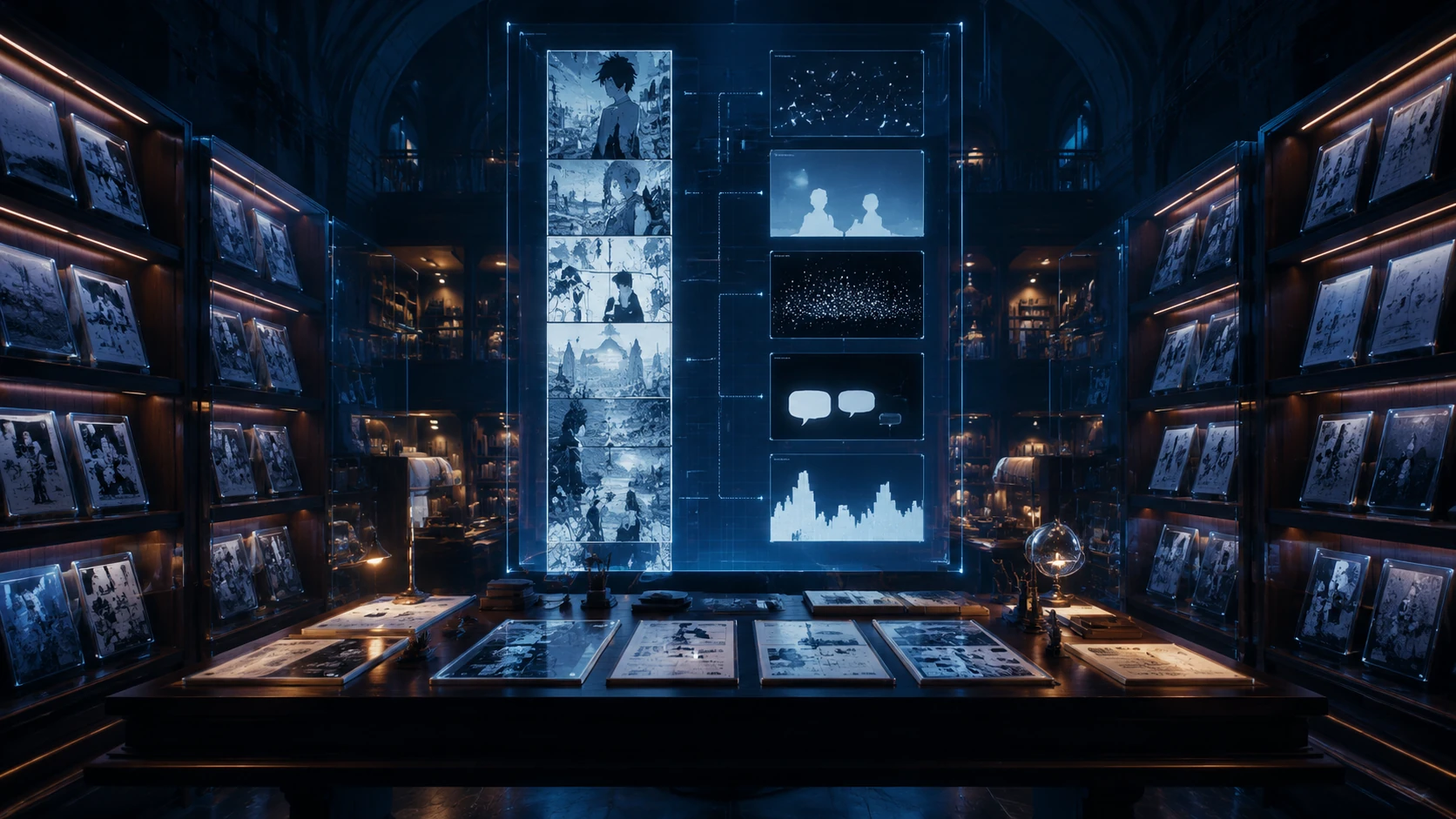
In 2026, the battle for reader attention is no longer won by art quality alone; it is won by the efficiency of information processing. As mobile reading habits have shifted toward 'high-velocity consumption,' the industry has formalized the Cognitive Load Optimization (CLO) Standard. This framework moves beyond simple aesthetic choices to apply neuro-narrative principles to comic layout. CLO is the science of engineering a comic so that the brain can process the story, emotion, and action with minimal effort, thereby reducing 'reader fatigue'—the primary cause of mid-chapter bounce rates. For creators and studios, mastering CLO is the difference between a reader skimming a chapter and a reader becoming fully immersed in the world. This article explores the core mechanics of CLO and how to implement them to achieve maximum narrative impact in the 2026 attention economy.
The Neuro-Science of the Vertical Scroll
The human brain processes vertical information differently than horizontal spreads. In a vertical-scroll environment, the eye does not 'leap' between panels; it tracks a continuous stream of data. The 2026 CLO Standard identifies the 'Foveal Focus Zone'—a specific area in the center of a smartphone screen where 80% of meaningful processing occurs. When a creator places critical dialogue or action outside this zone, the brain must work harder to re-center its focus, creating a micro-strain that accumulates over a 60-panel chapter. By aligning narrative 'beats' with the natural rhythmic movement of the thumb, creators can induce a 'flow state,' where the reader loses track of the medium and focuses entirely on the message. This neurological alignment is the foundation of high-retention IP.
The Three Pillars of the CLO Framework
To achieve a high CLO score, a comic must balance three distinct architectural elements. Failure in any one of these pillars leads to 'cognitive bottlenecking,' where the reader becomes overwhelmed and eventually disengages.
1. Visual Anchor Points (VAP)
Visual anchors are high-contrast or high-detail elements that serve as the 'landing gear' for the eye. In a high-velocity scroll, the reader needs a place to pause. CLO recommends placing a VAP every 2.5 screens of scrolling. This can be a character’s face, a significant object, or a wide establishing shot. These anchors act as mental bookmarks, allowing the reader to categorize the information they just consumed before moving to the next sequence.
2. Semantic Density Control
Semantic density refers to the ratio of text to imagery. In 2026, the '15-Word Rule' has become the benchmark: no single panel should contain more than 15 words of dialogue unless it is a stylized 'exposition dump' intended to overwhelm. By breaking complex ideas into smaller, bite-sized dialogue bubbles spread across multiple panels, you allow the brain to digest the plot without the 'wall of text' anxiety that triggers skimming behavior.
3. Chromatic Pacing
Color is a powerful tool for cognitive signaling. CLO practitioners use color palettes to signal shifts in mood, time, or perspective. Sudden shifts in saturation or hue act as 'narrative interrupts' that wake the brain up. Strategic use of white space (negative space) between panels acts as a 'sensory palate cleanser,' preventing the visual fatigue associated with dense, high-detail art styles.
Implementing 'Frictionless Transitions' (FT)
The 'gutter' in a vertical webtoon is not empty space; it is a temporal bridge. The 2026 CLO Standard emphasizes 'Frictionless Transitions,' where the tail of one panel leads the eye directly into the focal point of the next. This is often achieved through 'leading lines'—elements like a character’s gaze, a pointing hand, or even the flow of hair that directs the reader’s vision downward. When transitions are frictionless, the reader's thumb moves automatically, creating a seamless experience that mimics the fluidity of animation. Studios that have adopted FT protocols report a 35% increase in 'completion-to-end' metrics for their flagship titles.
Common Pitfalls: Why High-Detail Art Can Fail
A common mistake in the 2026 market is over-rendering. While high-detail art is impressive in a portfolio, it can be a cognitive nightmare for mobile readers. If every panel is a masterpiece filled with intricate backgrounds and complex lighting, the reader’s brain has no place to rest. This leads to 'detail blindness,' where the reader begins to ignore the art entirely just to find the dialogue. The CLO Standard advocates for 'Hierarchical Detail'—reserving peak visual complexity for the most important narrative moments (the VAPs) and using simplified, 'readable' art for transitional scenes.
The 2026 CLO Compliance Checklist
- Foveal Focus: Are the most important visual elements centered in the screen's middle third?
- Text-to-Space Ratio: Is there at least 200 pixels of vertical space between text-heavy panels?
- Eye-Tracking: Do the elements in panel A lead the eye naturally to the starting point of panel B?
- Anchor Frequency: Is there a high-impact visual anchor at least every three scrolls?
- Palette Fatigue: Does the color scheme provide enough contrast to distinguish characters and backgrounds instantly?
As we move further into 2026, the creators who respect the neurological limits of their audience will be the ones who build the most loyal fanbases. Cognitive Load Optimization isn't about dumbing down content; it's about removing the barriers between your imagination and your reader's mind. By engineering for readability, you ensure that your story—and not the effort of reading it—remains the focus of the experience.
FAQ
What is the ideal CLO score for a webtoon?
While scores vary by platform, a 'High-Retention' CLO score typically involves a 70/30 ratio of simplified transitional art to high-detail anchor panels, with a maximum of two dialogue bubbles per panel.
Does CLO apply to print manga as well?
Yes, but the architecture differs. In print, CLO focuses on 'page-turn reveals' and Z-pattern eye tracking, whereas mobile CLO is strictly optimized for the vertical Y-axis.
Can AI tools help with Cognitive Load Optimization?
Absolutely. 2026 editorial suites now include 'Heatmap Simulators' that predict where a reader’s eye will land, allowing creators to adjust their layouts for better flow before publishing.