The 2026 ‘Cognitive Load’ Optimization (CLO) Framework: Engineering Webtoons for the High-
Learn how to engineer your webtoon panels using the 2026 Cognitive Load Optimization (CLO) framework. Discover the science of visual digestion and how to maintain narrative depth without exhausting your readers' attention.
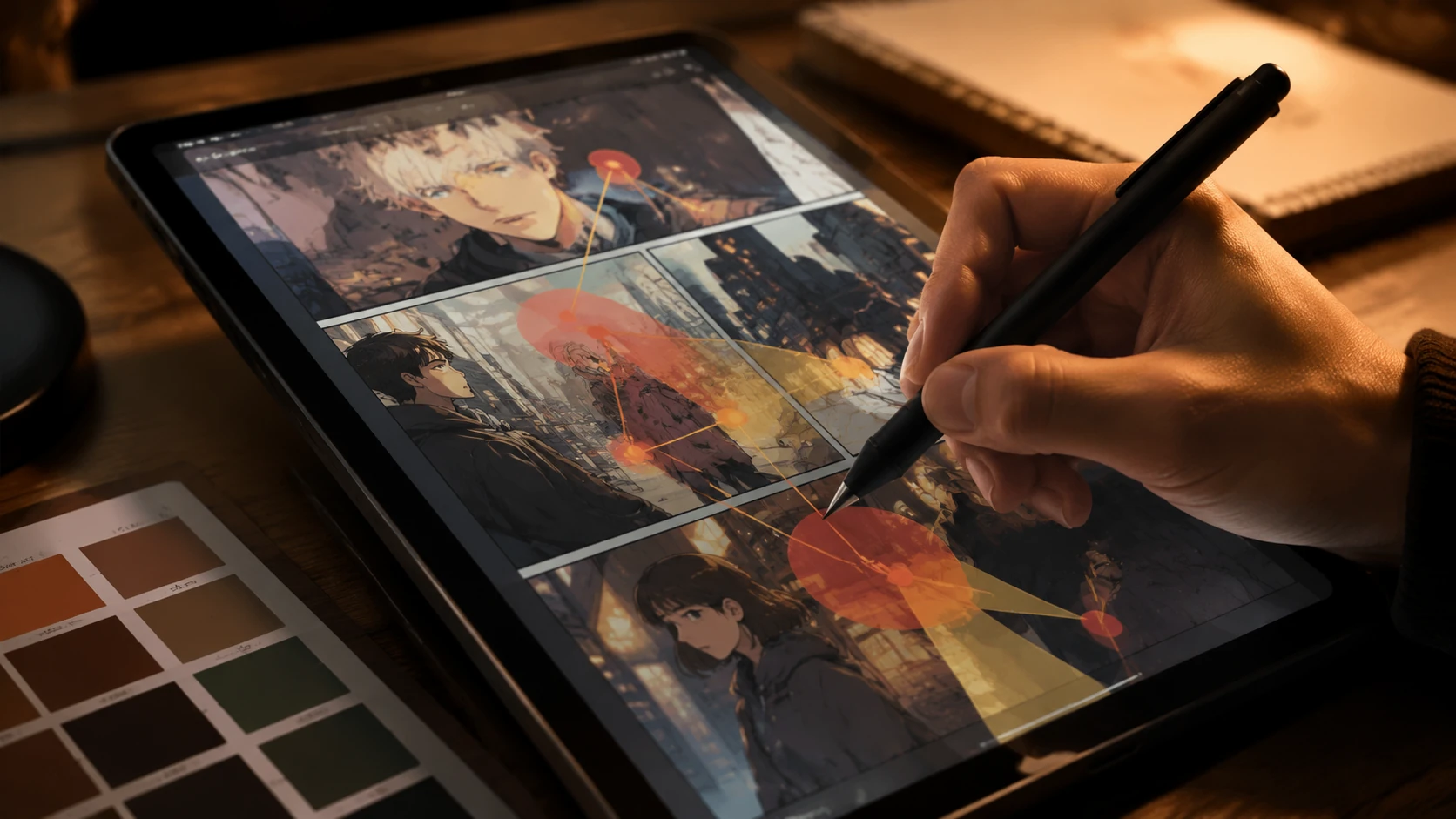
By 2026, the 'attention economy' has evolved into a 'cognitive economy.' With the sheer volume of serialized content available on global platforms, readers no longer just choose what to read based on genre; they choose based on mental effort. The 2026 Cognitive Load Optimization (CLO) Framework is a set of engineering principles designed to maximize narrative depth while minimizing the mental friction required to process vertical-scroll stories. As mobile reading environments become increasingly fragmented—interrupted by notifications, multi-tasking, and ambient distractions—the ability to deliver a seamless, low-effort reading experience has become a primary driver of long-term reader retention (LTV). Creators who fail to optimize for cognitive load find their works 'shadow-dropped' by readers who feel subconsciously exhausted after just a few chapters, regardless of how beautiful the art might be.
The Science of Visual Digestion in Vertical Scrolling
The fundamental shift in 2026 is the recognition that vertical scrolling is not just a format, but a cognitive process. Unlike traditional page-turning, where the brain resets at every 'spread,' vertical scrolling requires continuous processing. The CLO framework addresses three specific types of cognitive load: Intrinsic (the complexity of the story), Extraneous (the friction of the layout), and Germane (the effort to build mental models of the characters and world). By engineering the layout to handle extraneous load, creators free up the reader's mental 'RAM' to focus on the story's emotional core. This is achieved through 'Foveal Anchoring'—placing key narrative elements exactly where the eye naturally rests during a scroll, preventing the jerky, repetitive eye movements that lead to digital fatigue.
The 30% Text-to-Visual Ratio
One of the cornerstones of the 2026 CLO standard is the 30% rule. Data from leading platforms indicates that when text bubbles occupy more than 30% of a mobile screen's real estate, reader drop-off rates increase by 45%. In a high-speed attention economy, readers treat text as a secondary confirmation of the visual narrative. CLO-optimized scripts prioritize 'Show, Don't Tell' not just as a creative mantra, but as a technical requirement. Dialogue is broken into smaller, digestible chunks, often spanning across multiple panels to maintain a rhythmic scroll speed that matches the reader's natural thumb movement.
Pillars of the CLO Framework
- Semantic Negative Space: Using varying 'gutter' heights to signal time shifts and emotional weight without requiring text-based transitions.
- Visual Hierarchy Layering: Ensuring that the 'Hero' element of a panel is identifiable within 200 milliseconds of appearing on screen.
- Color Sentiment Mapping: Using consistent palette shifts to signal scene changes, reducing the cognitive effort needed to re-orient to new locations.
- The 'Three-Panel Hook' Cycle: Engineering every three-panel sequence to contain one 'Information Drop' and two 'Visual Breathers' to prevent mental saturation.
Managing Lore Density without the 'Wall of Text'
In 2026, world-building is no longer delivered via lengthy exposition. The CLO framework utilizes 'Tiered Metadata' and 'Ambient Lore'—narrative details embedded in the background art that readers can choose to engage with or ignore. This allows hardcore fans to dive deep into the world's history while casual readers can stay focused on the immediate plot. Advanced webtoon engines now support 'Hover-Lore'—semantic tags that provide character bios or world details only when the reader pauses their scroll, keeping the main narrative flow clean and unobstructed. This approach treats lore as an 'on-demand' asset rather than a mandatory cognitive hurdle.
The CLO Audit: A Checklist for Creators and Studios
Implementing CLO is an iterative process that should happen during the storyboarding (name) phase. Studios are increasingly using AI-driven eye-tracking simulators to identify 'friction points' where readers are likely to stall. A successful CLO audit ensures that the story flows like a river, with clear entry and exit points for the reader's attention. This is particularly vital for action-heavy genres where complex choreography can easily become a chaotic mess on a 6-inch smartphone screen. By simplifying the visual 'pathway,' creators ensure that their readers stay immersed in the world rather than struggling with the interface.
- Does every panel have a singular, clear focal point?
- Are dialogue bubbles placed in a 'Z-pattern' or 'Vertical-I' pattern to facilitate natural eye flow?
- Is the font size and line spacing optimized for 2026's ultra-high-density mobile displays?
- Have you utilized 'silent panels' to allow for emotional processing after major plot reveals?
Future-Proofing Your IP for the 2026 Market
As we move further into the decade, the competition for time will only intensify. The CLO framework isn't about 'dumbing down' content; it's about respecting the reader's cognitive resources. When a reader feels that a webtoon is 'easy to read,' they are more likely to binge multiple chapters, engage with the community, and ultimately convert into a paying subscriber. In the 2026 market, Narrative Efficiency is the new Aesthetic. By mastering the CLO framework, creators can build complex, multi-layered universes that feel as light as air to the reader, securing their place in the increasingly crowded digital landscape.
FAQ
Does CLO mean I can't have a complex plot?
No. CLO is about how you present that complexity. You can have a dense plot, but the visual delivery must be streamlined to prevent the reader from feeling overwhelmed.
How does CLO affect art style?
CLO encourages 'Readability over Rendering.' It suggests that while high-detail art is great, it must not clutter the visual hierarchy or obscure the narrative flow.
Is CLO only for webtoons?
While it originated in the vertical-scroll format, CLO principles are being applied to digital manga and novels to improve mobile readability across all serialized media.