The 2026 Boutique Studio Framework: Scaling AAA Webtoons with Lean 3-Person Teams
In 2026, the competitive landscape has shifted from massive production houses to elite, agile boutique studios. Discover the organizational framework that allows 3-person teams to deliver AAA-quality webtoons through modular asset management and automated pipeline orchestration.
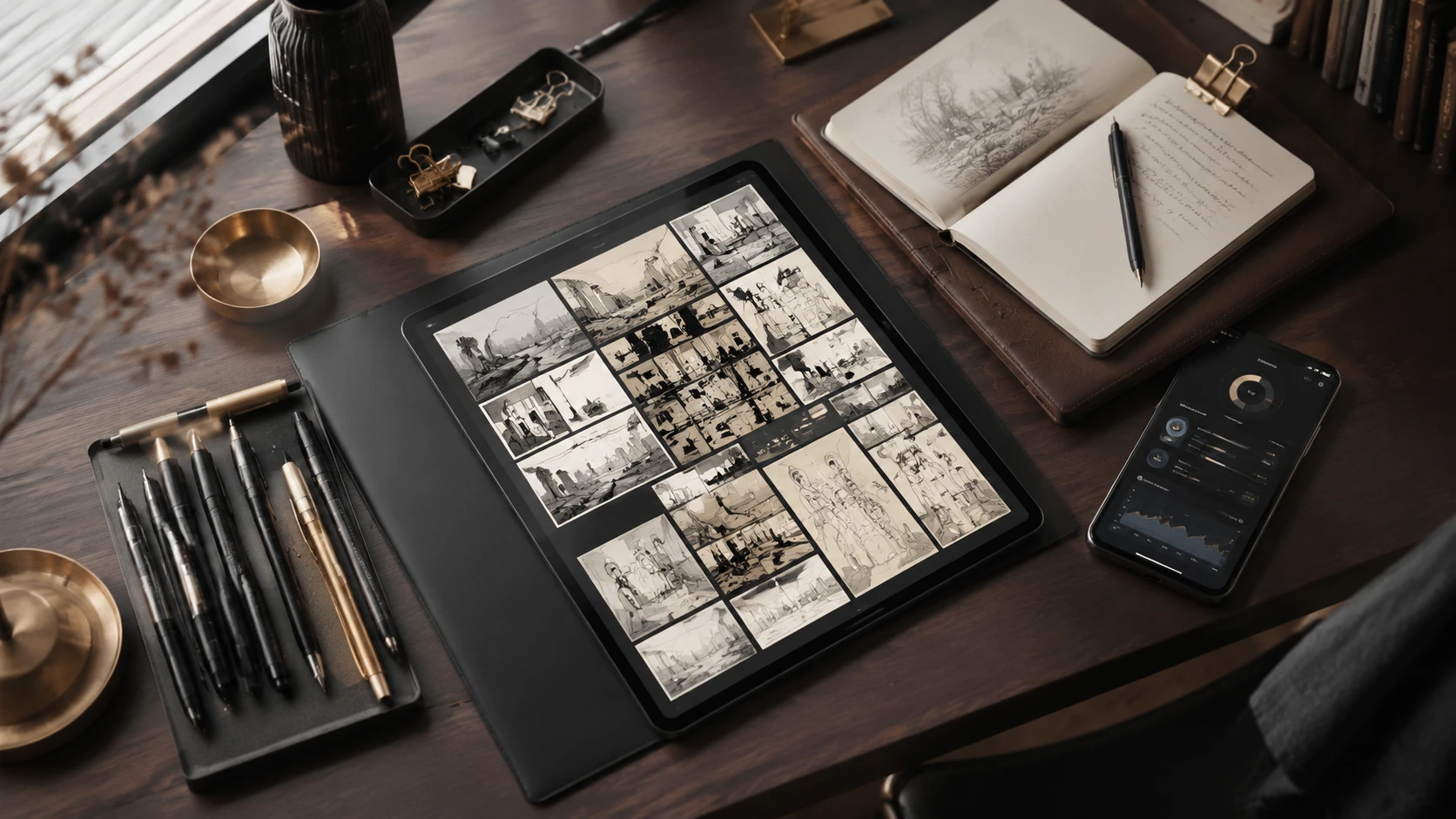
The 2026 comic market has witnessed a radical decentralization of production power. While the early 2020s were dominated by massive studios employing dozens of assistants to maintain weekly vertical scroll schedules, the current era belongs to the 'Boutique Studio.' These are lean, elite teams—often comprising only three core members—who leverage advanced orchestration tools to produce visual fidelity that equals or surpasses the industry giants. This shift isn't just about 'doing more with less'; it is a fundamental reimagining of the production pipeline. By moving away from the assembly-line model and toward a modular, asset-first architecture, boutique studios are achieving 90% reader retention rates while maintaining significantly higher profit margins per chapter. For creators looking to scale their IP without the overhead of a traditional firm, mastering the Boutique Framework is no longer optional—it is the prerequisite for survival in a saturated, high-fidelity market.
The 'Atomic Team' Structure: The Three Essential Roles
In the 2026 boutique model, the traditional roles of 'line artist,' 'colorist,' and 'background artist' have been collapsed into three strategic pillars. This 'Atomic' structure ensures that every team member is an orchestrator rather than just a manual laborer. Each role is designed to manage a specific segment of the automated pipeline while maintaining creative sovereignty.
1. The Narrative Architect
The Architect is responsible for the 'structural integrity' of the story. They don't just write scripts; they design the emotional metadata, the pacing blueprints, and the semantic tags for every panel. Their goal is to ensure the story is 'machine-readable' for the production layer, allowing for instant character consistency and lighting passes.
2. The Asset & Continuity Strategist
This role replaces the traditional background and technical artist. The Strategist manages the studio’s 'Digital Twin' library—3D environments, character rigs, and lighting presets. They ensure that every asset used in a chapter is modular and reusable, drastically reducing the 'time-to-panel' as the series progresses.
3. The Creative Finisher (The 'Human Touch' Lead)
The Finisher is the guardian of the studio’s stylistic signature. They handle the expressive line work, the final lighting adjustments, and the 'emotional resonance' pass. In a world of automated production, the Finisher ensures the work feels 'Human-Made' (the 2026 luxury standard), focusing on the nuances that algorithms cannot yet replicate.
The Modular Production Pipeline: From Script to Scroll
The core of the boutique's efficiency lies in its non-linear workflow. Unlike traditional pipelines where one step must finish before the next begins, the 2026 modular pipeline allows for parallel development. While the Architect is finalizing the dialogue for Chapter 10, the Strategist is already rendering the environmental lighting for Chapter 12 based on the narrative metadata.
- Semantic Storyboarding: Using intent-based sketching that automatically links to 3D camera placements.
- Automated Flatting & Base Lighting: Using studio-trained models to handle the repetitive 70% of the coloring process.
- Dynamic Layout Injection: Automatically adjusting panel spacing based on the 'Narrative Density' requirements of the specific chapter arc.
- Real-Time Asset Sync: Updating a character's outfit or scar in the master library and having it propagate across all in-progress panels.
Maintaining AAA Fidelity on a Boutique Budget
Quality in 2026 is measured by 'Atmospheric Immersion'—how well the comic uses lighting, depth, and haptics to draw the reader in. Boutique studios compete with larger firms by focusing their manual efforts only on 'High-Impact Panels.' They use a 20/80 rule: 20% of the panels (the emotional peaks) receive 80% of the manual finishing time, while the remaining 80% of the panels are handled by the optimized modular pipeline.
The 'Stylistic DNA' Audit
Boutique studios must conduct a monthly 'DNA Audit' to ensure their visual style isn't drifting toward generic AI-generated aesthetics. This involves manually redrawing key character expressions and updating the custom brush engines and texture overlays that define the studio's unique look. This 'Proof of Human' premium is what allows boutiques to charge higher subscription rates than mass-market competitors.
Next Steps: Transitioning to the Boutique Model
- Audit your current workflow: Identify the 3 most time-consuming manual tasks and research automation layers.
- Define your Atomic roles: Even if you are a solo creator, divide your schedule into Architect, Strategist, and Finisher blocks.
- Build your World Bible: Standardize your lighting, color palettes, and character rigs into a single, semantic library.
- Implement a Pilot Program: Test the 3-person modular workflow on a short 4-chapter micro-arc before committing a long-running series.
FAQ
Can a 3-person team really produce a weekly webtoon?
Yes, provided they use a modular asset library. By automating 60-70% of the technical tasks (flatting, background rendering, and basic lighting), the team can focus entirely on storytelling and high-quality finishing.
What is the biggest mistake new boutique studios make?
Underestimating the 'Asset Debt.' Many studios start by drawing everything manually and only try to automate later. The boutique model requires building your assets (3D environments, rigs, and palettes) *before* you start the first chapter.
How do boutique studios handle marketing?
In 2026, boutiques focus on 'Micro-Community' engagement. Instead of mass-market ads, they leverage their high-fidelity IP to create exclusive social-reading experiences and lore-driven community events.