The 2026 Biometric Narrative Framework: Engineering Emotional Resonance through Physiologi
In 2026, the most successful webtoon creators are moving beyond simple click-through rates to analyze physiological reader data. Discover how the Biometric Narrative Framework (BNF) allows you to map emotional spikes and gaze paths to engineer high-retention stories.
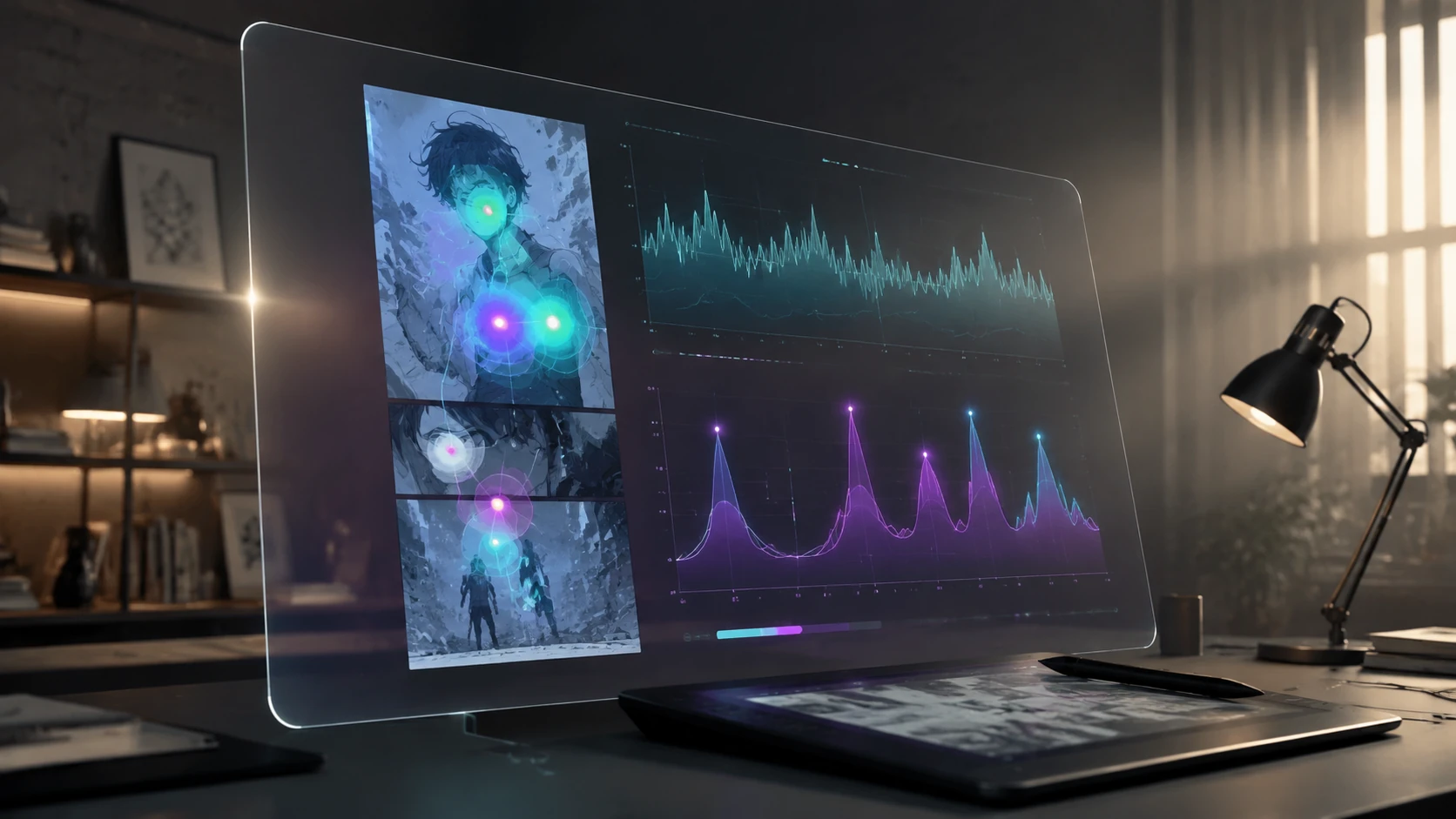
By 2026, the metrics of creator success have evolved far beyond the 'like' and 'comment.' The industry has entered the era of the Biometric Narrative Framework (BNF), a methodology that uses physiological data—such as eye-tracking gaze paths, heart-rate variability (HRV), and even galvanic skin response (GSR)—to measure how readers actually experience a story. While once the exclusive domain of AAA gaming studios, biometric feedback tools are now accessible to independent webtoon and manga creators through consumer-grade wearables and AI-integrated webcam tracking. This shift allows creators to see exactly where a reader’s attention wanders, which cliffhangers trigger a physical stress response, and which character designs fail to elicit an emotional spark.
The 3 Pillars of the Biometric Narrative Framework
The BNF is built on three core physiological signals that correlate directly to narrative quality and reader retention. By analyzing these signals during the pilot phase of a series, creators can iterate on their storyboards with surgical precision, ensuring that every panel serves a specific psychological purpose.
1. Gaze-Path Optimization (Attention Mapping)
Using eye-tracking data, creators can identify 'dead zones' in their vertical layouts. If a reader's eyes skip over a critical lore-heavy dialogue bubble or a subtle visual clue, the narrative flow is broken. Gaze-path optimization involves re-arranging panel elements to guide the eye in a natural, effortless 'S' or 'Z' pattern, reducing cognitive load and preventing scroll-fatigue. In 2026, high-performing webtoons maintain a 90% gaze-accuracy rate on key narrative anchors.
2. Arousal Mapping (Emotional Spikes)
Heart-rate data provides a window into the reader's sympathetic nervous system. A successful horror or action sequence should correlate with a measurable spike in heart rate. Conversely, 'slice-of-life' moments should trigger a calming effect. BNF allows creators to map these 'arousal spikes' against their chapter timeline. If a climax doesn't produce a physiological peak, the creator knows the pacing or the visual stakes need recalibration before the final release.
3. Cognitive Load Calibration
This metric measures the mental effort required to process a page. High cognitive load at the wrong time (e.g., during an action scene) can lead to 'bounce' behavior. By analyzing pupil dilation and blink rates, creators can determine if their panel transitions are too jarring or if their world-building is too dense. The goal is a 'Flow State,' where the reader loses track of time and becomes fully immersed in the narrative canvas.
Implementing BNF: A Workflow for Independent Creators
Transitioning to a biometric-informed workflow doesn't require a laboratory. In 2026, the 'Boutique Studio' model leverages small focus groups of 5-10 'Super-Fans' equipped with standard smartwatches and eye-tracking software. This data is then synthesized into a 'Resonance Map' that highlights which specific panels are underperforming.
- Pilot Testing: Release a 3-chapter pilot to a closed group of testers using biometric-integrated reading apps.
- Heatmap Analysis: Identify panels where gaze duration is too high (confusion) or too low (disinterest).
- Pacing Adjustment: Use heart-rate data to adjust the length of 'white space' between panels to build tension.
- Character Audit: Measure the 'Visual Magnetism' of new character designs—do readers fixate on the face or the background?
- Iteration: Refine the visual choreography based on the delta between intended emotion and recorded physiology.
Ethical Considerations and Data Privacy
As with any data-driven approach, the BNF must be handled with ethical transparency. In 2026, the 'Human-First Data Standard' requires creators and platforms to obtain explicit consent from readers before collecting biometric signals. This data must be anonymized and used strictly for creative optimization rather than predatory monetization. Creators who are transparent about their use of BNF often find that their communities are more than willing to participate, viewing themselves as 'co-engineers' of the story experience.
Case Study: The 'Neon Pulse' Success Story
The 2026 breakout hit 'Neon Pulse' used the Biometric Narrative Framework to rescue an underperforming first arc. Initial data showed that readers were experiencing high cognitive load during fight scenes, leading to a 45% drop-off rate. By analyzing gaze-path data, the studio realized the background art was too detailed, distracting from the character movement. They simplified the background assets and re-timed the scroll-speed haptics to match the readers' average heart-rate spikes. The result? Retention jumped to 92%, and the series became a top-tier licensing target for an animated adaptation.
FAQ
Do I need expensive equipment to use the Biometric Narrative Framework?
No. In 2026, most creators use standard webcam-based eye-tracking software and consumer wearables like smartwatches to collect heart-rate data from small beta-testing groups.
Will biometric data replace creative intuition?
Absolutely not. BNF is a tool for refinement, not replacement. It tells you *where* a reader is losing interest, but your creative vision is what determines *how* to fix it.
How many testers do I need for a reliable resonance map?
For independent creators, a focused group of 10-15 diverse readers is usually enough to identify significant patterns in attention and emotional spikes.