The 2026 ‘Bio-Adaptive’ (BA) Narrative Standard: Engineering Webtoons for Real-Time Physiological Engagement
Discover the 2026 ‘Bio-Adaptive’ (BA) Standard, a framework for engineering webtoons that respond to reader heart rate and eye movement in real-time. Learn how to optimize narrative pacing for maximum physiological engagement.
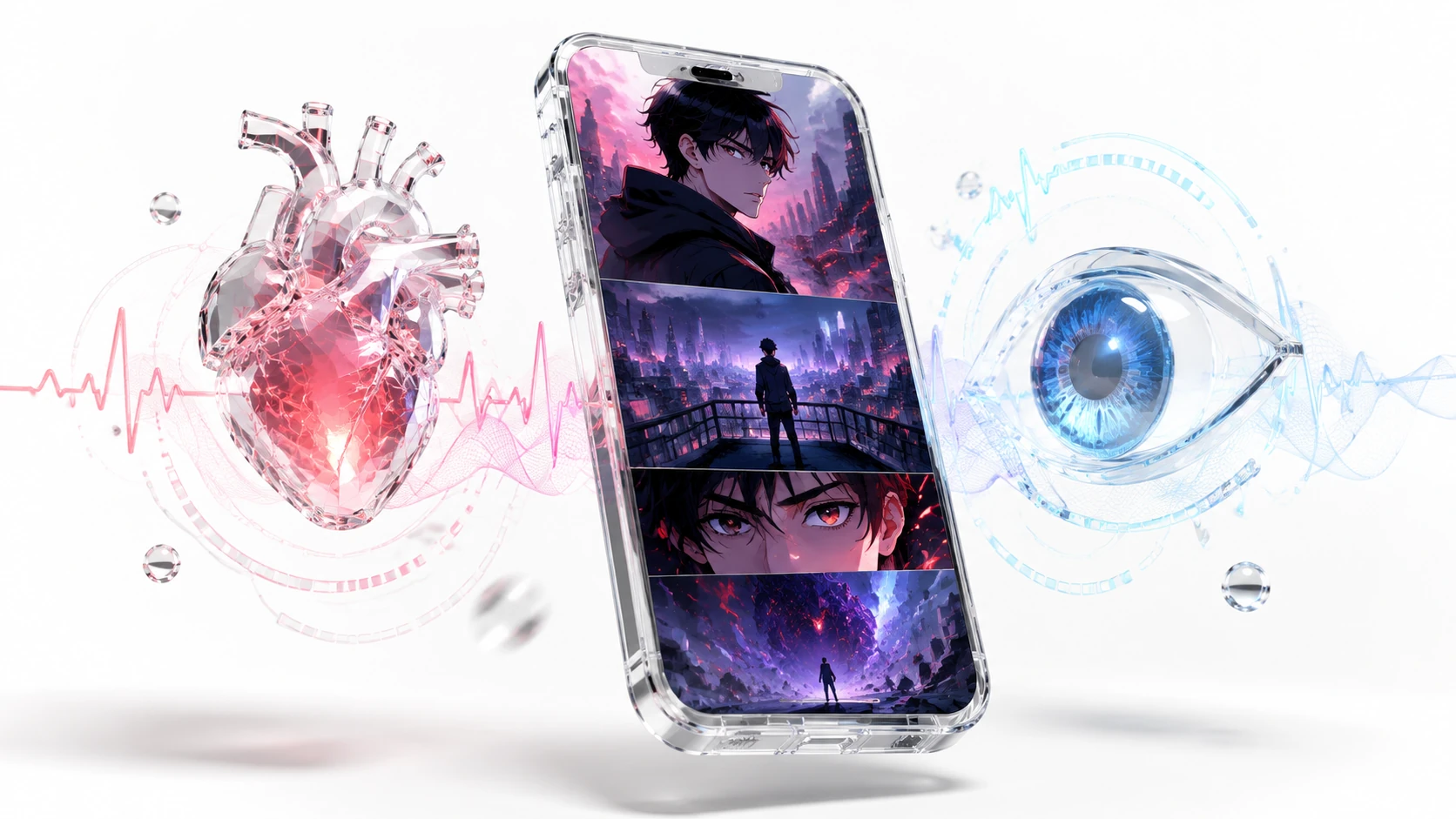
By 2026, the boundary between reader and story has dissolved. The ‘Bio-Adaptive’ (BA) Standard represents the pinnacle of this evolution, utilizing real-time biometric data from wearables and AR glasses to adjust narrative pacing, visual density, and soundscapes based on a reader’s physiological state. In the high-velocity attention economy, static content is no longer enough to maintain deep engagement. The Bio-Adaptive (BA) Standard is a technological framework that transforms webtoons from passive visual media into responsive, sentient experiences. By leveraging the sensors already present in high-end smartphones, smartwatches, and the burgeoning AR glasses market, creators can now measure heart rate variability (HRV), galvanic skin response (GSR), and eye-fixation duration to determine exactly how a reader is reacting to a specific panel or plot point.
The Mechanics of Physiological Pacing
One of the most profound applications of the BA Standard is the ‘Elastic Scroll.’ In traditional vertical webtoons, the user controls the speed of consumption. However, this often leads to 'speed-reading fatigue' where readers skim past crucial emotional beats. The BA Standard introduces physiological friction. When the system detects high cognitive load or intense emotional resonance (measured via eye-fixation and HRV), the scrolling engine subtly increases resistance, forcing the reader to slow down and absorb the moment. This technological intervention mimics the natural pauses in a film or a well-paced novel. By engineering the scroll to match the reader’s internal rhythm, studios can prevent the 'scrolling blur' effect that devalues high-quality art.
The Three Pillars of BA Engineering
- Biometric Ingestion Layer: Secure collection of heart rate and eye-track data.
- Narrative Logic Controller (NLC): The 'brain' that translates data into story changes.
- Adaptive IP: The modular visual and audio assets that respond to the NLC.
Ethical Data and Privacy Protocols
With the collection of intimate physiological data comes a massive responsibility for data ethics. The BA Standard includes a mandatory Ethical-Biometric Ledger (EBL) protocol. This ensures that all biometric data is processed locally on the user’s device and never uploaded to a central server in its raw form. Only anonymized 'Engagement Vectors' are shared with creators. This 'Privacy-by-Design' approach is critical for maintaining reader trust. In 2026, platforms that fail to adhere to the EBL are penalized by AI-driven search engines, which prioritize 'Verified Safe' content. Readers have full control over their biometric profile, with the ability to toggle specific sensors on or off.
FAQ
What hardware is required for Bio-Adaptive webtoons?
In 2026, BA-enabled webtoons work with standard smartphones (using front-facing cameras for eye tracking), smartwatches (for heart rate), and AR glasses (for full immersion).
Does biometric tracking drain my battery?
The BA Standard is optimized for efficiency, using low-power sensor polling and local processing to minimize battery impact, usually adding less than 5% overhead per reading hour.
Can I read BA webtoons without a wearable?
Yes. The standard includes a 'Graceful Degradation' mode that provides a high-quality static experience for readers without biometric hardware.