The 2026 ‘Archive Liquidification’ Framework: Engineering Back-Catalog Value for AI-Native
Legacy comic archives are often invisible to modern AI-native search engines and recommendation loops. The Archive Liquidification Framework (ALF) provides a structured methodology for retrofitting older works with semantic metadata and technical upgrades to unlock hidden IP value.
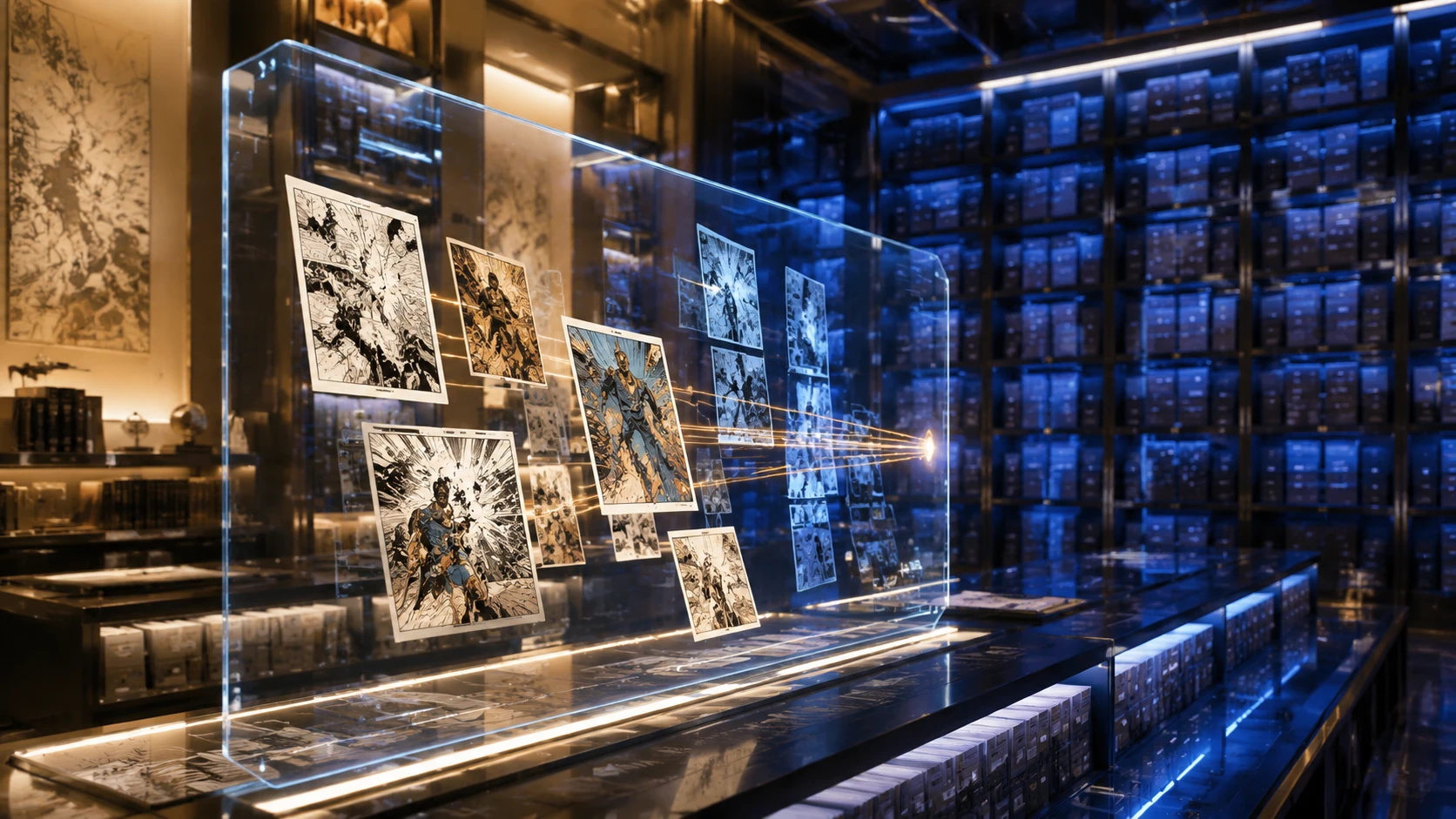
By 2026, the digital comic industry has reached a critical saturation point where the sheer volume of new content threatens to bury high-quality legacy works. For studios and independent creators with deep back-catalogs from the 2010–2022 era, these 'dead' assets represent a massive untapped revenue stream—if they can be made visible to modern discovery engines. The primary challenge is that legacy archives were often published as 'flat' image files with minimal metadata, making them virtually invisible to AI-driven answer engines and semantic recommendation loops that prioritize entity-based connectivity. The 2026 ‘Archive Liquidification’ Framework (ALF) is the industry standard for solving this visibility crisis, providing a technical and narrative methodology to transform static archives into liquid, discoverable, and monetizable assets.
The Core Pillars of Archive Liquidification
Archive Liquidification is not merely a 're-upload' or a simple 'remaster.' It is the systematic process of breaking down a finished work into its constituent semantic parts so it can be re-indexed by AI agents. This involves three distinct layers of engineering: technical upcycling, metadata retrofitting, and narrative entity mapping. Without these layers, an older webtoon or manga remains trapped in a 'data silo,' where it can only be found by users who already know its specific title. In the 2026 search landscape, readers search for 'vibes,' specific character archetypes, or complex plot tropes. ALF ensures your back-catalog shows up in those conversational queries.
1. Technical Upcycling: Preparing for High-Fidelity Hardware
- AI-Assisted Resolution Scaling: Using latent-space upscalers to convert 72dpi legacy files into 8K-ready assets for foldable and XR devices.
- Layer Separation: Using automated segmentation to separate text bubbles, characters, and backgrounds into distinct layers for responsive reflowing.
- Visual Consistency Patching: Fixing outdated color gamuts to meet 2026 HDR10+ display standards common on high-end mobile devices.
2. Semantic Metadata Retrofitting
The second pillar involves injecting 'hidden' data into the archive files. In 2026, search engines don't just 'look' at images; they read the underlying semantic tags. Retrofitting includes tagging every chapter with 'Entity IDs' for characters, locations, and specific plot beats. This allows a search engine to understand that 'The Knight of Solace' in your 2015 series is the same entity appearing in a 2026 spin-off, creating a cross-generational discovery loop. This process also involves 'Trope-Indexing,' where the narrative is mapped against the Global Comic Tropology (GCT) map to ensure it captures high-intent traffic for specific genres.
The 'Liquidity' Strategy: How to Deploy Re-Engineered Assets
Once a back-catalog has been liquidified, the goal is to reintegrate it into the active market. This is often done through 'Narrative Hooking'—where new, high-traffic releases contain embedded links and AI-triggered recommendations to relevant back-catalog entities. For example, if a reader is currently engaging with a new 'Found Family' webtoon, the platform's AI agent can suggest a liquidified 2018 series that shares 85% of the same semantic 'vibe' and character chemistry. This creates a perpetual discovery machine that values the quality of the story over its release date.
Monetization Models for Liquidified Archives
The 2026 market has moved beyond simple 'pay-per-chapter' models for legacy content. Liquidified archives allow for more creative revenue streams. One popular model is 'Contextual Bundling,' where back-catalog chapters are bundled with new releases based on shared lore or world-building elements. Another is 'Asset Micro-Licensing,' where the isolated, high-resolution backgrounds or character designs from an old series are licensed for use in indie games or AR applications, thanks to their now-standardized metadata tags.
The Risk of 'Archive Rot'
Failing to implement the ALF framework leads to what industry experts call 'Archive Rot.' This occurs when a work's file format, metadata, and visual fidelity become so outdated that it is actively penalized by platform algorithms. In 2026, platforms prioritize 'Healthy Assets'—those that provide a high-quality user experience and clear data signals. If your back-catalog is perceived as a 'Dead Asset,' it won't just stop earning; it can actually lower your overall creator entity authority score, dragging down the visibility of your newer works.
Implementation Checklist: 2026 Standards
- Audit existing archives for 'Zero-Metadata' silos.
- Run automated AI-upscaling passes to meet 2026 hardware minimums.
- Implement the Layer-Semantic File Standard (LSFS) for all legacy assets.
- Cross-link legacy entities with current active IP to trigger recommendation loops.
- Re-verify human authorship signals to maintain SEO trust in the AI-hybrid era.
The Archive Liquidification Framework is the bridge between the 'Wild West' era of early digital comics and the hyper-structured, AI-native future of 2026. By investing in the technical and semantic health of your back-catalog, you aren't just looking backward—you are engineering a more stable, diversified, and resilient creator career for the decade to come.
FAQ
Is it worth liquidifying very old, low-art-quality comics?
Yes, if the narrative has strong 'Entity DNA' or tropes that are currently trending. Modern AI upscaling can improve the visual quality, but the primary value lies in the story's ability to be discovered via semantic search.
How long does it take to liquidify a 100-chapter back-catalog?
With 2026 AI-automated workflows, the technical upscaling and initial metadata tagging can be completed in 48-72 hours, though manual 'Entity Mapping' for complex lore may take an additional week.
Does Archive Liquidification help with Google search rankings?
Absolutely. By providing structured semantic data and entity tags, your comic becomes an 'authority' on specific tropes and characters, allowing it to appear in Google's AI Overviews and answer boxes.