Stopping the 'Adaptation Gap': The 2026 SA Standard
Discover why high-budget novel-to-webtoon adaptations fail and how the 2026 Semantic-Anchor (SA) Standard preserves narrative depth.
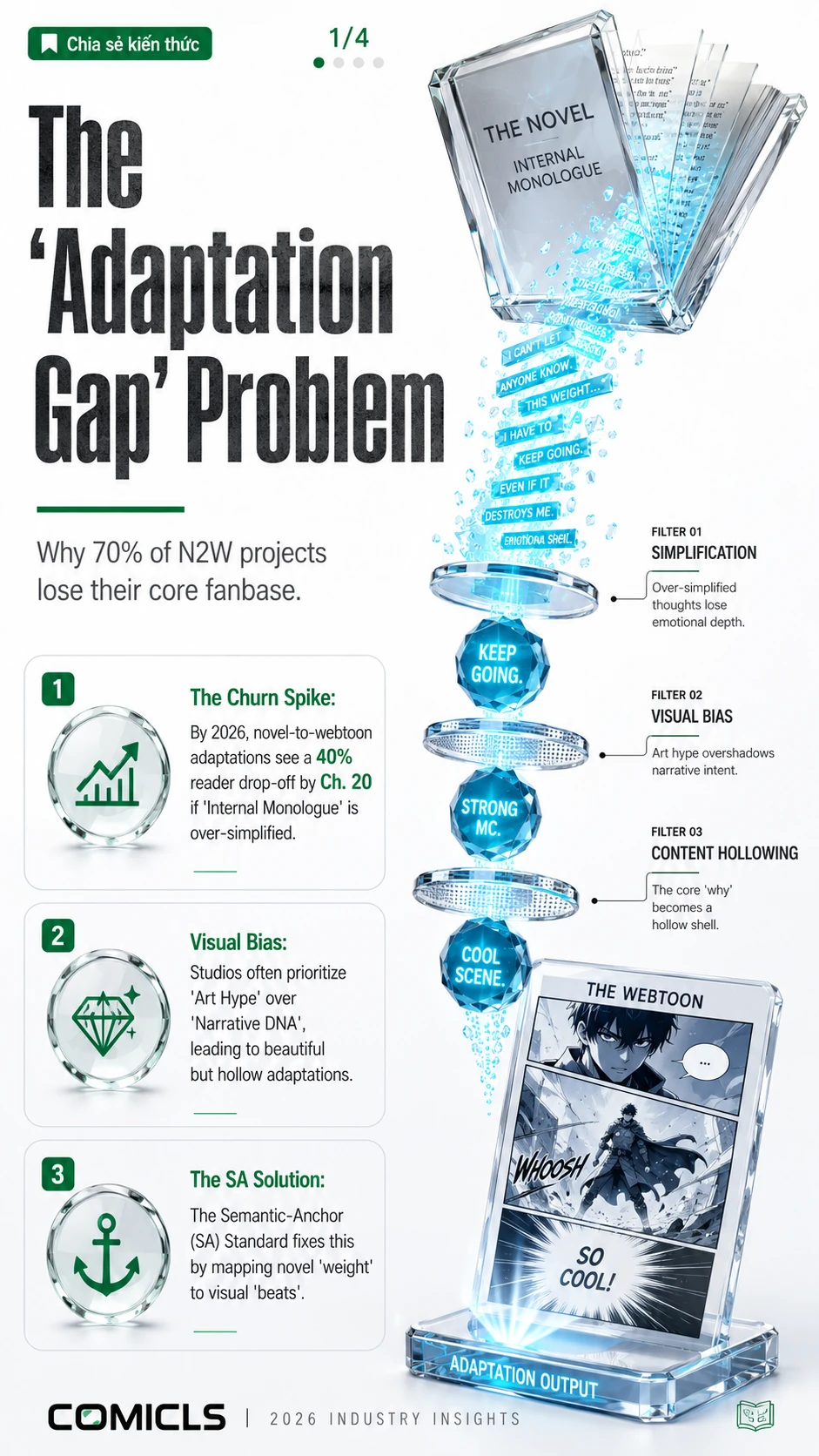
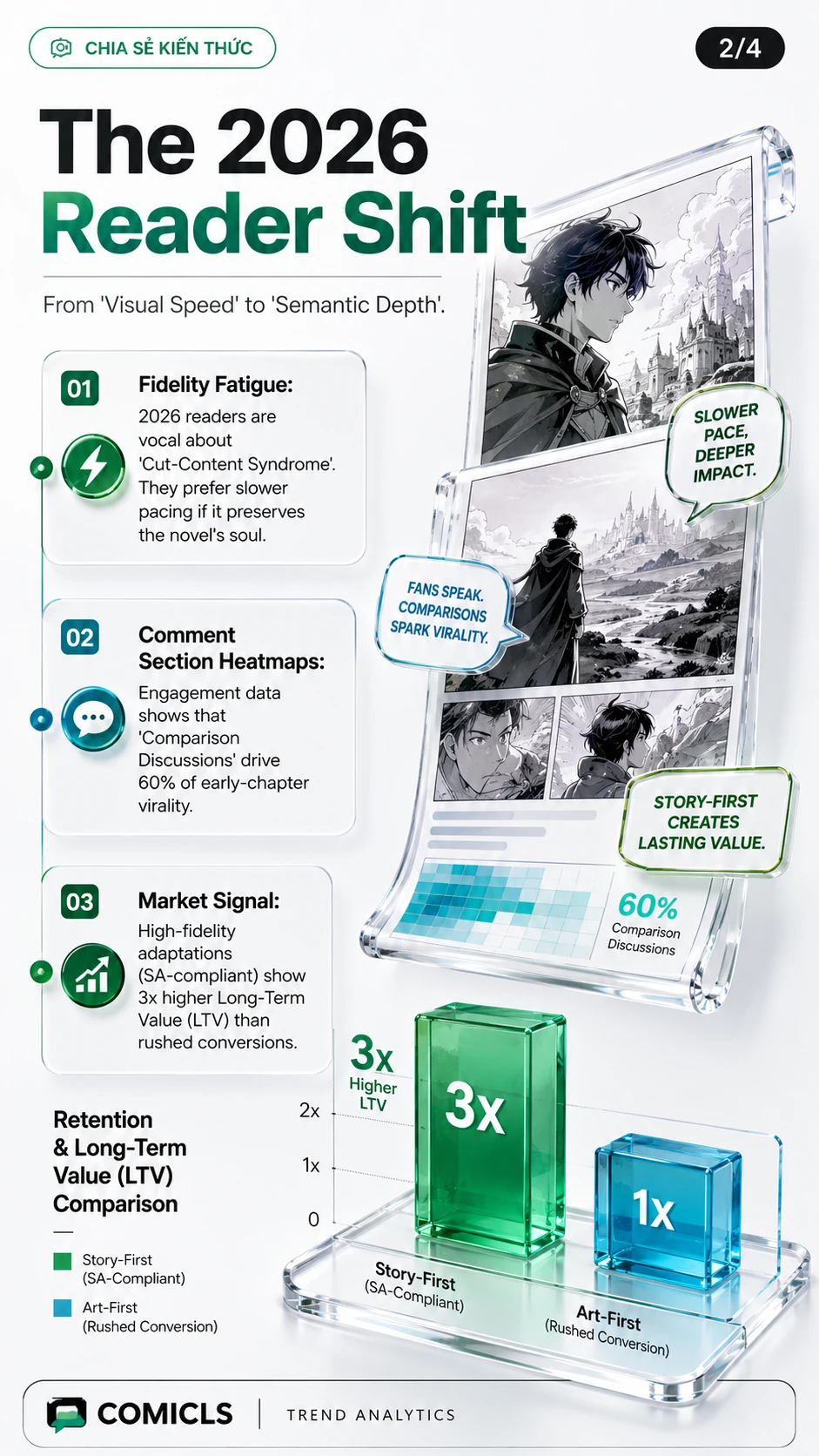
The transition from web novel to webtoon is the most lucrative path for creators in 2026, yet it remains the most difficult to execute without alienating the original audience. The 'Adaptation Gap' occurs when studios sacrifice the intricate internal logic and character depth of a novel for the sake of rapid visual pacing. To solve this, the 2026 Semantic-Anchor (SA) Standard provides a structured framework for preserving the 'Soul' of a story during the conversion process.
- Why 'Art-First' adaptations are seeing massive churn in the 2026 market.
- The shift in reader behavior toward 'Semantic Depth' and internal dialogue preservation.
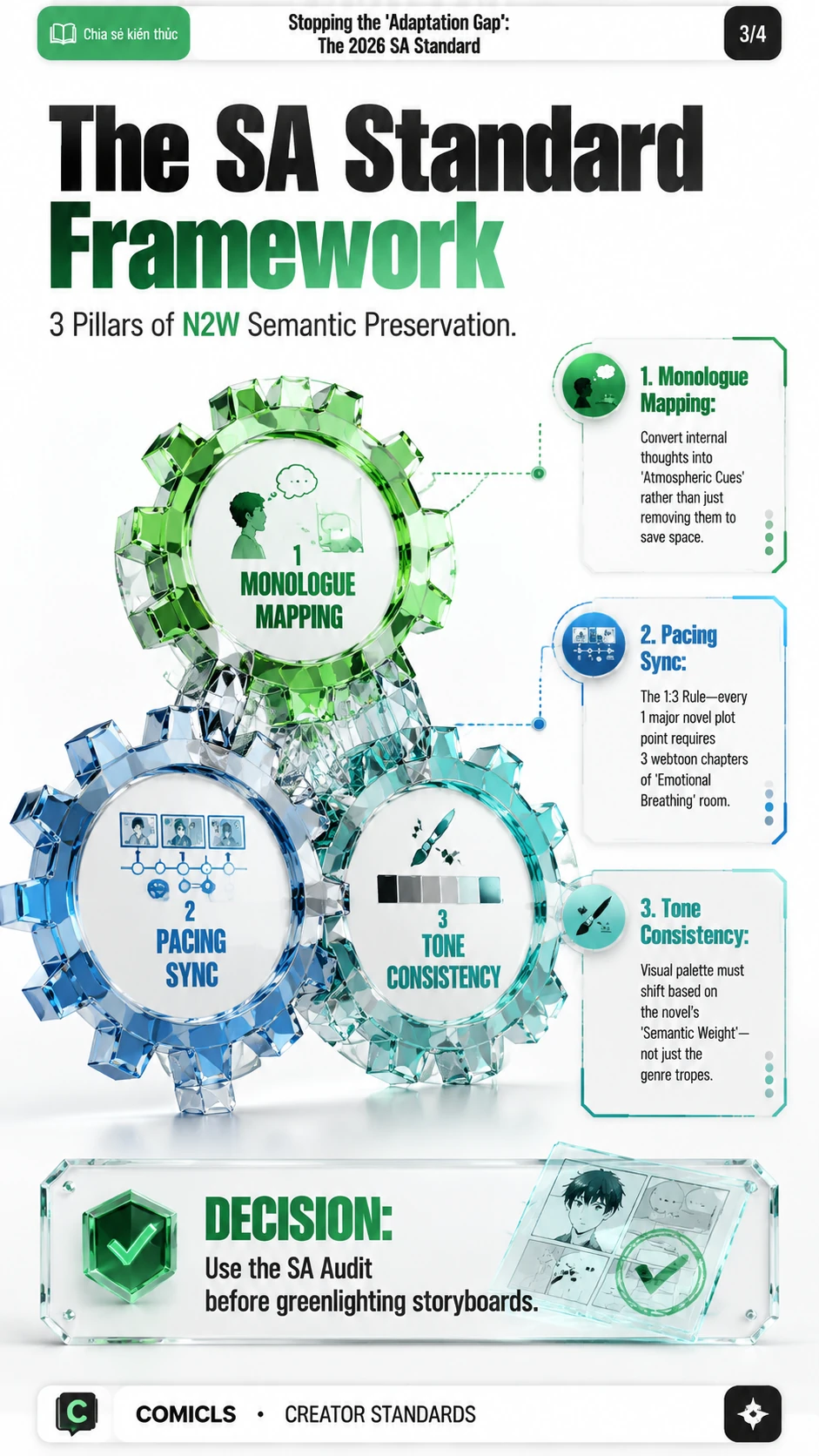
- Implementing the 3 Pillars of the SA Standard: Mapping, Pacing, and Tone.
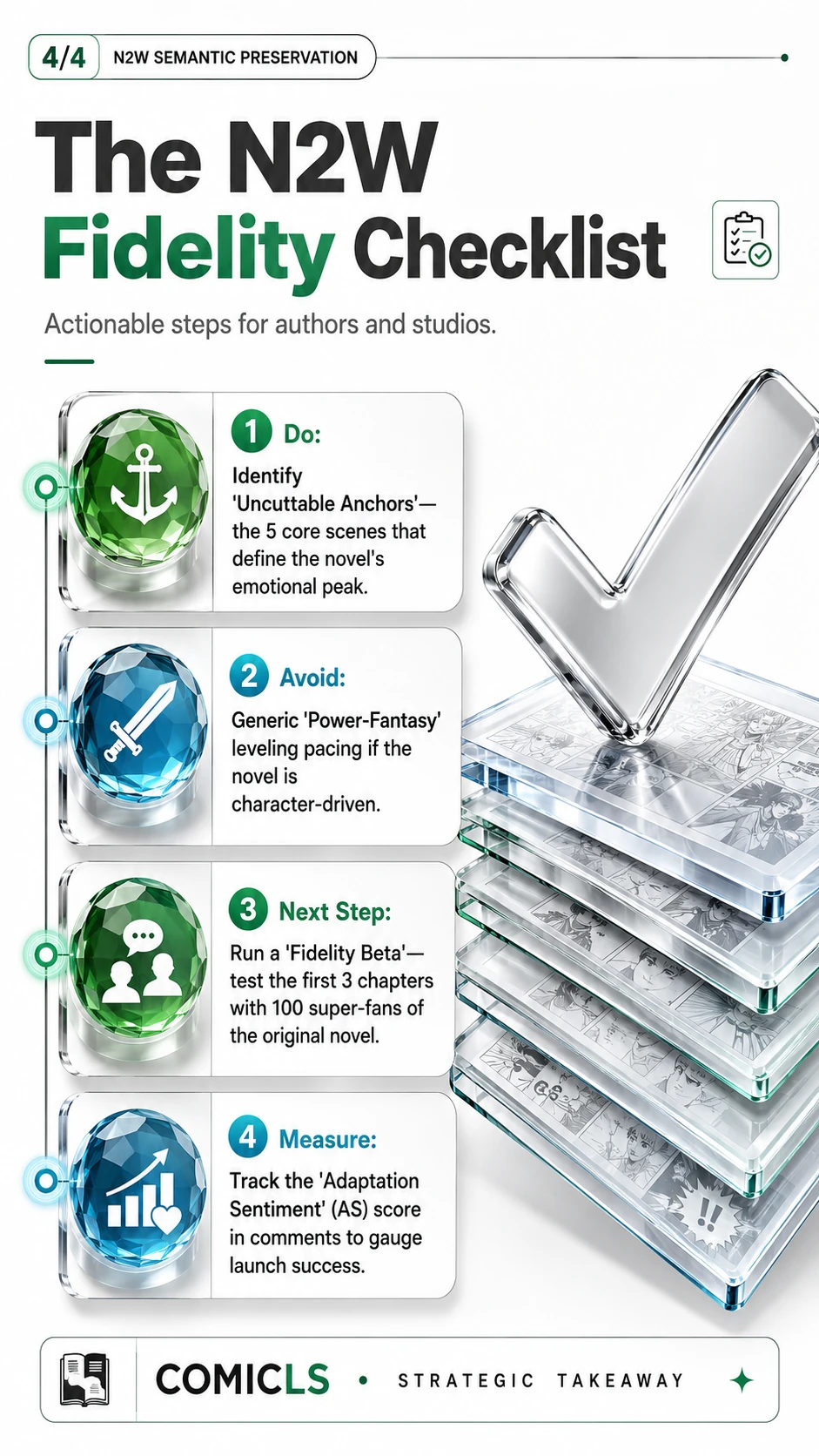
- A practical checklist for auditing your adaptation's fidelity before launch.
FAQ
What is the biggest mistake in N2W adaptations?
Over-trimming internal monologues, which removes character motivation and causes the story to feel like a generic sequence of events.
How do you calculate the 1:3 Pacing Rule?
For every major narrative arc or 'beat' in a novel, ensure at least three webtoon chapters are dedicated to the buildup, the climax, and the emotional fallout.