Optimizing Webtoon Storyboarding with AI: A 2026 Workflow Guide for Visual Storytellers
Streamline your webtoon production by integrating AI into your storyboarding process. This guide covers the 2026 hybrid workflow that balances speed with creative integrity.
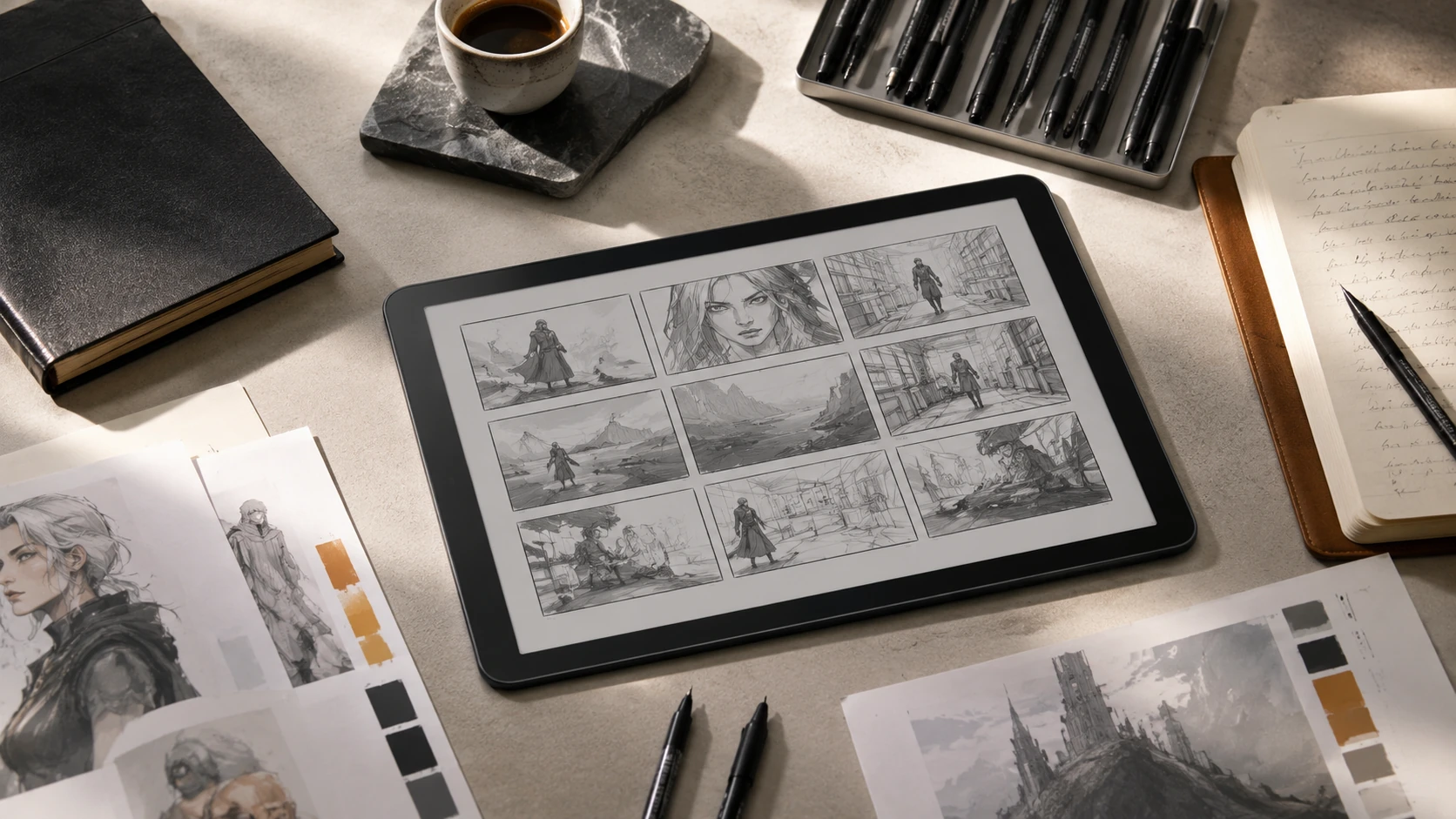
In 2026, the bottleneck for webtoon success is no longer just the quality of the art, but the speed of production. As reader expectations for weekly updates remain high, independent creators are turning to hybrid workflows that leverage artificial intelligence for the most labor-intensive stage of production: storyboarding. This guide explores how to integrate generative tools into your planning phase without sacrificing your unique artistic voice.
The 2026 Hybrid Storyboarding Workflow
The traditional method of sketching every thumbnail by hand is evolving. A modern hybrid workflow uses AI as a 'layout assistant' rather than a replacement. By feeding your script into specialized comic AI models, you can generate multiple composition options for a single panel in seconds. This allows you to focus on the 'director' aspect of storytelling—choosing the best camera angles and pacing—rather than the manual labor of perspective drawing.
- Script-to-Layout: Use text-to-image models to visualize panel compositions based on your written scene.
- Composition Refinement: Apply AI-generated depth maps to fix perspective issues in complex background shots.
- Dynamic Posing: Utilize 3D-rigged AI models to establish consistent character proportions across various angles.
- Batch Thumbnailing: Generate 10-20 rough layout variations to find the most impactful visual hook for a chapter.
Maintaining Visual Consistency and Logic
One of the greatest challenges in AI-assisted storyboarding is maintaining 'character constancy.' In 2026, professional creators solve this by creating LoRA (Low-Rank Adaptation) models or character embeddings of their original designs. By using these custom models, the AI-generated storyboard thumbnails will already resemble your specific characters, making the final 'inking and coloring' phase significantly faster.
Ethical Integration and Search Visibility
Transparency is a key E-E-A-T (Experience, Expertise, Authoritativeness, Trustworthiness) signal in the 2026 content landscape. Platforms like COMICLS and major webtoon portals increasingly favor creators who are open about their process. When publishing your work, consider including a 'behind-the-scenes' section that shows how you used AI to plan your layouts. This builds trust with your audience and positions you as a tech-forward innovator in the creator economy.
Finally, ensure your storyboards are optimized for vertical scrolling. AI tools can now simulate the 'reader scroll' experience, helping you identify 'dead zones' in your pacing where readers might lose interest. This data-driven approach to storyboarding ensures that your webtoon is not just beautiful, but structurally optimized for mobile consumption.
FAQ
Can I copyright a webtoon that used AI for storyboarding?
Current 2026 legal standards generally allow for copyrighting the final work as long as the human creator provides 'substantial creative contribution,' such as final inking, coloring, and scriptwriting. Always consult local intellectual property laws.
What are the best AI tools for comic layouts in 2026?
Leading tools include COMICLS AI for layout generation, Stable Diffusion with ControlNet for character posing, and specialized webtoon plugins for Photoshop and Clip Studio Paint.
Does AI storyboarding make the art look generic?
Only if used without customization. By using your own character sheets as reference and manually refining the AI's output, you maintain your unique style while benefiting from the speed of AI composition.