Mastering Visual Psychology: A 2026 Guide to Color Theory and Emotional Pacing in Webtoons
Color is more than an aesthetic choice; it is a narrative engine that dictates reader retention and emotional impact. This guide explores the advanced visual psychology required to master the 2026 digital comic landscape.
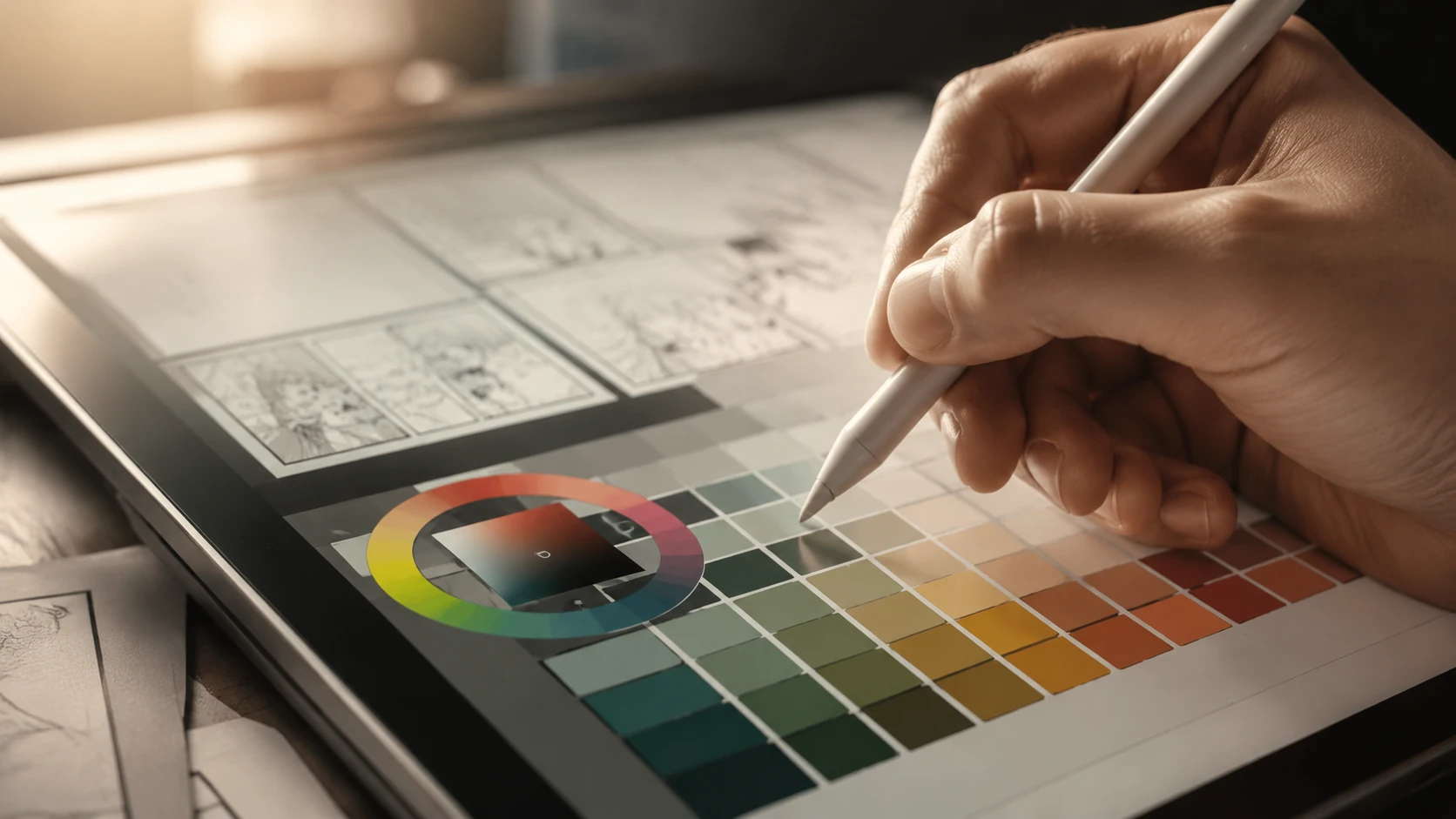
In the 2026 digital comic market, the battle for reader attention is won or lost in the first three seconds of a scroll. While character design and plot are foundational, visual psychology—specifically the strategic application of color—is the silent narrator that guides a reader's subconscious. As mobile displays evolve with higher peak brightness and more accurate color gamuts, creators must move beyond 'filling in the lines' and adopt a sophisticated color-first storytelling strategy.
The Science of the 'Scroll-Stop' Palette
The 'Scroll-Stop' effect is a metric used by top webtoon platforms to measure immediate engagement. Psychologically, human eyes are drawn to high-contrast areas and specific 'safety' or 'danger' hues. In 2026, successful creators are using complementary color schemes not just for harmony, but to anchor the reader's eye on key narrative beats. For instance, using a desaturated cool-toned background with a single high-saturation warm-toned object (like a character's eyes or a pivotal item) creates an immediate focal point that resists the fast-scroll reflex.
Color Scripting: Pacing the Emotional Arc
A color script is a sequence of color keys that map out the emotional journey of a chapter. Unlike static manga, the vertical scroll allows for seamless color transitions that act like a cinematic score. By gradually shifting the temperature of the panels, a creator can induce physical sensations in the reader:
- Transitioning from Pale Blue to Deep Violet: Signals rising tension, mystery, or psychological isolation.
- Shifting from Ochre to High-Vibrancy Red: Mimics the adrenaline of an action sequence or a sudden realization.
- Utilizing Monochromatic Grays with Selective Color: Highlights trauma or a shift in the character's perception of reality.
- Gradual Saturation Increase: Represents character growth, hope, or the climax of a romantic arc.
Accessibility and the 2026 Hardware Standards
Modern storytelling must be inclusive. With the rise of e-ink color tablets and diverse mobile screen qualities, creators must ensure their visual psychology works across all devices. This involves checking for 'Value Contrast'—the difference in lightness and darkness—rather than just hue contrast. If your panel is unreadable in grayscale, it will fail readers with color vision deficiencies and those reading in direct sunlight. 2026 best practices dictate a 'Value-First' approach where the silhouette and depth are established before the hue is applied.
AI-Assisted Color Consistency
While the emotional intent remains human, 2026 workflows heavily leverage AI for color grading and flatting. Tools now allow creators to upload a 'style reference' to maintain a consistent palette across hundreds of chapters. This ensures that a character's signature color remains identical even when lighting conditions change from a sunset to a fluorescent-lit office. The goal is not to replace the artist’s choice, but to automate the technical application, allowing the creator to focus on the psychological impact of the scene.
Genre-Specific Color Archetypes
Readers have developed subconscious expectations based on genre. Breaking these can be a powerful tool, but mastering them is the first step toward professional-grade storytelling:
- Modern Fantasy: High-contrast magentas and teals to emphasize 'otherworldliness'.
- Slice-of-Life: Low-contrast, high-brightness pastels (cream, sage, dusty rose) to lower the reader's heart rate and create comfort.
- Psychological Thriller: Liminal spaces defined by sickly yellows, heavy shadows, and high-value whites to create a sense of unease.
- Corporate Romance: Crisp whites, 'expensive' navy blues, and gold accents to signal status and professional tension.
FAQ
What is a color script in webtoons?
A color script is a visual roadmap that outlines the color palette for every scene in a chapter to ensure the emotional tone aligns with the narrative pacing.
How does color affect reader retention?
Color creates visual hierarchy and emotional resonance. Strategic use of contrast 'stops' the scroll, while harmonious palettes reduce reading fatigue, keeping readers engaged longer.
Is color theory different for mobile reading?
Yes. Mobile screens (OLED/LCD) amplify saturation and contrast. Creators must account for backlighting, which makes dark scenes harder to parse if the value range is too narrow.