Mastering the 2026 ‘Narrative-Layering’ (NL) Standard
Discover how the 2026 Narrative-Layering (NL) Standard solves the 'Attention Divide' in digital comics. Learn to engineer stories that work across three distinct depth tiers.
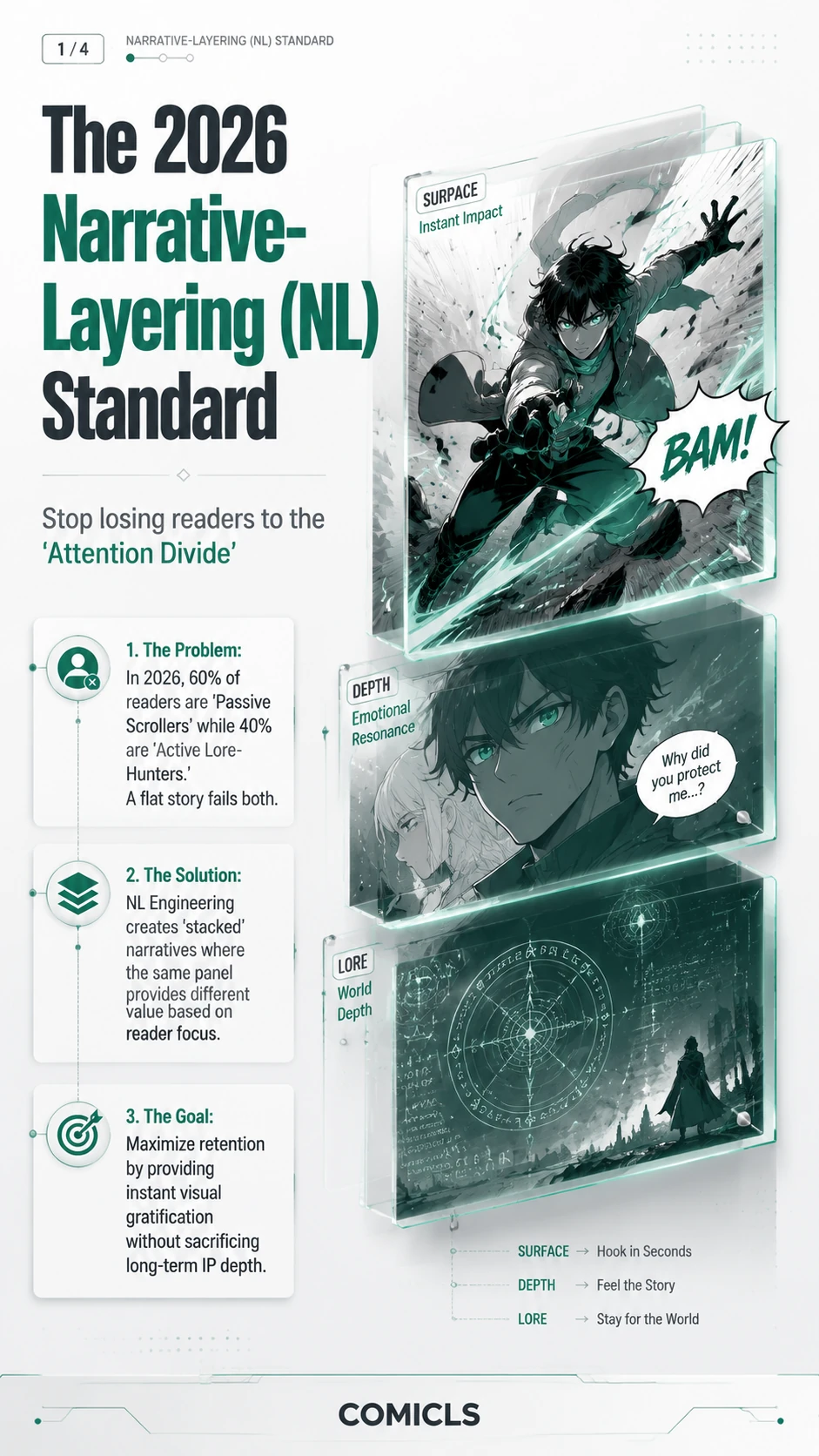
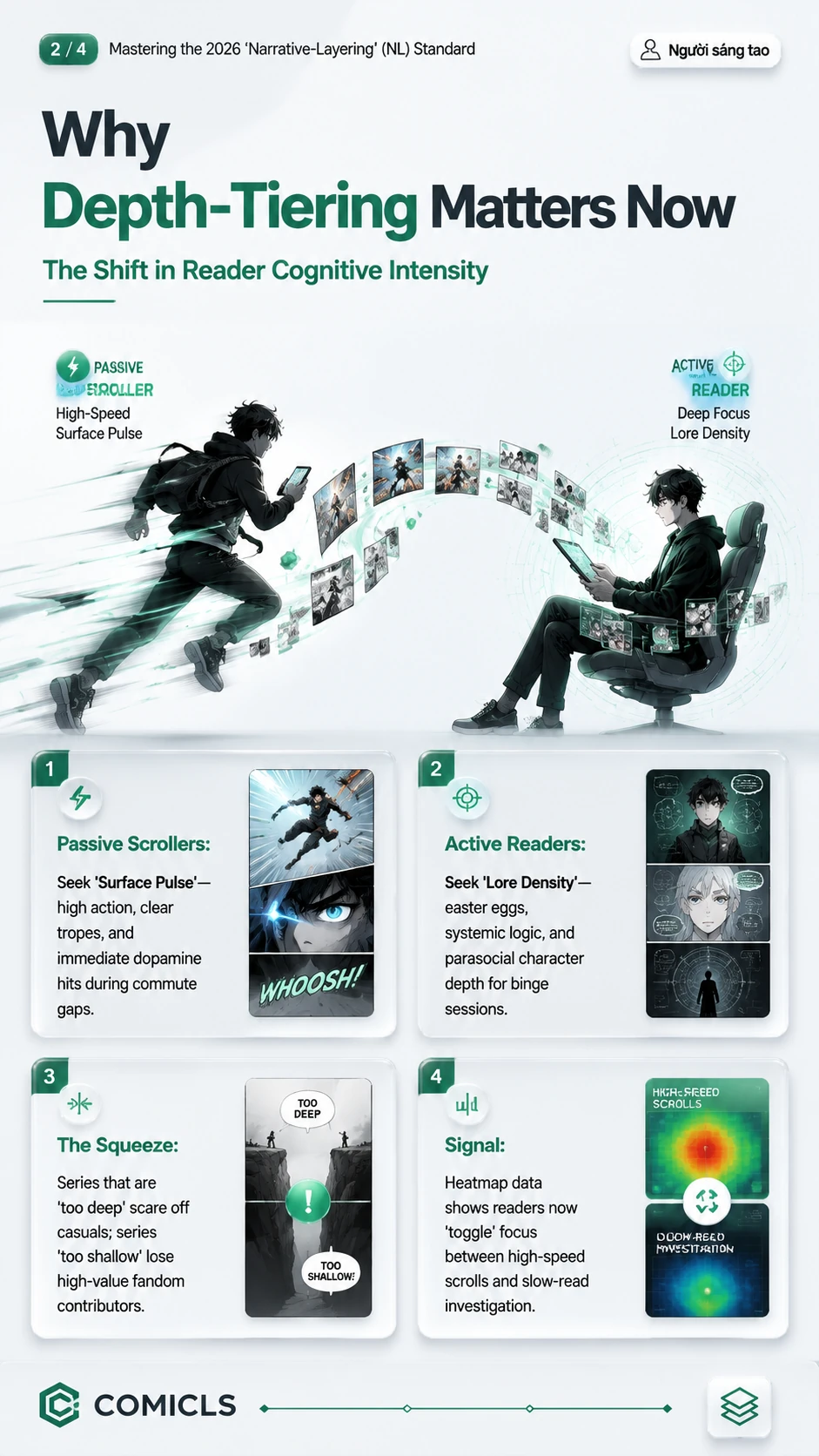
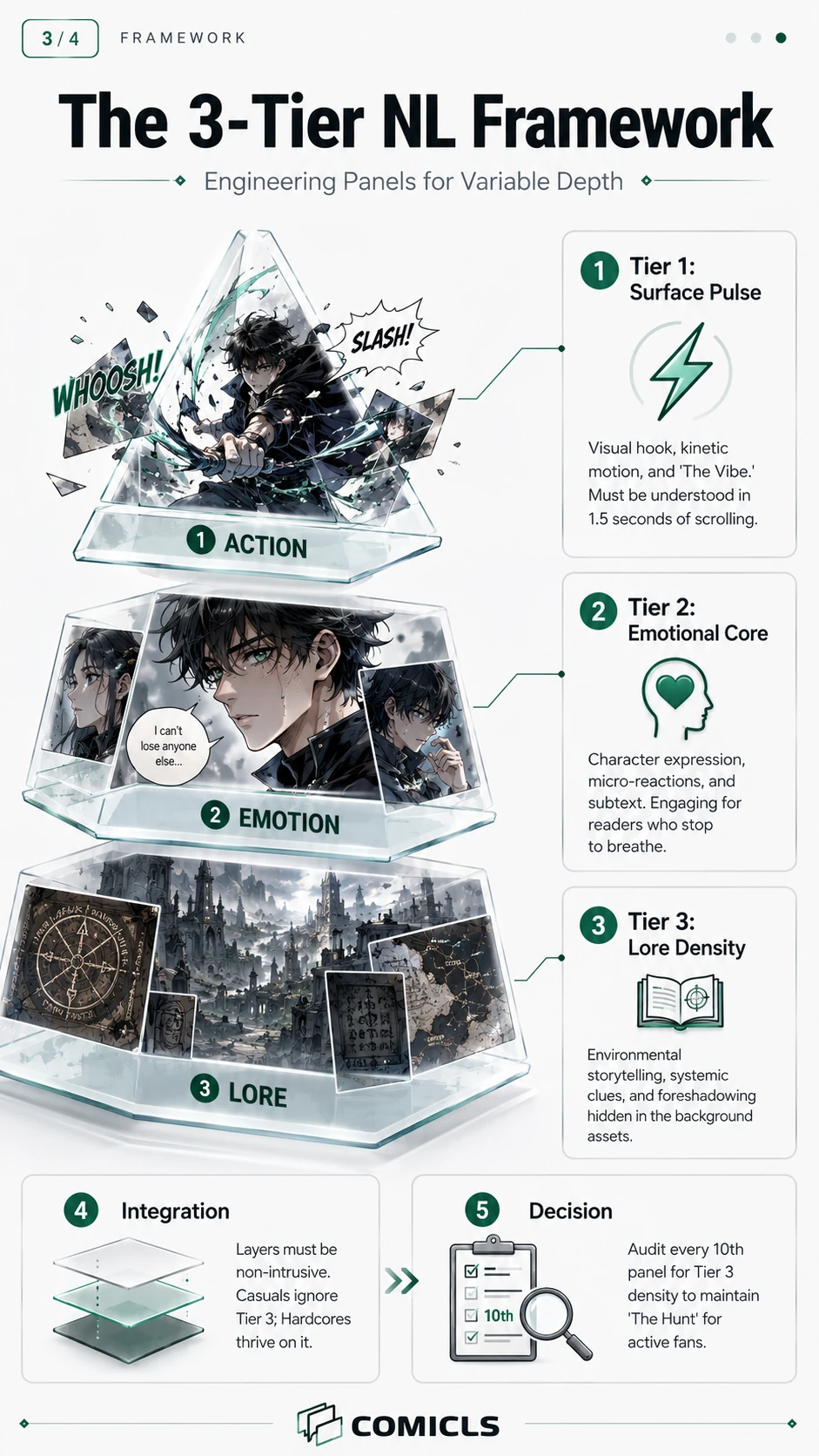
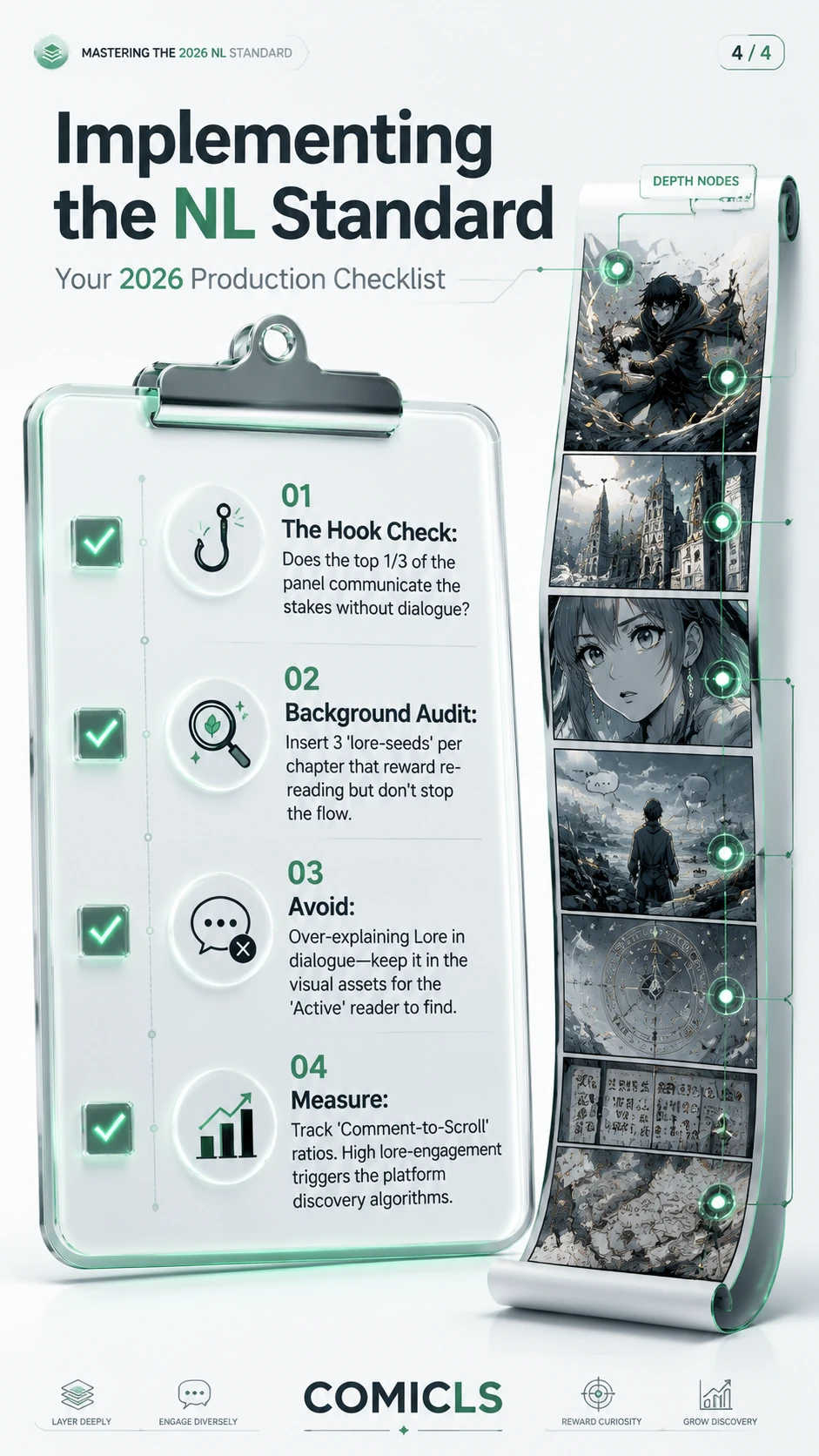
The 2026 Narrative-Layering (NL) Standard is the industry's answer to the diverging attention spans of modern webtoon and manga audiences. By moving away from one-dimensional storytelling, creators can now engineer content that satisfies 'Passive Scrollers' looking for quick dopamine hits while simultaneously providing enough depth to retain 'Active Lore-Hunters' who drive fandom growth and monetization. This 4-page guide breaks down how to structure your panels to work on multiple cognitive levels.
- Page 1: Defines the NL Standard and the 2026 Attention Divide between reader types.
- Page 2: Explores the market shift toward 'toggle focus' reading behaviors and why shallow stories are failing.
- Page 3: Introduces the 3-Tier Framework (Surface Pulse, Emotional Core, Lore Density) for panel engineering.
- Page 4: Provides a practical implementation checklist to audit your series for depth and engagement.
FAQ
What is the Narrative-Layering (NL) Standard?
It is a 2026 storytelling framework where comic panels are engineered with three distinct layers of information—Action, Emotion, and Lore—to engage different types of readers simultaneously.
How does NL improve webtoon retention?
By providing immediate visual hooks for fast scrollers while hiding deep story clues in the background for dedicated fans, ensuring no reader segment feels alienated.
Will adding lore-layers slow down my production?
Not necessarily. The NL Standard focuses on strategic background asset placement and visual subtext rather than adding more panels or complex dialogue.