Mastering Prompt-to-Panel: How AI is Redefining Webtoon Workflows in 2026
The digital comic industry is shifting from manual labor-intensive processes to AI-assisted 'Prompt-to-Panel' workflows. This guide explores how creators can maintain artistic integrity while leveraging technology to meet the demands of weekly publishing schedules.
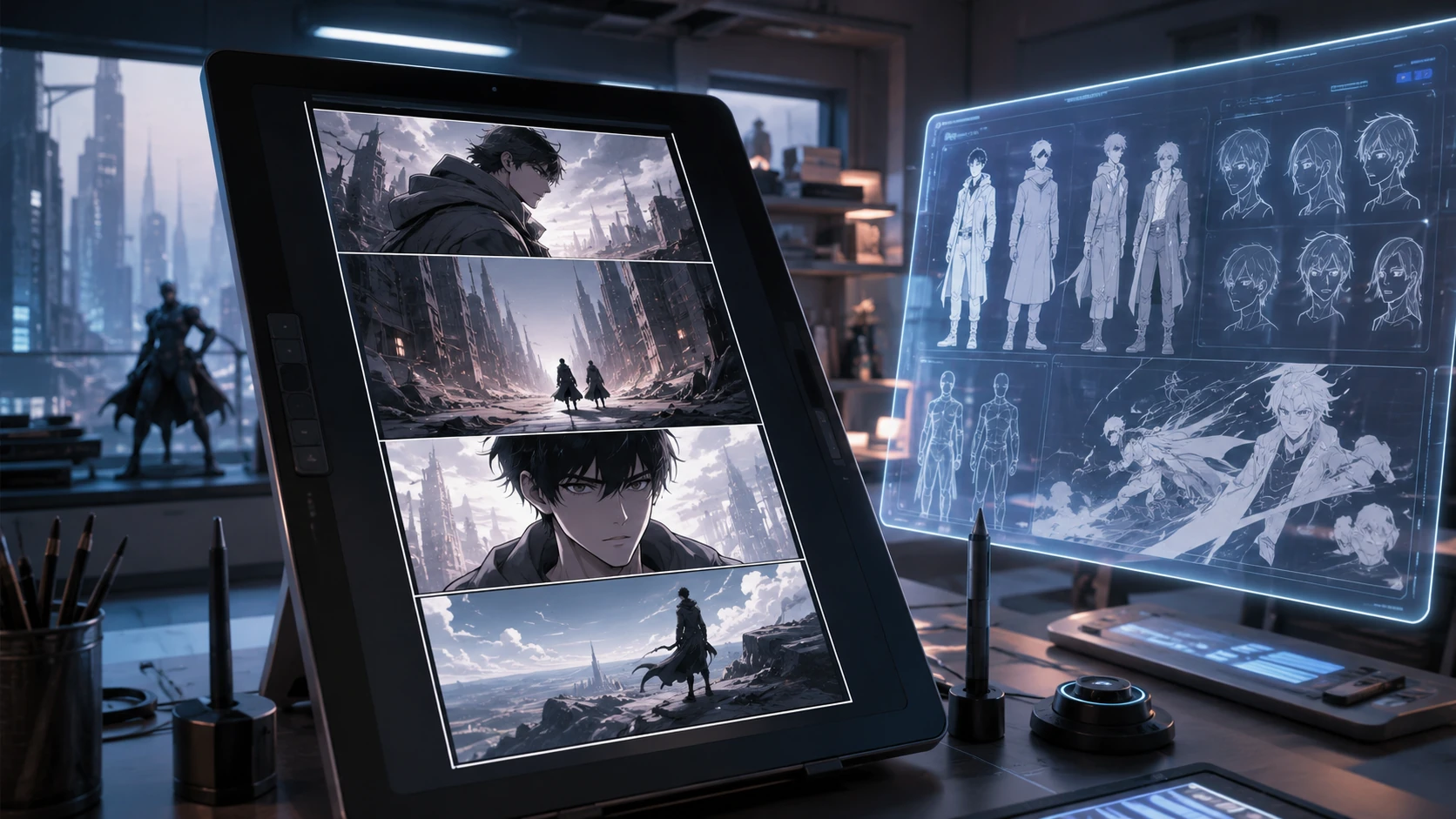
By 2026, the 'starving artist' trope in the comic industry has been challenged by a new paradigm: the Hybrid Creator. As global demand for vertical-scroll webtoons and manhwa continues to skyrocket, the traditional 80-hour work week is being replaced by AI-augmented workflows. The 'Prompt-to-Panel' methodology isn't about replacing the artist; it's about automating the friction points of production—storyboarding, background rendering, and flatting—to allow more time for narrative depth and emotional resonance.
The Anatomy of a Modern AI-Assisted Workflow
The modern webtoon production line has evolved into a multi-stage collaborative process between human intuition and machine efficiency. This workflow typically follows a structured path that ensures the creator remains the director of the vision while the AI acts as the production assistant.
- Script-to-Layout Synthesis: Using LLMs to convert prose scripts into panel-by-panel descriptions for vertical scrolling.
- Generative Backgrounds: Utilizing 3D-to-AI pipelines to create consistent architectural environments without manual painting.
- Character LoRA Training: Creators now train personal 'Low-Rank Adaptation' models on their own art style to maintain 100% consistency across thousands of panels.
- Automated Flatting and Shading: AI tools that identify line art boundaries to apply base colors and lighting gradients in seconds.
Solving the Consistency Crisis
One of the greatest hurdles in digital comics has always been character consistency. In 2026, creators have moved beyond generic image generation. By utilizing 'ControlNet' and 'IP-Adapter' technologies, artists can lock in specific facial structures and costumes. This ensures that a protagonist looks identical in a high-octane action sequence as they do in a quiet emotional beat, regardless of the angle or lighting.
Narrative Pacing in the Vertical Scroll
Webtoons are defined by the 'gutter'—the white space between panels that dictates the reader's tempo. AI tools now offer 'Pacing Analysis,' suggesting where to lengthen gaps for dramatic tension or where to tighten them for fast-paced action. Understanding this spatial storytelling is vital for retention on platforms like COMICLS, where reader engagement is tracked by scroll speed and dwell time.
The Ethics of AI and Creator Ownership
As the industry matures, the focus has shifted toward 'Ethical AI'—models trained on licensed or opt-in datasets. For a creator, the value lies in the Intellectual Property (IP). Platforms and publishers are increasingly prioritizing works where the AI is a tool in the hands of a human visionary, ensuring that copyright protections remain robust and that the 'human touch' is palpable in the dialogue and character arcs.
Successful monetization in 2026 relies on a community-first approach. By reducing production time, creators can engage more with their audience, produce bonus content, and build transmedia franchises (merchandise, light novels, and animations) faster than ever before.
FAQ
Does using AI mean I don't own the copyright to my comic?
Copyright laws vary by jurisdiction, but in 2026, the consensus focuses on 'substantial human involvement.' If you provide the script, layout, character designs, and final edits, you maintain the core IP rights. Always check local regulations.
What are the best AI tools for webtoon artists right now?
Current industry standards include Stable Diffusion with ControlNet for character posing, Midjourney for conceptual backgrounds, and specialized plugins for Clip Studio Paint that automate flatting.
Will AI replace professional comic artists?
AI replaces tasks, not people. It eliminates the 'grunt work' of coloring and perspective drawing, but it cannot replicate the unique emotional perspective and cultural nuance that a human writer and director provide.