From Script to Screen: Navigating the Web Novel to Webtoon Pipeline in 2026
The 'One Source Multi-Use' (OSMU) model has become the gold standard for digital creators in 2026. This guide explores how to successfully bridge the gap between prose and panels to maximize IP value.
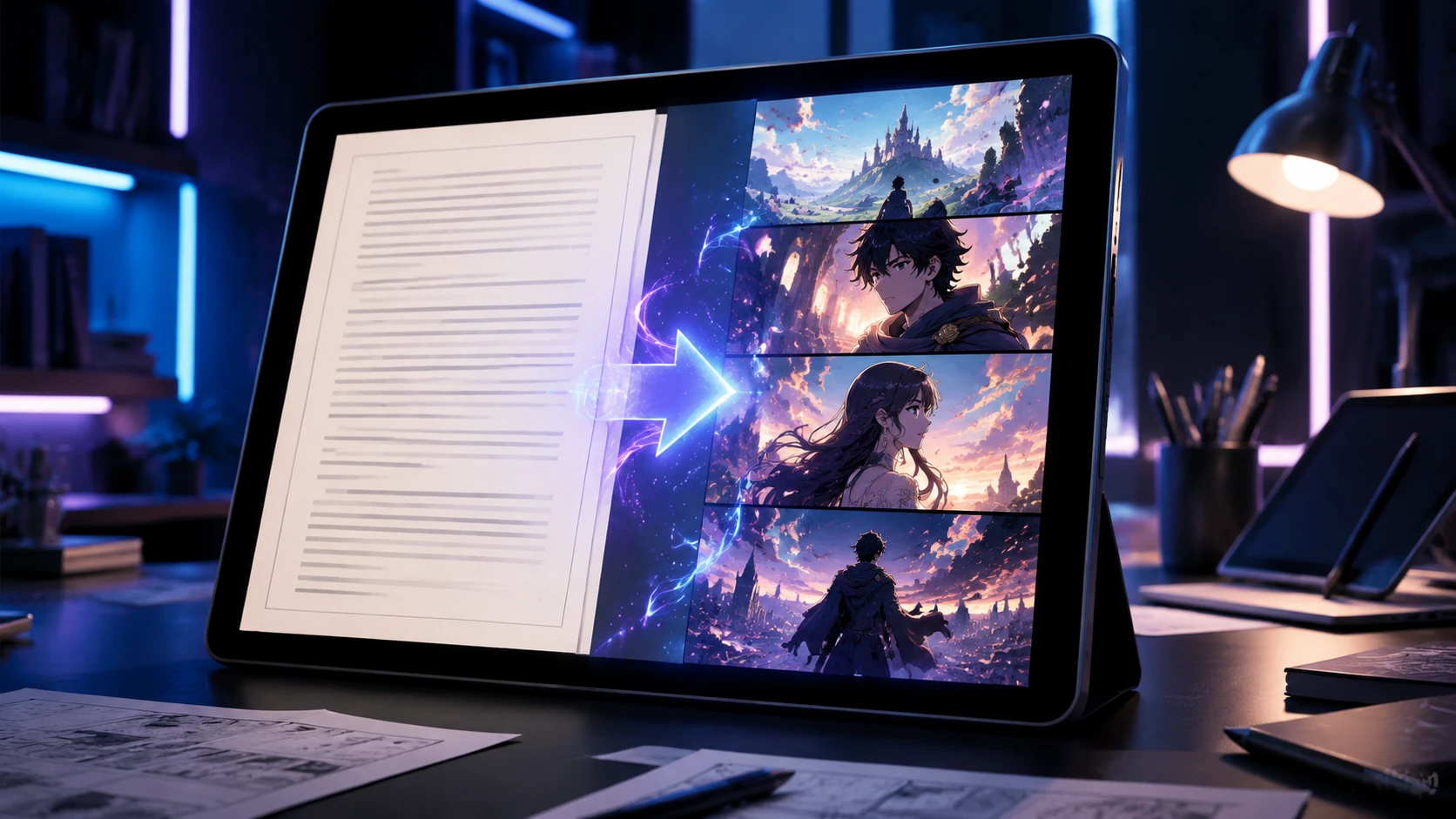
In 2026, the boundary between literary fiction and visual media has all but vanished. The 'One Source Multi-Use' (OSMU) strategy, once a luxury for major publishing houses, is now the standard operating procedure for independent creators and digital platforms alike. As web novels continue to dominate the global digital fiction market, the 'Pipeline'—the process of converting text-heavy narratives into high-engagement webtoons—has become the most critical skill set for modern storytellers looking to achieve longevity and cross-platform success.
The 2026 Shift: Why Novels are the Foundation of Modern IP
The current landscape favors 'proven' stories. Web novels serve as the ultimate testing ground; they allow creators to build a dedicated fanbase and refine plot points with minimal overhead before investing in the high-cost production of a webtoon. In 2026, data-driven platforms use novel engagement metrics to greenlight adaptations, making the transition from script to screen more of a calculated evolution than a creative gamble.
Key Steps in the Adaptation Workflow
Adapting a novel isn't just about drawing what's on the page. It requires a fundamental shift in how information is delivered to the reader. Unlike traditional books, webtoons rely on visual pacing and the 'infinite scroll' to maintain tension.
- Visual Scripting: Rewriting internal monologues into expressive character actions or concise dialogue bubbles.
- Panel Pacing: Using white space (gutters) to control the 'speed' at which a reader consumes the story.
- Character Blueprinting: Designing iconic, recognizable silhouettes that remain consistent across hundreds of chapters.
- Cliffhanger Engineering: Adjusting chapter breaks to fit the weekly scrolling habit of mobile users.
Bridging the Gap with AI-Assisted Prototyping
One of the most significant breakthroughs in 2026 is the use of AI to bridge the 'visualization gap.' Creators are now using generative tools to create 'visual bibles' directly from their novel's prose. This allows authors to provide artists with precise references for lighting, setting, and character emotions, drastically reducing the friction during the early stages of adaptation.
Monetizing the Multi-Format Journey
The real power of the pipeline lies in its revenue potential. By maintaining a presence in both novel and webtoon formats, creators tap into two distinct audiences. In 2026, successful IPs often launch 'Webtoon-First' side stories that drive traffic back to the original novel, creating a self-sustaining ecosystem of monetization through subscriptions, ad revenue, and physical print collections.
Common Pitfalls to Avoid
Many adaptations fail because they try to be too faithful to the source material. A 1:1 translation often results in 'clunky' webtoons with too much text and not enough visual momentum. The most successful 2026 adaptations are those that treat the webtoon as a 'remix'—retaining the soul of the story while optimizing the delivery for the vertical canvas.
FAQ
Does every web novel need an adaptation?
Not necessarily. Stories with heavy internal monologue or abstract concepts are harder to adapt. Action, romance, and high-fantasy genres typically perform best in webtoon format.
How long does it take to adapt a novel into a webtoon?
On average, one novel chapter translates into 1-2 webtoon episodes. With 2026 AI-assisted workflows, the production of a single episode can take 3-5 days for a small team.
Can I adapt my novel if I can't draw?
Yes. Most web novel authors partner with artists or studios. In 2026, 'Creator Matching' platforms help authors find artists who specialize in their specific genre and style.