Decoding the Vertical Scroll: Master Webtoon Storytelling Dynamics in 2026
Mastering the infinite canvas requires more than just stacking images vertically. Explore the psychology of the scroll and how to direct your reader's eye for maximum engagement.
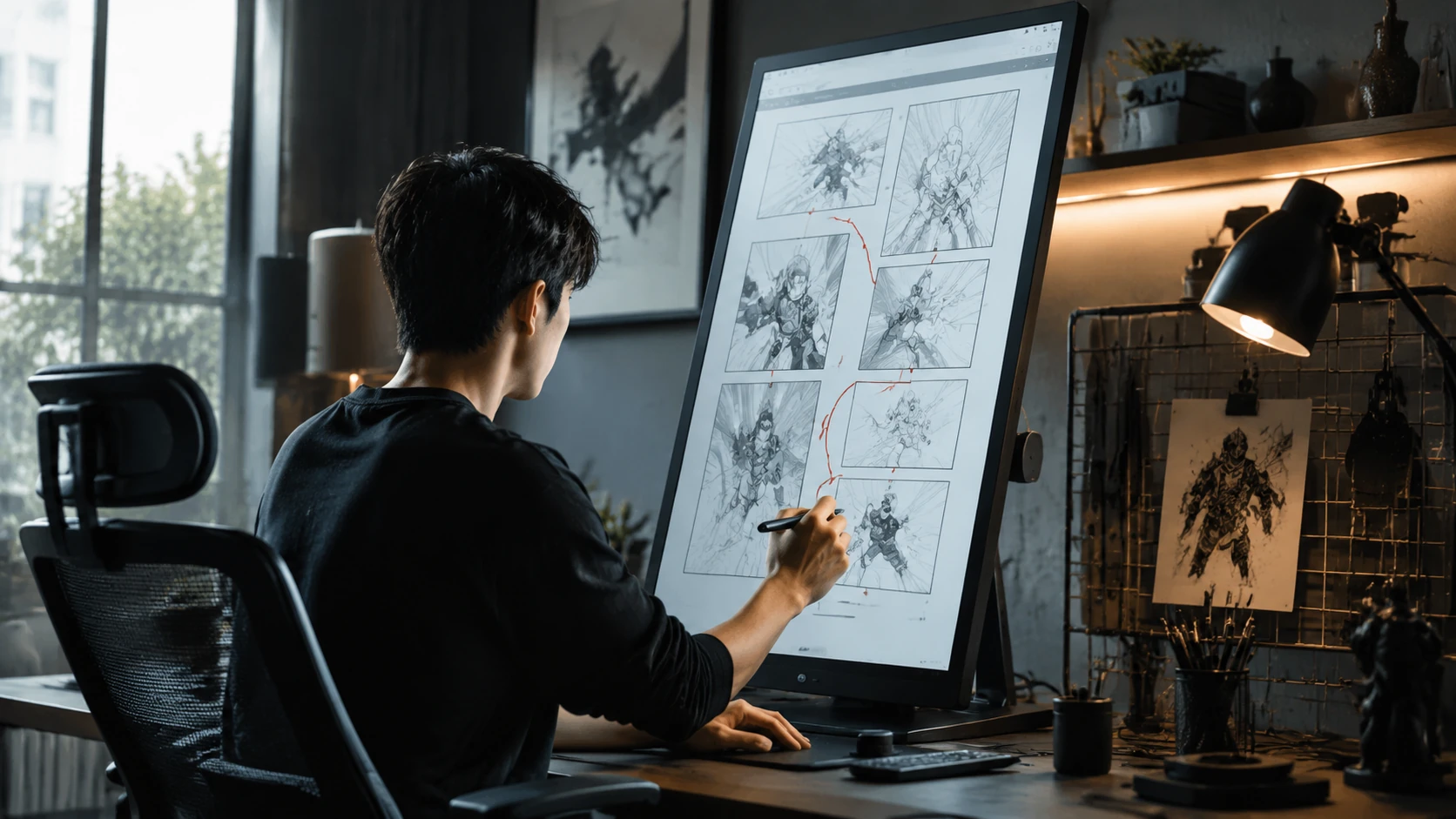
In 2026, the battle for reader attention isn't won by the most detailed art alone, but by the most seamless reading experience. As mobile-first consumption dominates over 90% of the digital comic market, the 'infinite canvas' has evolved from a format choice into a sophisticated psychological tool. To keep a reader scrolling, creators must understand that the vertical scroll is not just a sequence of panels—it is a choreographed dance of time, space, and 'thumb-stopping' momentum.
The Gutter as a Metaphor for Time
In traditional print comics, the gutter (the space between panels) is a static transition. In vertical webtoons, the gutter represents the passage of time and emotional weight. A short gutter implies rapid-fire action or quick dialogue, while an elongated gutter creates suspense, silence, or a sense of travel. By 2026 standards, successful creators are using 'negative space' as a narrative beat, forcing the reader to scroll through emptiness to build anticipation before a major reveal.
The Rule of the Thumb: Directing the Eye
Unlike the Z-pattern used in Western print or the right-to-left flow of Manga, the vertical scroll utilizes a 'Central Gravity' flow. The reader's eye naturally rests in the middle 60% of the screen. To optimize retention, key narrative elements—speech bubbles, facial expressions, and action impact points—should be centered or strategically staggered to lead the eye downward in a zigzag motion. This prevents eye fatigue and creates a hypnotic scrolling rhythm that increases 'Time on Page' metrics.
- Avoid 'Wall of Text' Bubbles: Keep dialogue concise to prevent obscuring the art.
- The 1.5-Screen Rule: Ensure that no more than 1.5 screen-lengths pass without a visual hook or a narrative beat.
- Dynamic Panel Shapes: Break the rectangular mold with slanted borders or borderless panels to indicate movement and energy.
- Color Gradients as Transitions: Use background color shifts to signal changes in mood or time without needing text captions.
Cinematic Composition in the Vertical Space
2026 storytelling trends lean heavily into 'cinematic scrolling.' This involves using 'establishing shots' that span two or three screen lengths, requiring the reader to scroll through a single massive image. This technique provides a sense of scale that print can rarely match. When combined with layering techniques—where a character's limb or weapon overlaps the next panel—it creates a 3D effect that makes the story feel alive and immersive.
Optimizing for Global Audiences
Localization is no longer just about translating text; it’s about cultural pacing. Western audiences often prefer a slightly faster scroll with more frequent action, while Eastern markets may appreciate longer, atmospheric pauses. Modern creators are now utilizing AI-driven layout assistants to suggest alternative panel spacings based on regional reader data, ensuring their story resonates regardless of the territory.
FAQ
How long should a single webtoon episode be in 2026?
While it varies by genre, the industry standard for high-retention episodes is currently between 45 to 65 panels, optimized for a 3 to 5-minute reading session.
Does panel spacing really affect reader engagement?
Yes. Data shows that 'claustrophobic' paneling (too many panels close together) leads to higher drop-off rates on mobile devices compared to spacious, breathable layouts.
Can I use traditional comic pages for webtoons?
It is not recommended. 'Cropped' print pages often result in text that is too small to read on mobile, leading to a poor user experience. Always design with a vertical-first mindset.